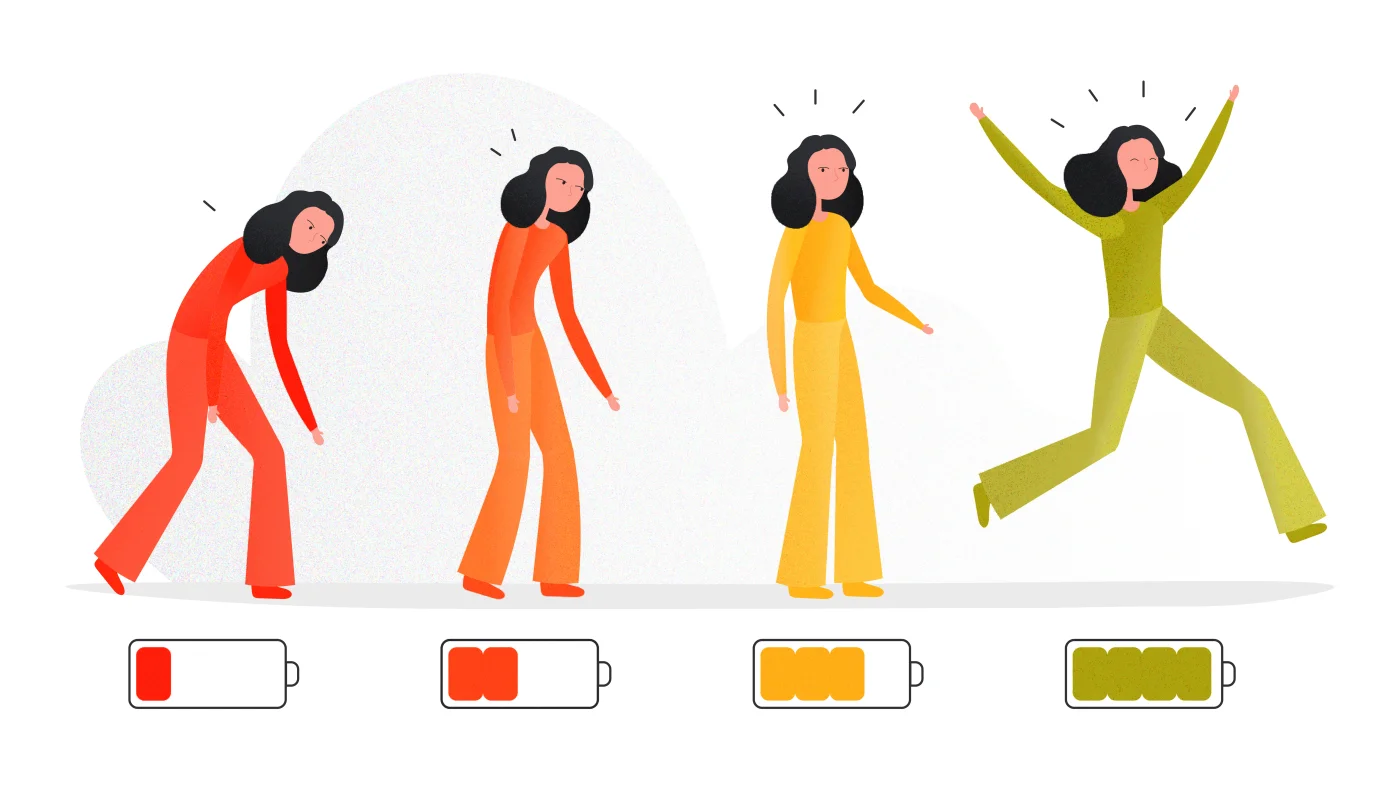
Some people with clinical depression can't get out of bed.
asserted
people → get → bed
But what about those who exhibit other signs of depression who never stop moving, and may double down on their work?
uncertain
who → exhibit → work
Psychiatrist Dr. Judith Joseph says the second group often goes unnoticed, even by the people living it.
asserted
group → say → it
She calls it "high-functioning depression": people who keep meeting their obligations at work and at home while quietly losing the ability to feel pleasure.
asserted
who → call → pleasure
"When you are joyful, you have better physical health, you have better relationships, you have better productivity at work," Joseph said in an interview for the Your Turn podcast.
asserted
Joseph → have → podcast
"So why don't we prioritize it?"
asserted
we → prioritize → it
At the center of Joseph's work is anhedonia: a reduced ability to feel joy, pleasure or interest in things that once brought those feelings.
asserted
that → reduce → feelings
Joseph describes it as "the silent sister" of depression.
asserted
Joseph → describe → depression
"One sister is depressed, and crying, and not getting out of bed, and getting all the attention," she says.
asserted
she → cry → attention
Anhedonia may not seem like a crisis in the classic sense, Joseph says.
uncertain
Joseph → seem → sense
"But it is an existential crisis, and it's not something to ignore."
What the research shows
In a peer-reviewed study published in the journal Cureus, Joseph and colleagues interviewed adults using a set of questionnaires designed to assess high-functioning depression, trauma and anhedonia.
asserted
Joseph → ignore → depression
The results supported the researchers' hypothesis that people with high-functioning depression have increased levels of anhedonia and trauma.
asserted
people → support → anhedonia
Participants with higher anhedonia scores also had higher high-functioning depression scores.
asserted
Participants → have → scores
Parents and caregivers had the highest anhedonia and high-functioning depression scores in the study.
asserted
Parents → have → study
The authors note that high-functioning depression is not an official diagnosis in the DSM-5, the manual clinicians use to diagnose mental health conditions.
asserted
clinicians → note → conditions
They say that is part of the problem: people who keep functioning may not recognize their symptoms or seek treatment until they reach burnout.
uncertain
they → say → burnout
'Something's gonna give'
asserted
Something → go → ?
Joseph says she often sees the pattern in women who are the steady presence for everyone around them.
asserted
who → say → them
They are so focused on their responsibilities at work and at home that they don't realize they are burned out, or close to it.
asserted
they → realize → it
"But eventually something's gonna give," she said.
asserted
she → go → ?
"Either they do break down and they have a clinical depression and they lose their functioning, they go into distress or crisis, or they physically break down."
asserted
they → break → distress
She said she has seen patients end up in the emergency room without understanding why, only to learn they had been carrying unresolved emotional pain.
asserted
they → say → pain
Joseph said the pattern is common in professions that discourage vulnerability, including her own.
asserted
that → say → own
In medicine, she said, crying after a patient died was seen as weakness.
asserted
patient → say → weakness
"In medicine, we focus on the crisis," Joseph said.
asserted
Joseph → focus → crisis
"You're [taught] to look for the mania, for the psychosis."
asserted
You → teach → psychosis
She believes there should be more focus on anhedonia, the loss of sense of joy.
asserted
She → believe → joy
A self-assessment
Joseph developed an anhedonia quiz based on the Snaith-Hamilton Pleasure Scale, a measure of the capacity to feel pleasure that was published in the British Journal of Psychiatry.
asserted
that → develop → Psychiatry
The questionnaire asks about everyday experiences, such as whether you have trouble enjoying praise, whether you savor your meals or other small pleasures, and whether you struggle to enjoy your work or accomplishments because they never feel good enough.
asserted
they → ask → work
It's an invitation to take stock of what might be standing in the way of a fuller, more joyful life.
uncertain
what → take → life
If you'd like to take the quiz, you'll be asked to share your email to see the results.
asserted
you → like → results
Five V's
In her book, "High Functioning: Overcome Your Hidden Depression and Reclaim Your Joy," Joseph also outlines a framework she calls the Five V's:
- Validation: naming and accepting what you feel.
- Venting: expressing emotions, through talking, writing, creative expression or maybe a good cry.
asserted
you → overcome → talking
- Values: making time for what matters most.
- Vision: having something to look forward to.
asserted
what → make → something
Joseph says anhedonia appears across many conditions, in many people in midlife and other times, too.
asserted
anhedonia → say → midlife
"It's something that we need to learn how to detect," she said, because it can be a silent problem.
asserted
it → need → that
If you or someone you know is in crisis, call or text 988, to reach the Suicide & Crisis Lifeline
Want to know more?
asserted
you → know → more
Follow the Your Turn newsletter and listen to the Your Turn podcast on the NPR app or wherever you get your podcasts.
asserted
you → follow → podcasts
 The Aporia