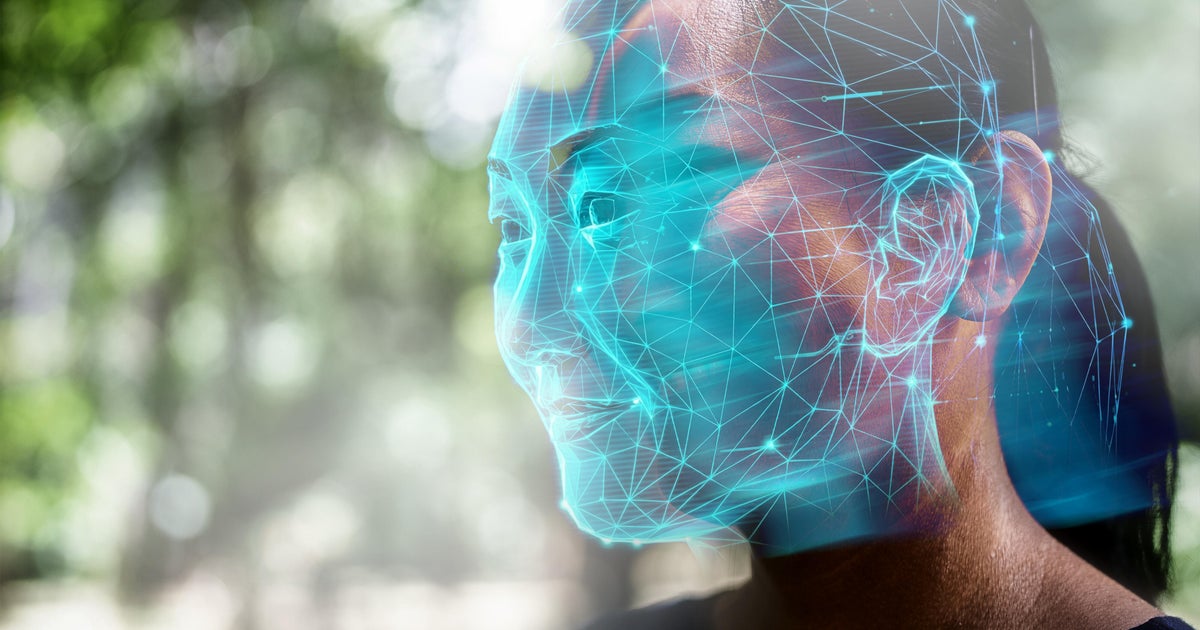
Photo via CBS News

AI deepfakes pose risks to consumers and voters, experts warn

Read the original at CBS News ↗
Cite

Cerullo, M. (2026, October 29). AI deepfakes pose risks to consumers and voters, experts warn. CBS News. https://www.cbsnews.com/news/deepfakes-artificial-intelligence-consumer-risks-fraud/

Dated from the outlet's own feed. Check the original for its byline.

CBS News · collected 2026-10-29 · by Megan Cerullo

Quick Summary

Security experts warn that advancements in artificial intelligence are making it easier to create realistic deepfakes—videos and audio recordings that use the likenesses of public figures—which could be used for scams and disinformation. According to Doppel, a social engineering defense platform, only about 10% of people can recognize an AI-generated deepfake voice, highlighting the potential dangers these technologies pose to consumers and voters. As of mid-October, political campaigns had spent over $137 million on more than 220 AI-generated ads, some featuring deepfakes of candidates, without proper disclosure about their AI origins, raising concerns about misinformation in upcoming elections.
Written by AI on 2026-10-30, from this article's own text only (the story summary below draws on all the coverage).

AI analysis

Story summary

Advances in artificial intelligence are making it increasingly easy to create hyper-realistic deepfakes, raising significant concerns about their potential misuse. Security experts warn that these deepfake videos and audio recordings can deceive consumers and voters, leaving them vulnerable to scams and disinformation. According to research by Doppel, a social engineering defense platform, fewer than 10% of people are able to recognize an audio deepfake. In one test, only 8% of participants realized they were speaking with an AI agent, while the rest believed they were talking to a real person. This issue is particularly pressing in the political arena ahead of upcoming elections. For instance, in Texas, a fake social media video manipulated by AI was circulated online, targeting Senate candidate James Talarico and falsely accusing him of sexual misconduct. Such incidents underscore the need for robust measures to detect and mitigate deepfake threats.

Written for “AI Deepfake Risks Warning” on 2026-10-30, grounded in this article and the 0 other(s) covering the same event.
Why this leaning score
This article does not take a side on a contested political question, so it has no leaning score. That is an answer rather than a gap: a match report or a rescue can be warmly or critically written without being left or right, and scoring it anyway is how approval of a subject gets recorded as a political position.
No political leaning scored for article 115637 · logged 2026-10-30

Story

📰 AI Deepfake Risks Warning
Technology · 1 article(s) covering the same event.

Compared with similar articles

This article reads unscored and hedges 22% of its claims. Each row says how that neighbour differs.
The Guardian
⚖️ Leans left Hedges 13 of 60 claims Outlet record 67/100
“The articles discuss related topics but describe different aspects and concerns regarding AI disinformation and deepfakes rather than the same specific incident.”
How this article was measured signals, leaning charts, publisher record, byline, topics and claims

Signals How these are calculated →

Claims extracted
36
sentences that state something as happening or true
Uncertain
22%
8 of 36 hedged ("reportedly", "may", "according to")
Leaning
not political
takes no side on a contested political question
Publisher signals
66/100
CBS News's corrections and hedging, across everything collected from it. Not a measure of accuracy.
Outlets on this story
1
Technology
Same framing elsewhere
1
articles that frame the event the way this one does
Analyzed 2026-10-30 · how these are computed

How this is being covered How these are calculated →

Article leaning vs. publisher reliability
Source leaning vs. consistency

Publisher

CBS News · 4141 article(s) · 6 correction(s) detected
Running correction rate · 6 correction(s)

Who wrote this

Megan Cerullo
28 article(s) here · 1 carrying a prediction
🔮 Advances in artificial intelligence are making it a cinch to create so-called , videos and audio recordings, raising concerns that bad actors could bombard people with hyper-realistic scams and spread disinformation.
🔮 Wendy Mayo knows firsthand how expensive and time-consuming caring for an aging parent can be.
🔮 "There's a world of difference between user-authorized agents (Muse, Instinct, Grokbot, etc.) and true unauthorized/rogue agents that could constitute cyberattacks," he said.
🔮 Assuming a family spends $24,000 annually on childcare, it would need to earn roughly $343,000 to remain below the 7% threshold.
🔮 Holiday retail sales this year are expected to top $1 trillion for the first time, according to a forecast from the National Retail Federation.
2026-10-20 · speculative framing · Amazon to hire 300,000 workers for seasonal jobs this year
🔮 Walmart is betting that low prices and discounts will draw cash-strapped Americans into its stores.
🔮 Such certificates or licenses demonstrate "specific skills that will put you ahead of other candidates," she told CBS News.
🔮 Financial security among U.S. employees dropped from 46% to 36% in 2026, its lowest level in seven years, according to a survey of 6,000 U.S. employees by benefits company Willis Towers Watson (WTW).
🔮 AI companies are facing a dilemma between promoting the technology's capabilities as more experts are about the dangers the tech could pose to society.
🔮 But his campaign promises raised hopes that he would lower consumer prices.
Also by Megan Cerullo
Nothing else under this byline is closely related to this article, so these are simply their most recent.
All 28 articles by Megan Cerullo →

Topics

CBS News Doppel Senate Texas the Wesleyan Media Project

Subjects

CBS News ORG · 4× Veriff ORG · 3× the Wesleyan Media Project ORG · 2× Democrat NORP · 1× Doppel ORG · 1× James Talarico PERSON · 1× Kevin Tian PERSON · 1× Senate ORG · 1× Texas GPE · 1× The Poynter Institute's ORG · 1×

Narrative

"You can also hang up the phone and call the contact back on the number you have for them, or use another channel to validate their identity, if the request seems suspicious." Veriff research on deepfakes found that consumers struggle to spot deepfakes, leaving them vulnerable to manipulation.
framing: mixed · carried by 1 article(s) · first seen 2026-10-30
🔮 Advances in artificial intelligence are making it a cinch to create so-called , videos and audio recordings, raising concerns that bad actors could bombard people with hyper-realistic scams and spread disinformation.
2026-10-30 · CBS News
AI deepfakes pose risks to consumers and voters, experts warn · mixed framing

Claims (36 extracted, 8 hedged)

Advances in artificial intelligence are making it a cinch to create so-called , videos and audio recordings, raising concerns that bad actors could bombard people with hyper-realistic scams and spread disinformation. uncertain
actors → make → disinformation
Deepfakes that use the voices and likenesses of public figures, including celebrities or political candidates, can also deceive the public in various ways, security experts told CBS News. asserted
experts → use → News
By one measure, fewer than 10% of people can recognize an audio deepfake, according to Doppel, a social engineering defense platform for detecting AI-enabled threats. uncertain
% → recognize → threats
"In a test, only 8% of people realized an AI agent was calling them, whereas 92% of people thought they were speaking to a human," said Doppel co-founder Kevin Tian. asserted
Tian → realize → human
AI's capacity to churn out deepfakes at scale is a pressing issue in the political arena, according to security experts. uncertain
capacity → churn → experts
AI-generated advertisements featuring deepfakes of politicians have already surfaced across the internet and social media ahead of the .In one such incident in Texas asserted
advertisements → generate → Texas
, a phony, AI-manipulated social video targeting Senate candidate James Talarico purported to show a former student accusing the Democrat of sexual misconduct, according to The Poynter Institute's PolitiFact service. uncertain
student → manipulate → service
"When you can't tell what's legitimate, you question everything," Michael Kaiser, CEO of Defending Digital Campaigns, a nonpartisan organization that provides free cybersecurity services to political campaigns, told CBS News. asserted
that → tell → News
As of mid-October, political campaigns had spent more than $137 million on at least 220 AI-generated ads, some of which feature deepfakes of candidates, according to the Wesleyan Media Project, which tracks ads by political candidates. uncertain
which → spend → candidates
"AI is making its way into the 2026 midterms in a big way this year. asserted
AI → make → way
For comparison, we identified less than $50,000 in spending on AI-generated ads in the 2024 cycle," Erika Franklin Fowler, co-director of the Wesleyan Media Project, said in a statement this month. asserted
Fowler → identify → statement
She noted that in most cases, the creators of the ads don't disclose that they were made using AI. asserted
they → note → AI
Even when someone suspects an ad is AI-generated or features a deepfake, the ad's visuals still can make an impression and shape opinion, the project's co-director, Travis Ridout, told CBS News. asserted
director → suspect → News
"Even if we know it's not real, that sticks in one's mind," he added. asserted
he → know → mind
Prompting for deepfakes Deepfakes are a kind of synthetic media that replicate a private individual's or public figure's image and likeness. asserted
that → prompt → image
Examples include a voice that sounds like a colleague or relative on the other end of a phone line, or a political figure appealing to voters for support or donations. asserted
that → include → support
Raul Liive, a deepfake expert at Veriff, an AI-powered identity verification company, said the ease and speed with which deepfakes can be made and deployed today pose major risks. asserted
deepfakes → power → risks
"Every day that goes by, the generation of deepfake data gets easier and easier," he told CBS News. asserted
he → go → News
"If you wanted to fake someone's face years ago, you needed to make an effort to create fake data and use Photoshop. asserted
you → want → Photoshop
But now, to generate a fake face, you can just prompt your AI tool. asserted
you → generate → tool
Veriff has documented a 300% increase in deepfake-related fraud attempts against businesses this year, compared with 2025. asserted
Veriff → document → 2025
Liive outlined several examples of how bad actors use the tech to target businesses and unsuspecting consumers. asserted
actors → outline → businesses
"A purported friend of yours calls and asks for a loan, but you know that person, and they've never made that kind of request before," he said. asserted
he → call → request
Other types of scams center around medical emergencies. asserted
types → center → emergencies
A caller could say they have a medical bill they urgently need help paying. uncertain
they → say → help
"Ask yourself what is the chance that someone you know would actually ask you something like that?" he said. asserted
he → ask → that
"You can also hang up the phone and call the contact back on the number you have for them, or use another channel to validate their identity, if the request seems suspicious." Veriff research on deepfakes found that consumers struggle to spot deepfakes, leaving them vulnerable to manipulation. asserted
consumers → hang → manipulation
In one test the firm conducted, 70% of people misidentified a deepfake video of a female character as being real. asserted
% → conduct → character
The old telltale signs that something was a deepfake, like a human having six fingers or three hands, are also disappearing from AI content. asserted
something → have → content
Veriff found that people look for unreliable visual cues, such as unnatural skin or oddities in a subject's hair or teeth, which AI is increasingly eliminating from the content it generates. asserted
it → find → content
Meanwhile, eroding public confidence in what they see could also undermine trust in legitimate content. uncertain
they → erode → content
Kaiser pointed to a posing with his wife from his hospital bed, released amid speculation that the senator had died following a medical emergency earlier this year. asserted
senator → point → emergency
Although the photo was authentic, some Internet users suggested it had been manipulated. uncertain
it → suggest → ?
"That's an example of people just not trusting what they are seeing," Kaiser said. asserted
Kaiser → trust → what
"People don't know if what they are looking at is legitimate, or if requests for donations are real. asserted
requests → know → donations
They're questioning everything that's going on and that disadvantages and erodes trust in the whole system." asserted
that → question → system

💬Give feedback
🕘History 🎫Support