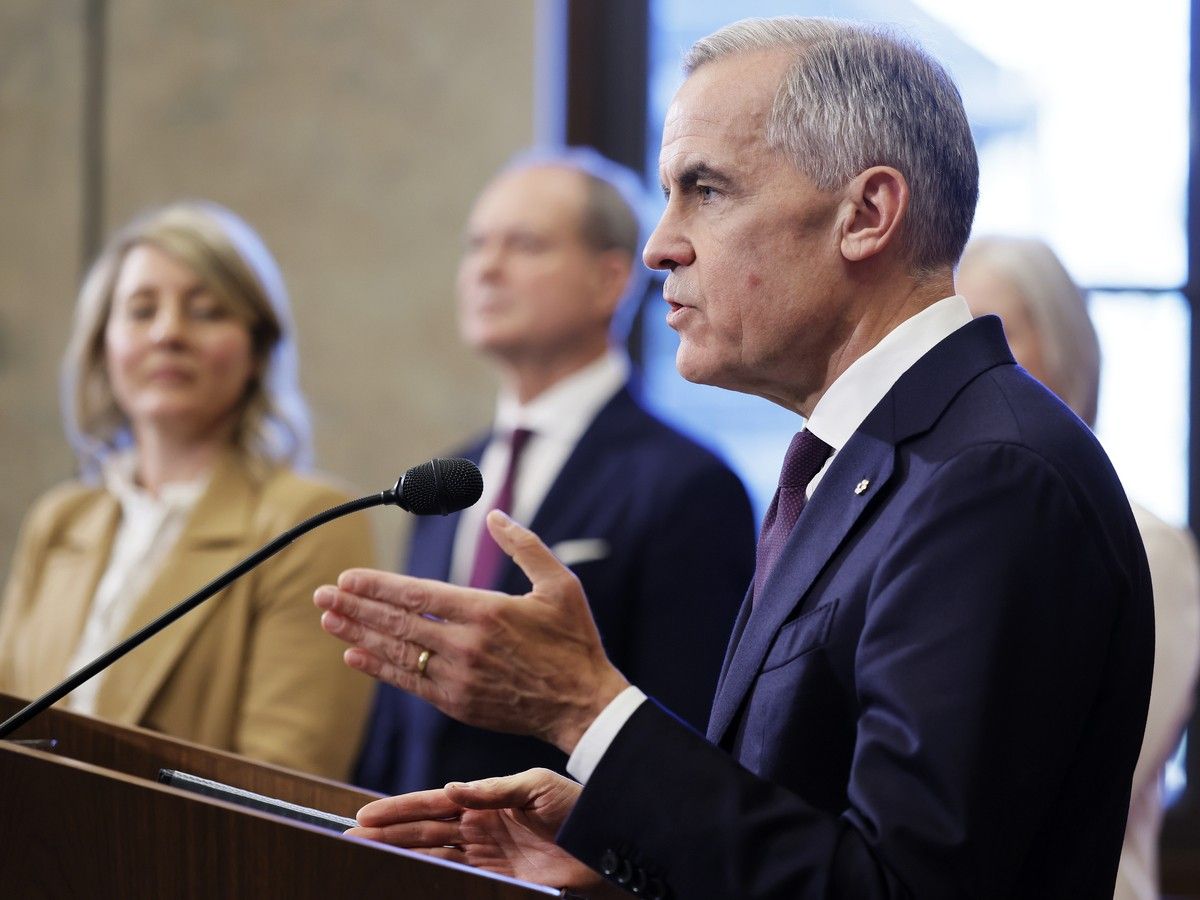
Photo via National Post

Labour unions set up ‘war room’ to fight Carney’s Bill C-39

Read the original at National Post ↗
Cite

Gowling, J. (2026, October 29). Labour unions set up ‘war room’ to fight Carney’s Bill C-39. National Post. https://nationalpost.com/news/labour-unions-set-up-war-room-to-fight-carneys-bill-c-39

Dated from the outlet's own feed. Check the original for its byline.

National Post · collected 2026-10-29 · by Jordan Gowling

Quick Summary

Canada’s labour unions have established a "war room" to coordinate their opposition against Bill C-39, which they claim undermines workers’ constitutional right to strike. The bill, introduced by the Liberal government, aims to streamline the approval process for major projects and modify collective bargaining rules for federally regulated employees. Critics argue that these changes could lead to prolonged labour conflicts and legal challenges, while proponents from business groups support it as a means to reduce work stoppages impacting supply chains and the economy.
Written by AI on 2026-10-31, from this article's own text only (the story summary below draws on all the coverage).

AI analysis

Story summary

Labour unions have established a "war room" to coordinate their response against Bill C-39, which they claim undermines workers' constitutional right to strike. The nearly 240-page bill, introduced by the Liberal government, aims to expedite regulatory processes for major projects and alter collective bargaining rules for federally regulated workers. Union leaders, including Canada Labour Congress President Bea Bruske, warn that changes to Section 107 of the Canadian Labour Code could lead to years of labour conflict and costly legal challenges. The unions argue that such measures will not help businesses achieve their goals but instead provoke unnecessary court battles with workers.

Written for “Labour Unions Fight Carney's Bill C-39 War Room” on 2026-11-01, grounded in this article and the 0 other(s) covering the same event.

Story

📰 Labour Unions Fight Carney's Bill C-39 War Room
Politics · 1 article(s) covering the same event.

Compared with similar articles

Nothing to compare against. No article is close enough to this one for the pipeline to have linked or judged the pair.
How this article was measured signals, leaning charts, publisher record, byline, topics and claims

Signals How these are calculated →

Claims extracted
20
sentences that state something as happening or true
Uncertain
0%
0 of 20 hedged ("reportedly", "may", "according to")
Leaning
withheld
no quote in the article backed the model's score
Publisher signals
60/100
National Post's corrections and hedging, across everything collected from it. Not a measure of accuracy.
Outlets on this story
1
Politics
Same framing elsewhere
1
articles that frame the event the way this one does
Analyzed 2026-10-31 · how these are computed

How this is being covered How these are calculated →

Article leaning vs. publisher reliability
Source leaning vs. consistency

Publisher

National Post · 1242 article(s) · 2 correction(s) detected
Running correction rate · 2 correction(s)

Who wrote this

Jordan Gowling
11 article(s) here · 1 carrying a prediction
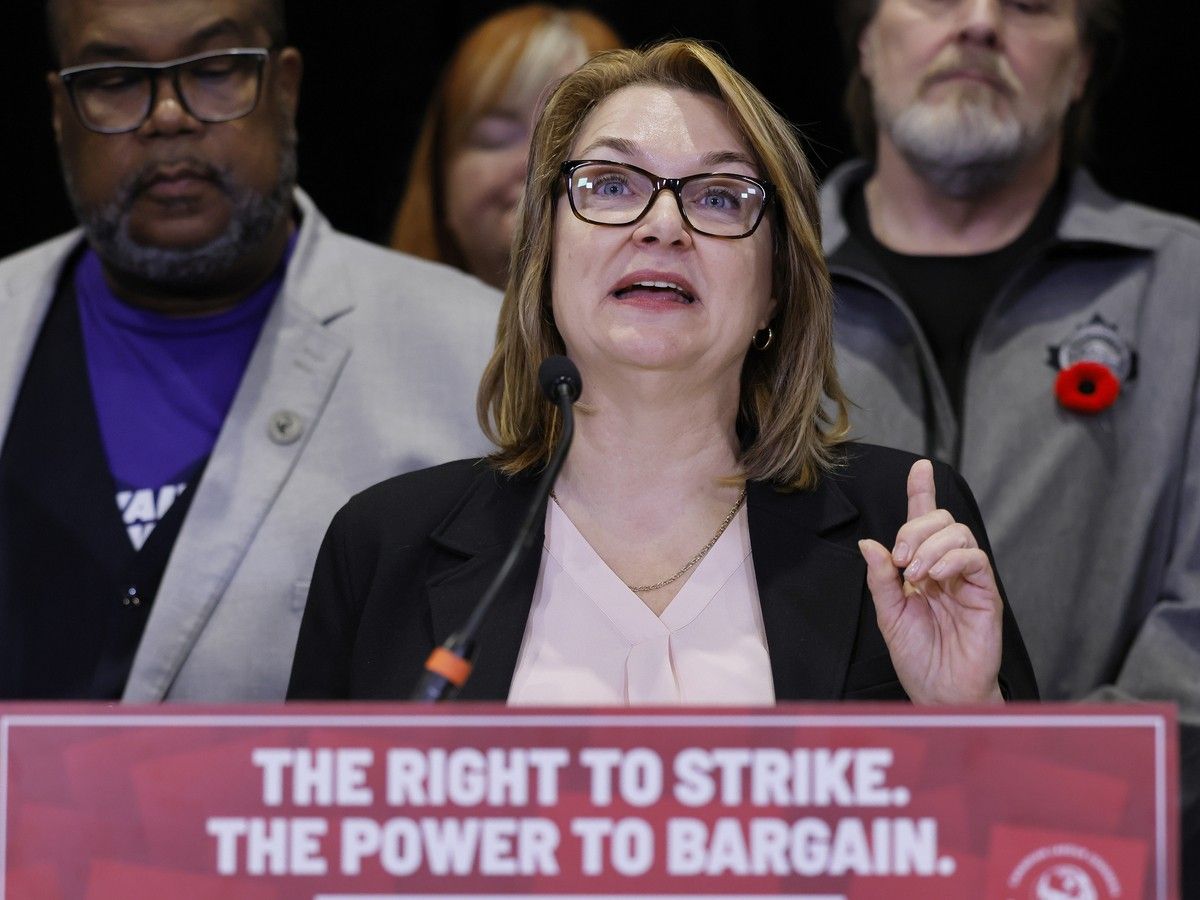
🔮 Canada’s labour union leaders announced on Thursday they will set up a “war room” to coordinate their response to the federal government’s latest major projects bill, which they argue undermines workers’ constitutional right to strike.
🔮 “Salaried employment is expected to average at least 627 full-time equivalent employees, compared with the required level of 603,” it read.
🔮 Prime Minister Mark Carney told reporters Monday that there has been a small intensification in trade talks with the United States, but the prospect of a deal will depend on the Americans moving closer to the Canadian position.
🔮 Carney, who is currently visiting Istanbul where he signed a strategic partnership with Turkey, said the timing of a trade deal remains up to the U.S. “We could sign it this afternoon if the U.S. were there,” said Carney, during a press conference on Friday.
🔮 OTTAWA – Prime Minister Mark Carney said his government will be holding the Palestinian National Authority to account on its commitment to hold legislative elections, after the president postponed the vote until next year.
🔮 Layoffs are also expected to take place at Stelco’s Lake Erie Works in Nanticoke, Ont.
🔮 “Conservatives will always fight against antisemitism and all forms of hatred: protecting our schools, communities and places of worship so that Canadians of all faiths can live in peace and security.”
🔮 The announcement comes on Oct. 1, the deadline for the project to be designated a project in the national interest, which would fast-track the pipeline’s regulatory journey.
🔮 Prime Minister Mark Carney expressed his disappointment with steelmaker Stelco’s decision to lay off hundreds of workers at its plant in Hamilton, Ont., while also promising his government will explore legal options to oppose what he described as the company’s betrayal of Canadian workers.
🔮 Parliament is set to return after a three-month long summer break on Monday and the Liberal government’s agenda will be jammed packed this fall.
Also by Jordan Gowling
Nothing else under this byline is closely related to this article, so these are simply their most recent.
All 11 articles by Jordan Gowling →

Topics

Canadian Conservative Liberal NDP Section 107

Subjects

Canadian NORP · 2× Conservative NORP · 2× Liberal NORP · 2× NDP ORG · 2× Bea Bruske PERSON · 1× Bruske PERSON · 1× Canada GPE · 1× Canada Labour Congress ORG · 1× David Chartrand PERSON · 1× OTTAWA GPE · 1×

Narrative

Bill C-39 has been dubbed the most consequential economic legislation in this Parliament by the Liberal government. The nearly 240-page bill is intended to speed up the regulatory process for the approval of major projects and make changes to collective bargaining for federally regulated workers.
framing: assertive · carried by 1 article(s) · first seen 2026-10-31
🔮 Canada’s labour union leaders announced on Thursday they will set up a “war room” to coordinate their response to the federal government’s latest major projects bill, which they argue undermines workers’ constitutional right to strike.
2026-10-31 · National Post
Labour unions set up ‘war room’ to fight Carney’s Bill C-39 · assertive framing

Claims (20 extracted, 0 hedged)

Canada’s labour union leaders announced on Thursday they will set up a “war room” to coordinate their response to the federal government’s latest major projects bill, which they argue undermines workers’ constitutional right to strike. asserted
they → announce → right
The unions warn the passing of Bill C-39’s changes on Section 107 of the Canadian Labour Code risks “triggering years of labour conflict and costly constitutional challenges.” asserted
passing → warn → conflict
“Businesses want to get goods moving, reach new markets and build major projects” said Canada Labour Congress President Bea Bruske, in a statement Thursday. asserted
Bruske → want → statement
“Years spent fighting workers in court won’t accomplish any of that.” asserted
Years → spend → that
Bruske made the announcement alongside David Chartrand, Canadian general vice-president of the International Association of Machinists and Aerospace Workers, and Marty Warren, national director of the United Steelworkers. asserted
Bruske → make → Steelworkers
Bill C-39 has been dubbed the most consequential economic legislation in this Parliament by the Liberal government. The nearly 240-page bill is intended to speed up the regulatory process for the approval of major projects and make changes to collective bargaining for federally regulated workers. asserted
bill → dub → workers
The bill has amassed critics, including unions, environmentalists and First Nations. asserted
bill → amass → unions
The legislation also clarifies Cabinet’s use of Section 107 of the labour code, by giving the labour minister “guardrails” on when they can intervene to end a lockout or strike, including a special mediator report and a national interest test. asserted
they → clarify → report
Section 107 has been used by the Liberal government to end strikes and work stoppages at ports, railways, Canada Post and airlines. asserted
Section → use → ports
It is currently facing court challenges for its use. asserted
It → face → use
Jobs Minister Patty Hajdu said the bill protects and strengthens workers’ right to strike, rather than weakening it. asserted
bill → say → it
She has also said the legislation ensures that Section 107 cannot be used pre-emptively. asserted
Section → say → ?
However, union leaders’ testimonies in front of the Bill C-39 legislative committee, argue that the bill allows the government to legitimize its use of a section in the labour code it has no business using in the first place. asserted
it → argue → place
Meanwhile, business and industry groups have applauded the bill’s changes to Section 107 of the code and bargaining, which they believe will help curb the amount of work stoppages that have a significant impact on Canadian supply chains and the economy. asserted
that → applaud → chains
Bill C-39 was passed at second reading, with help from the Conservative Party. asserted
C-39 → pass → Party
However, Conservative Leader Pierre Poilievre has promised his party will make amendments “to protect the rights of workers.” asserted
party → promise → workers
Opposition parties including the NDP and the Bloc Québécois voted against the bill. asserted
parties → include → bill
On Wednesday, Conservatives voted in favour of NDP MP Leah Gazan’s private member’s bill which would repeal Section 107 from the labour code altogether. asserted
which → vote → code
The bill was defeated by Liberal MPs. asserted
bill → defeat → MPs
Asked on Thursday to clarify his party’s position on Section 107, Conservative associate labour critic Colin Reynolds said “we need to look at it more thoroughly and ultimately that’s what we are looking forward to doing in committee.” asserted
we → ask → committee

💬Give feedback
🕘History 🎫Support