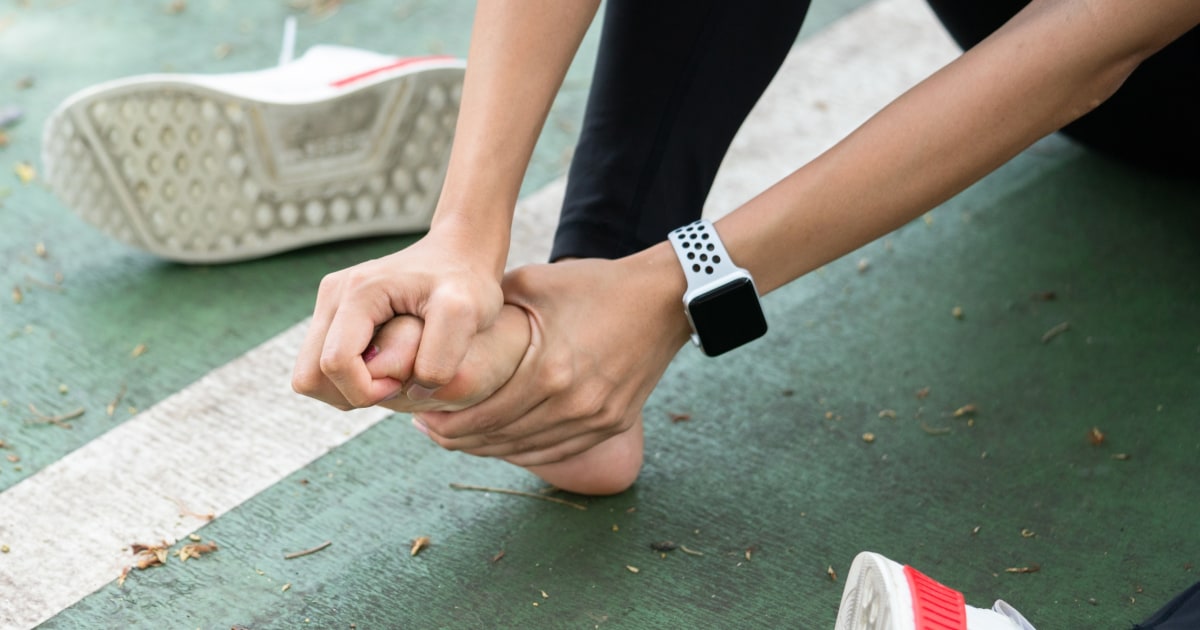
I’ll admit it: I’ve had three cases of runner’s toe this year, and I lost my toenail each time.
asserted
I → admit → toenail
It’s a common issue among runners, especially those logging long distances while marathon training or doing the race itself.
asserted
It → ’ → race
It’s totally treatable and completely preventable, according to doctors I talked to.
uncertain
I → ’ → doctors
Read on to learn how to treat runner’s toe and prevent it from happening again, whether you have a black and blue nail or one that fell off.
asserted
that → read → nail
Runner’s toe is a commonly used term for a subungual hematoma, a.k.a. bleeding under the nail bed, says Dr. Jacob Wynes, a podiatric surgeon and an associate professor of foot and ankle surgery for the University of Maryland School of Medicine.
asserted
Wynes → use → Medicine
You’ll see red, purple and black-ish discoloration under your toenail, which can sometimes be painful or cause throbbing pressure.
asserted
which → see → pressure
Runner’s toe may eventually lead to the affected toenails partially or fully falling off.
uncertain
toenails → lead → ?
The condition can impact any toe on your foot, but you most commonly get it on your longest toe, which is either the big toe or second toe for most people.
asserted
which → impact → people
While a subungual hematoma is colloquially called “runner’s toe,” runners aren’t the only people who get it: Anyone can, especially if they’re wearing poorly fitting shoes, says Wynes.
asserted
Wynes → call → shoes
You can also get a subungual hematoma if you drop something on your toe or stub it, says Dr. Kristin Hullings, an assistant professor of clinical orthopaedic surgery and sports medicine at Temple University’s Lewis Katz School of Medicine — in those cases, since the bleeding is caused by sudden rather than gradual trauma, see a doctor to make sure you didn’t also fracture or break your toe.
asserted
you → get → toe
What causes runner’s toe?
asserted
What → cause → toe
Runner’s toe is caused by repetitive trauma to the toenails during running, says Dr. Rull James Toussaint, the chief of the foot and ankle division in the department of orthopaedic surgery and sports medicine at the University of Florida College of Medicine.
asserted
Toussaint → cause → Medicine
Running downhill, high mileage, wearing loose shoes that cause your feet to slide around, wearing tight shoes that squeeze your feet, long toenails, heat buildup and sweat/moisture buildup all increase friction and pressure between your toes and the top or front of a shoe.
asserted
that → run → shoe
Eventually, this increased, forceful toe to shoe contact can rupture blood vessels in your nail bed, leading blood to collect under the nail plate, says Hullings.
asserted
Hullings → increase → plate
How do you treat runner’s toe?
asserted
you → treat → toe
Runner’s toe ranges in severity, so treatment plans do, too.
asserted
plans → range → severity
Below, I break down how to treat minor to moderate cases and the supplies you’ll need, according to doctors.
uncertain
you → break → doctors
Regardless of how severe your runner’s toe is, it’s crucial that you identify what caused it and correct it to prevent the condition from worsening or reoccurring — follow these prevention tips.
asserted
what → ’ → tips
Finally, if you have significant and/or worsening pain or swelling, see your doctor — there’s more information on that in the FAQ section here.
asserted
you → have → section
If your toenail is still intact
If you have blood buildup under your toenail, but it’s still intact, not loose, you aren’t experiencing pain and there’s no exposed nail bed, your runner’s toe will likely go away on its own as the nail grows out, says Toussaint.
asserted
Toussaint → have → own
Focus on preventing runner’s toe from getting worse or happening again — I included prevention tips here.
asserted
I → focus → tips
The toenail might eventually get loose and start shedding (falling off).
uncertain
toenail → get → ?
If your toenail partially or fully falls off
asserted
toenail → fall → ?
If your toenail partially or fully falls off, your goal is to keep the exposed nail bed clean and protected to prevent infection and promote regrowth, says Hullings.
asserted
Hullings → fall → regrowth
Exactly how you do so is a bit different in each circumstance: Because a fully detached nail leaves the nail bed completely exposed, it’s fragile and needs extra care, while a partially detached nail is more protected, so the process is simpler.
asserted
process → detach → care
That said, the core principals are the same — here’s what to do.
asserted
principals → say → what
Clean the affected toe
Whether you have a partially or fully detached nail, first cleanse the affected toe to remove any dirt, says Wynes.
asserted
Wynes → clean → dirt
You can use mild soap and water or a saline solution.
asserted
You → use → soap
NeilMed’s saline solution is made with 0.9 percent sodium chloride and water, making it a gentle yet effective wash.
asserted
it → make → chloride
It comes in a bottle with a nozzle that sprays in any direction, even when it’s upside down, which is helpful when reaching your toes.
asserted
which → come → toes
Trim away loose parts of the nail
If you have a partially detached toenail, leave the attached portion in place — it acts as a protective splint for the nail that’s left over, and promotes healing with a lower risk for infection, says Hullings.
asserted
Hullings → trim → infection
You should trim away loose, snagging edges, however, to prevent them from catching on socks, pant legs and sheets — you don’t want to end up with another open wound to worry about.
asserted
you → trim → wound
Trim as little as possible to preserve as much of the leftover nail as you can, but just enough to make sure there’s smooth edges, says Wynes.
asserted
Wynes → trim → nail
I find using a cuticle cutter to snip my partially detached toenail’s loose, sharp edges to be more efficient than using standard nail cutters.
asserted
using → find → cutters
The head of the cuticle cutters are smaller and narrower, allowing me to make tiny, precise clips and avoid getting rid of too much nail.
asserted
me → allow → nail
I’ve owned Tweezerman’s stainless steel Rockhard Cuticle Nippers for years and they’ve always stayed sharp.
asserted
they → own → years
You only need to put light pressure on the handle to make a trim, and they’re designed for right- and left-handed people to use.
asserted
people → need → trim
Apply a topical ointment
Applying a topical antibiotic ointment to the exposed nail bed prevents infection, keeps the area moist and promotes healing, says Wynes.
asserted
Wynes → apply → healing
Neosporin’s ointment uses three antibiotics to kill germs and prevent infection for up to 24 hours post-application, according to the brand.
uncertain
ointment → use → brand
Its formula also helps skin stay hydrated as it heals.
asserted
it → help → ?
…and 77 more, not listed.
 The Aporia