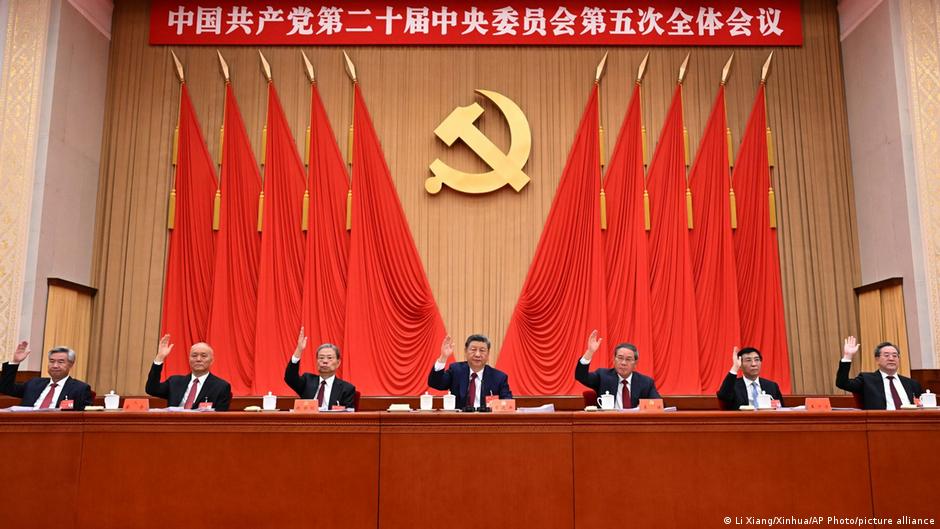
The top echelon of the Chinese Communist Party (CCP) held a four-day session behind closed doors in Beijing this week, with the talks focusing on strict leadership and discipline inside the ruling party.
asserted
talks → hold → party
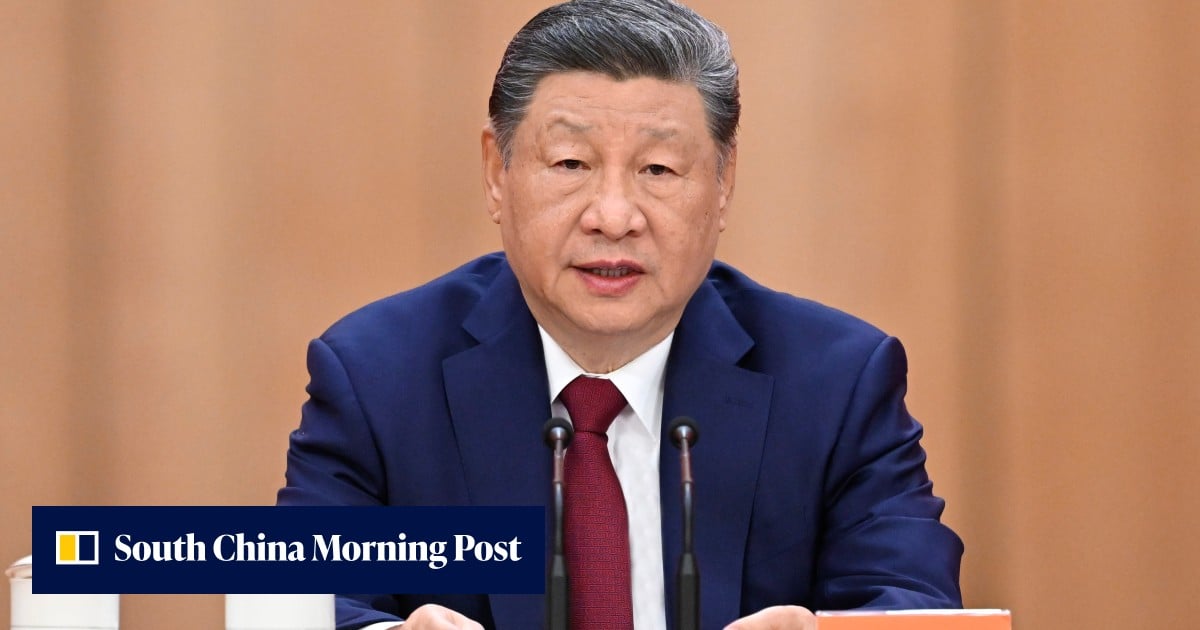
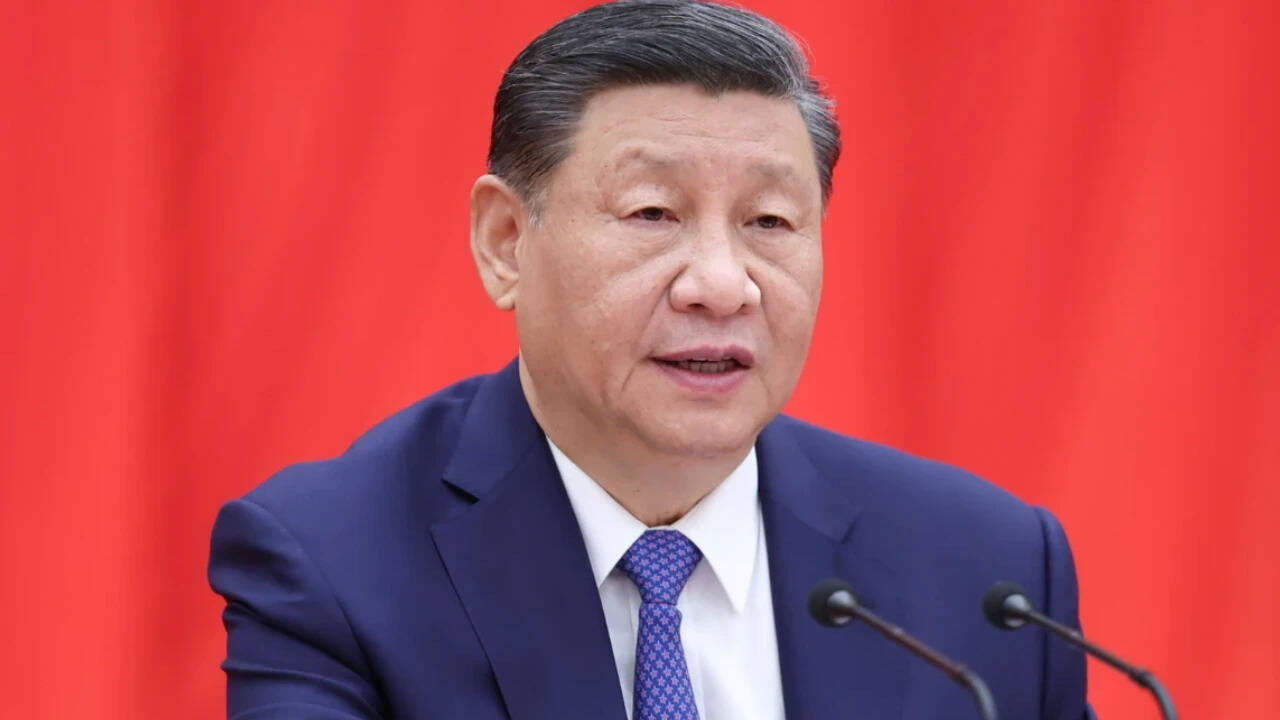
Xi Jinping, who is both the CCP's general secretary and the head of state in China, signaled he would not only deepen the existing anti-corruption effort, but also ensure that party officials demonstrate more loyalty and more initiative at all levels.
asserted
officials → signal → levels
According to the press release published on Thursday, the committee published a resolution praising the leadership and Xi Jinping for "enormous political courage and strong sense of responsibility" in tackling the issues of corruption and the weakening of the Party's governance.
uncertain
committee → accord → governance
The statement emphasized the need to "consistently advance comprehensive and strict Party leadership."
asserted
statement → emphasize → leadership
China's leadership fears instability
Kerry Brown, head of the Lau China Institute at King's College London, says Xi wants to minimize potential sources of instability.
asserted
Xi → fear → instability
Amid the current international tensions and the internal problems in China, including economic difficulties, Xi is pursuing his anti-corruption campaign and by demanding loyalty.
asserted
Xi → include → loyalty
"This is just going to intensify because if [the CCP] isn't disciplined and united, the party believes that it will go the same way as everywhere else in the world at the moment and become disunited and unstable," Brown told DW.
asserted
Brown → go → DW
'Two-faced' party members targeted by Xi
Xi also recently spoke of the necessity to identify and remove "two-faced functionaries" from the political system.
asserted
members → target → system
In his speech, which was published in mid-October by the party's Qiushi Magazine, Xi referred to people professing loyalty to the central leadership while working against its instructions and following their own "individualistic" goals.
asserted
Xi → publish → goals
The Chinese president described them as "political opportunists."
asserted
president → describe → opportunists
He also criticized party officials pretending to be "nice guys," as in, those who use harmony as an excuse to stand aside when problems arise.
asserted
problems → criticize → excuse
Brown points out that China's political system is now facing a crucial dilemma: If officials at all levels are now indeed expected to show innovation and courage in solving problems, the party's control could grow weak.
uncertain
control → point → problems
This could, in turn, boost corruption.
uncertain
This → boost → corruption
However, if CCP leaders lean more on the "strict Party leadership" aspect and ramp up the pressure on the rank-and-file, there is also the danger of suppressing initiative.
asserted
leaders → lean → initiative
This could go beyond the party itself and could even affect the military.
uncertain
This → go → military
The party is "very, very risk averse," Brown points out.
asserted
Brown → point → ?
China 'kind of works' in a messy world
Chong Ja Ian, a political scientist at the National University of Singapore, notes that party functionaries under Xi only have a limited space to make their own decisions.
Taking this into account, the party's push for individuals to show initiative is not necessarily a major issue.
"
asserted
individuals → work → initiative
I believe Xi would like for the officials to act proactively and decisively by conducting specific tasks; but he still doesn't want them thinking for themselves so much that they can question the agenda he prescribed.
asserted
he → believe → agenda
The 'proactivity' demanded by Xi is limited to the implementation, not decision-making," he told DW.
asserted
he → demand → DW
Brown adds that Xi seems to be ready to sacrifice a certain amount of operational flexibility to gain more control and stability.
asserted
Xi → add → control
"As long as you have unity, you live for another day, right?
asserted
you → have → day
But if you have disunity, you probably die the same day," he told DW.
asserted
he → have → DW
This approach "kind of works," at least at the moment, he added.
"It's not like the Chinese economy is disastrous.
asserted
economy → work → moment
"
Who will succeed Xi Jinping?
asserted
Who → succeed → Jinping
Outside observers are also focusing on Xi's future and possible successors for the 73-year-old leader.
asserted
observers → focus → leader
For now, Xi seems to be firmly in control.
asserted
Xi → seem → control
It is highly likely that he would be confirmed as the party's general secretary next fall, and could stay in that position until 2032.
uncertain
he → confirm → 2032
This is due to the changes pushed by Xi in 2018, which removed term limits for state and party leaders.
asserted
which → push → state
Both analysts told DW that the issue of succession plays a major role in Xi's push towards internal stability.
"There's always a danger of differences in the party fragmenting it, especially when the question of succession comes up," says Brown.
asserted
Brown → tell → succession
"And even though we don't expect to see a successor anytime soon, you know, there's going to be speculation about who might succeed Xi."
uncertain
who → expect → Xi
"He can't go on forever," he added.
asserted
he → go → ?
Political scientist Chong Ja Ian says that Xi currently holds all the power.
asserted
Xi → say → power
Therefore, the CCP leader could be afraid of his authority being undermined if he named a successor ahead of time.
uncertain
he → undermine → time
"On the other hand, a failure to make preparations on time could create a power vacuum that can cause major instability," he told DW.
uncertain
he → make → DW
"To solve this dilemma, the current leader needs to have both the necessary self-confidence and the readiness to take a step back — just like his predecessors did.
asserted
predecessors → solve → step
But not everyone has that kind of confidence.
asserted
everyone → have → confidence
"
This text was originally published in Chinese.
asserted
text → publish → Chinese
 The Aporia