Photo via The Independent

United States and Japan forge missile production alliance to counter China's power

Read the original at The Independent ↗
Cite

Calupitan, J., & Gomez, J. (2026, October 29). United States and Japan forge missile production alliance to counter China's power. The Independent. https://www.independent.co.uk/news/world/americas/japan-us-air-missiles-facility-manufacture-b3075832.html

Dated from the outlet's own feed. Check the original for its byline.

The Independent · collected 2026-10-29 · by Joeal Calupitan, Jim Gomez

Quick Summary

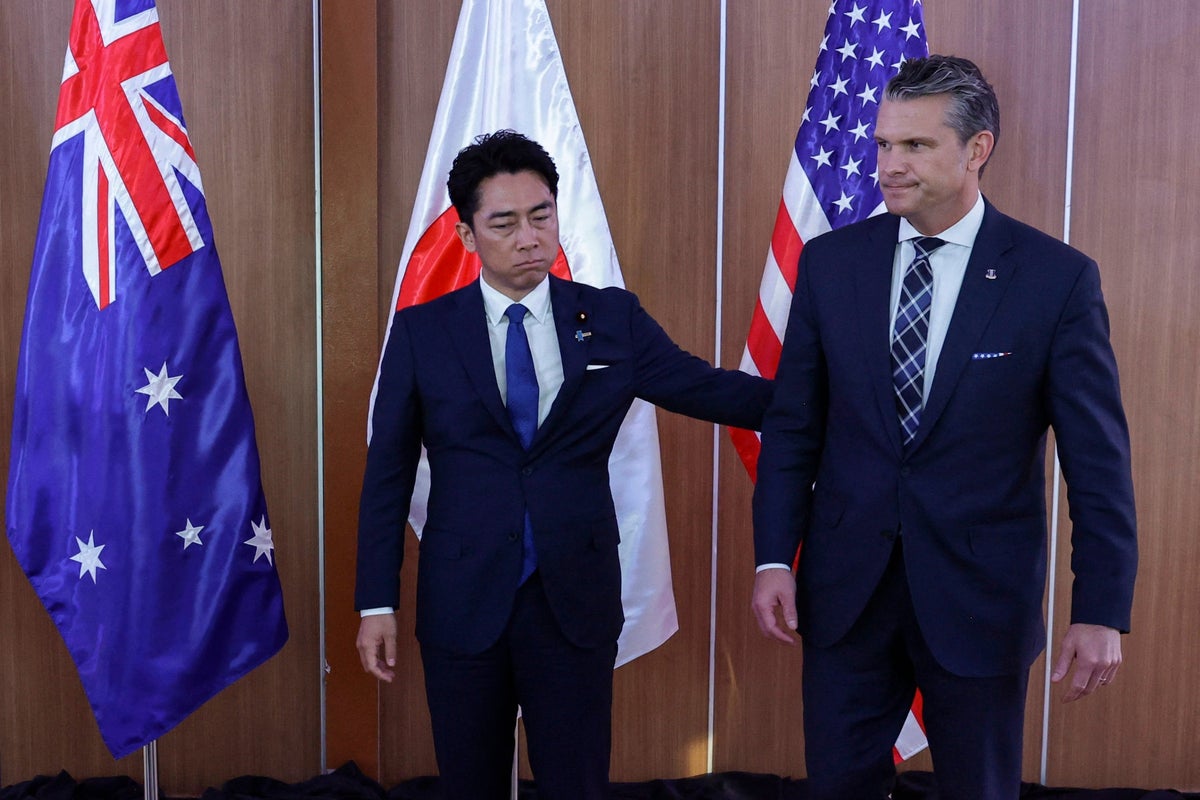
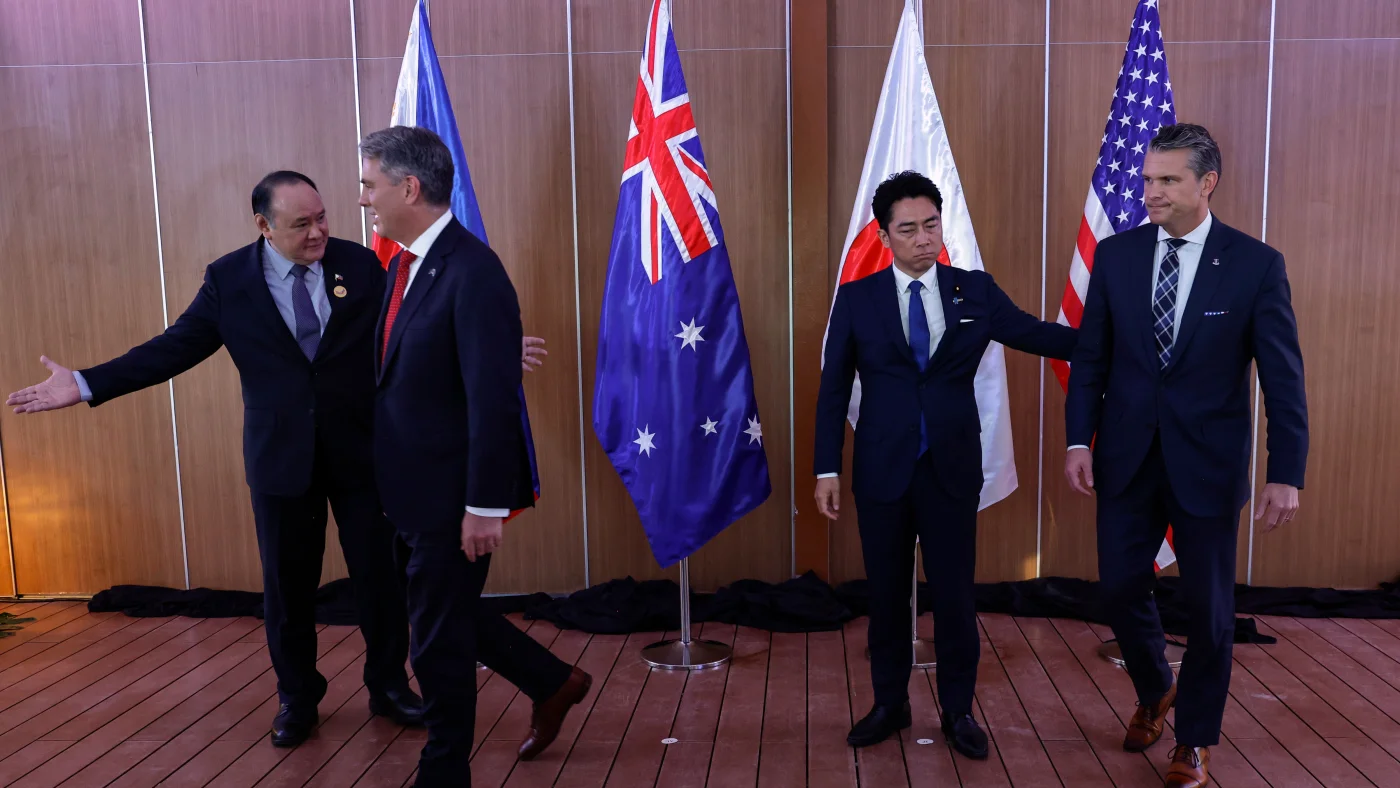
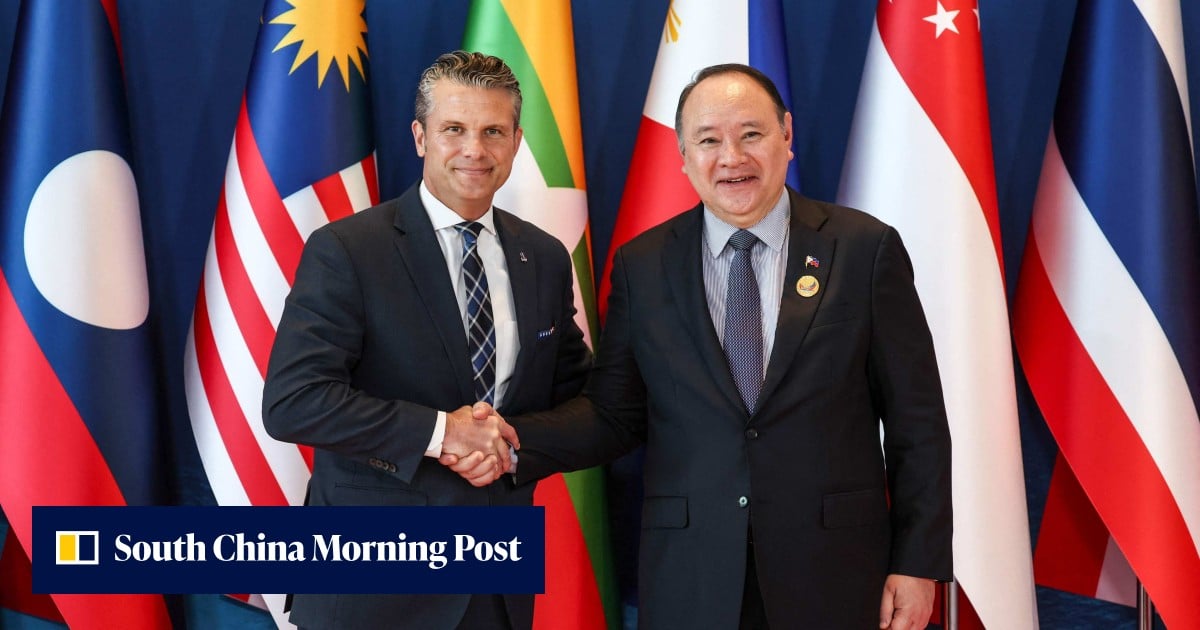
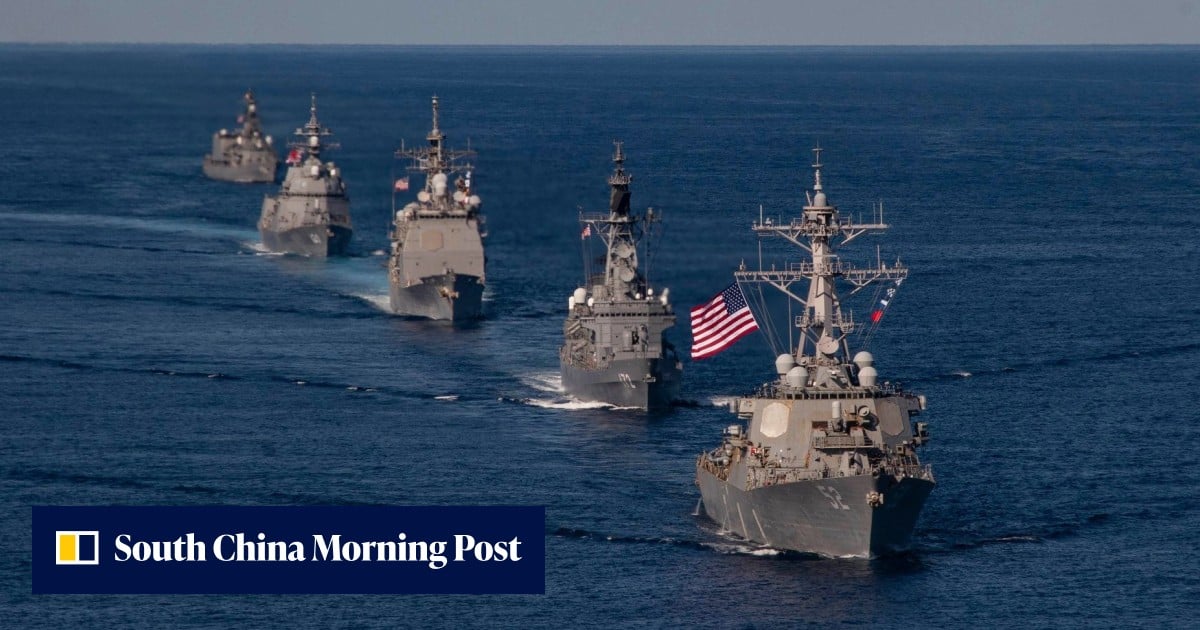
Japan and the United States have agreed to create a joint missile production facility in Japan to manufacture advanced air-to-air missiles, amid rising tensions with China. Japanese Defense Minister Shinjiro Koizumi made this announcement on Wednesday evening during a news conference in Cebu, Philippines, following talks with U.S. Defense Secretary Pete Hegseth at an annual meeting of Southeast Asian defense chiefs. The partnership, called "Operation Supercharge," aims to bolster the military capabilities of both countries and counter China’s growing naval presence near Japan's southwestern regions. Koizumi cited recent Chinese naval activity in the Osumi Strait as evidence of a challenging security environment and stressed the importance of maintaining surveillance on Chinese operations while accelerating Japan’s own defense efforts.
Written by AI on 2026-10-29, from this article's own text only (the story summary below draws on all the coverage).

AI analysis

Story summary

Japanese Defense Minister Shinjiro Koizumi and U.S. Defense Secretary Pete Hegseth announced on October 28, 2026, during a meeting of Southeast Asian defense chiefs in Cebu, Philippines, an agreement to establish a Japanese facility for joint production of AIM-120 Advanced Medium-Range Air-to-Air Missiles (AMRAAM). The missiles will be essential equipment for Japan’s US-made F-35 fighter jets. Koizumi also expressed concern over increased Chinese naval activity near southwestern Japan, noting that three Chinese destroyers and a coast guard ship had recently crossed the Osumi Strait, marking the first such fleet configuration observed by his ministry. This agreement is seen as part of broader efforts by the U.S. and Japan to counter China’s growing military assertiveness in Asia.

Written for “US and Japan Missile Production Alliance” on 2026-10-31, grounded in this article and the 2 other(s) covering the same event.

Story

📰 US and Japan Missile Production Alliance
Politics · 3 article(s) covering the same event. See how they differ ↓

Compared with similar articles

This article reads leans right and hedges 10% of its claims. Each row says how that neighbour differs.
NPR
⚖️ Leans right Hedges 2 of 32 claims Outlet record 60/100
South China Morning Post
Hedges 0 of 5 claims Outlet record 64/100
The Straits Times
⚖️ Leans right Hedges 1 of 6 claims Outlet record 66/100
“The articles describe related agreements but different specific events: Article A discusses an agreement on defense investments and strategic alignment, while Article B reports on a new missile production facility agreement.”
The Hindu
Hedges 1 of 16 claims Outlet record 77/100
“The articles describe different collaborations between the US and other countries in response to Chinese military assertiveness, occurring on consecutive days at a regional summit.”
South China Morning Post
Hedges 1 of 3 claims Outlet record 64/100
“While both articles mention US Defence Secretary Pete Hegseth and involve security cooperation, they describe separate events: one about funding for Philippines military cooperation without details, and another about a missile production alliance with Japan.”
South China Morning Post
⚖️ Leans right Hedges 1 of 2 claims Outlet record 64/100
“Article A discusses broader geopolitical concerns and actions taken by Japan in response to potential US political instability, while Article B reports on a specific missile production alliance agreement announced during a meeting between Japanese and U.S. defense officials.”
How this article was measured signals, leaning charts, publisher record, byline, topics and claims

Signals How these are calculated →

Claims extracted
20
sentences that state something as happening or true
Uncertain
10%
2 of 20 hedged ("reportedly", "may", "according to")
Leaning
Leans right
of the writing, not the subject · beta estimate
Publisher signals
59/100
The Independent's corrections and hedging, across everything collected from it. Not a measure of accuracy.
Outlets on this story
3
Politics
Same framing elsewhere
1
articles that frame the event the way this one does
Analyzed 2026-10-29 · how these are computed

How this is being covered How these are calculated →

Article leaning vs. publisher reliability
Source leaning vs. consistency

Publisher

The Independent · 3426 article(s) · 7 correction(s) detected
Running correction rate · 7 correction(s)

Who wrote this

Joeal Calupitan
2 article(s) here · 1 carrying a prediction
🔮 Koizumi pointed to the transit as "an example illustrating the challenging security environment in the region," adding that Tokyo will maintain close surveillance of Chinese naval operations while continuing to accelerate its own military buildup in southwestern Japan.
Also by Joeal Calupitan
Nothing else under this byline is closely related to this article, so these are simply their most recent.
Jim Gomez
3 article(s) here · 1 carrying a prediction
🔮 Koizumi pointed to the transit as "an example illustrating the challenging security environment in the region," adding that Tokyo will maintain close surveillance of Chinese naval operations while continuing to accelerate its own military buildup in southwestern Japan.
🔮 Dela Rosa last appeared in public when he went to the Philippine Senate briefly in May but fled after the international court in The Hague, Netherlands, made public a warrant for his arrest.
🔮 MANILA, Philippines (AP) — The Philippine government summoned the Chinese ambassador Monday to protest remarks it considered a threat to use force, saying it will not accept attempts to intimidate Philippine officials critical of Beijing’s actions in the disputed South China Sea. Foreign Secretary Ma. Theresa Lazaro relayed to Chinese Ambassador Jing Quan the Philippine government’s serious concern and “strong objection” to his statement on Thursday, the Department of Foreign Affairs in Manila said.
Also by Jim Gomez
Nothing else under this byline is closely related to this article, so these are simply their most recent.

Topics

China Chinese Japan Japanese U.S.

Subjects

Japan GPE · 6× Chinese NORP · 5× Hegseth PERSON · 5× U.S. GPE · 5× Koizumi PERSON · 4× Australian NORP · 3× China GPE · 3× Defense ORG · 3× Japanese NORP · 3× The United States GPE · 2×

Narrative

He emphasized that the position is "clear enough that our friends, our partners and potential adversaries understand precisely where the United States stands and that we will defend our interests and the interests of our allies and partners." Hegseth reassured the Philippines, Washington’s oldest treaty partner in Asia, that the Trump administration will maintain robust deterrence against Beijing’s actions in the South China Sea, a critical trade waterway claimed almost entirely by China. Australian Defense Minister Richard Marles pledged that Australian forces, alongside allies like the U.S., would continue upholding international law despite Chinese actions in disputed waters. Referring to an incident last year where a Chinese J-16 jet released flares near an Australian P-8 Poseidon surveillance plane, Marles said: "That doesn’t deter us from doing what we need to do and that’s essentially asserting the rules-based order here in the end of the Pacific."
framing: assertive · carried by 1 article(s) · first seen 2026-10-29
🔮 Koizumi pointed to the transit as "an example illustrating the challenging security environment in the region," adding that Tokyo will maintain close surveillance of Chinese naval operations while continuing to accelerate its own military buildup in southwestern Japan.

Claims (20 extracted, 2 hedged)

The United States and Japan have agreed to establish a production facility in Japan to jointly manufacture advanced medium-range air-to-air missiles, according to the Japanese defense chief. uncertain
States → agree → chief
The decision marks the latest step by the two allies to bolster security capabilities amid heightened concerns over China's growing military assertiveness across Asia. asserted
decision → mark → Asia
Japanese Defense Minister Shinjiro Koizumi announced the agreement during a news conference Wednesday evening in Cebu, a province in the central Philippines. asserted
Koizumi → announce → Philippines
His remarks followed a bilateral meeting with U.S. Defense Secretary Pete Hegseth on the sidelines of an annual gathering of Southeast Asian defense chiefs and their major Asian and Western counterparts. asserted
remarks → follow → chiefs
During a session on Thursday, Koizumi highlighted increased Chinese naval presence near southwestern Japan, noting that three Chinese destroyers alongside a coast guard vessel recently passed through the Osumi Strait south of Kyushu into the Pacific Ocean. asserted
destroyers → highlight → Ocean
He stated that it was the first time his ministry had recorded such a fleet configuration. asserted
ministry → state → configuration
Koizumi pointed to the transit as "an example illustrating the challenging security environment in the region," adding that Tokyo will maintain close surveillance of Chinese naval operations while continuing to accelerate its own military buildup in southwestern Japan. asserted
Tokyo → point → Japan
The annual meetings aim to prevent major conflict and deepen regional cooperation, though the U.S., China, and their respective allies frequently exchange criticisms during the proceedings. asserted
U.S. → aim → proceedings
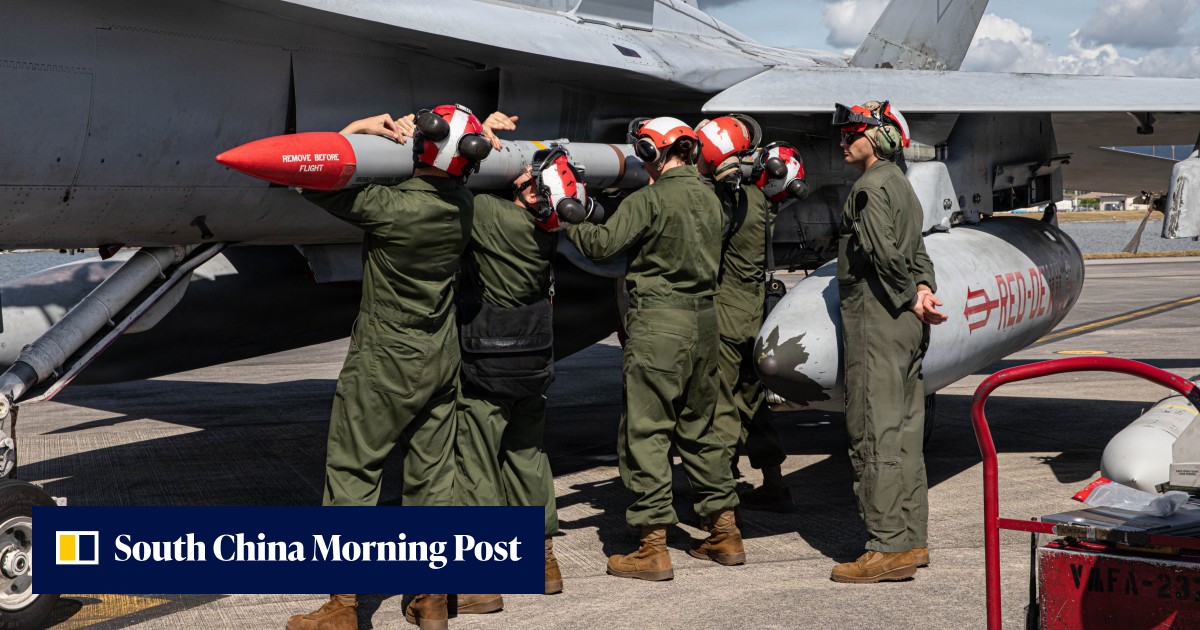
The joint manufacturing effort, titled "Operation Supercharge," will establish a final assembly and inspection plant in Japan for the Advanced Medium-Range Air-to-Air Missile, or AMRAAM. asserted
effort → title → Missile
Koizumi emphasized that these missiles are essential for F-35 stealth fighters, which are operated by both the U.S. and Japanese militaries. asserted
which → emphasize → militaries
Recounting his meeting with Hegseth, Koizumi said he "shared a sense of crisis … regarding the increasingly severe regional situation and we agreed to strengthen the deterrence and response capabilities of the Japan-U.S. alliance with greater speed and intensity than ever before." asserted
we → recount → speed
He added: "We reaffirmed the importance of a free and open international order based on the rule of law, which rejects any attempts to unilaterally alter the status quo through the use of force, coercion or other means." asserted
which → add → force
In a separate meeting with ASEAN defense ministers led by Philippine Defense Secretary Gilberto Teodoro Jr., Hegseth offered renewed assurances regarding Washington's commitment to regional stability. asserted
Hegseth → lead → stability
Without calling out Beijing by name, Hegseth outlined the U.S. approach. asserted
Hegseth → call → approach
"The approach we’re taking, we describe as strong, quiet and clear," Hegseth told the defense chiefs, adding it is "Strong enough to deter coercion and aggression, quiet enough to avoid needless escalation or public theatrics to let our actions speak for themselves." asserted
actions → take → themselves
He emphasized that the position is "clear enough that our friends, our partners and potential adversaries understand precisely where the United States stands and that we will defend our interests and the interests of our allies and partners." Hegseth reassured the Philippines, Washington’s oldest treaty partner in Asia, that the Trump administration will maintain robust deterrence against Beijing’s actions in the South China Sea, a critical trade waterway claimed almost entirely by China. Australian Defense Minister Richard Marles pledged that Australian forces, alongside allies like the U.S., would continue upholding international law despite Chinese actions in disputed waters. Referring to an incident last year where a Chinese J-16 jet released flares near an Australian P-8 Poseidon surveillance plane, Marles said: "That doesn’t deter us from doing what we need to do and that’s essentially asserting the rules-based order here in the end of the Pacific." asserted
that → emphasize → Pacific
He added: "Freedom of navigation on the high seas is profoundly important for Australia." asserted
Freedom → add → Australia
Territorial claims in the South China Sea remain contested among the Philippines, Vietnam, Malaysia, Brunei, and Taiwan, with frequent standoffs involving Chinese and Philippine coast guard and naval vessels. uncertain
claims → contest → vessels
Washington maintains that it is bound by treaty to defend the Philippines if Filipino forces, ships, or aircraft come under armed attack. asserted
forces → maintain → attack
Separately, Tokyo and Beijing remain locked in a maritime dispute over Japanese-controlled islands in the East China Sea. asserted
Tokyo → remain → Sea

💬Give feedback
🕘History 🎫Support