As the Trump Administration forges ahead with its campaign to dismantle the International Criminal Court (ICC) “brick by brick,” Europe is publicly showing a steady stream of support for the institution.
asserted
Europe → forge → institution
The E.U. last week awarded the court and its officials the Sakharov human rights prize, commending “the important work of the court in upholding international law and justice.”
asserted
E.U. → award → law
The prestigious recognition came after former ICC judge Navanethem 'Navi' Pillay on Oct. 9 was awarded the 2026 Nobel Peace Prize—an honor long coveted by President Donald Trump.
asserted
Pillay → come → Trump
Jørgen Watne Frydnes, chair of the Norwegian Nobel Committee, acknowledged the award was intended to send a “message to those who are attacking, undermin[ing]... the international rules-based system.”
asserted
who → acknowledge → system
Hours after Pillay’s win, U.S. Secretary of State Marco Rubio announced sweeping new sanctions against the ICC.
asserted
Rubio → announce → ICC
While previous U.S. sanctions had targeted the institution's prosecutors and judges, the new measures were aimed at “cutting off [the court’s] resources” by severing U.S. transactions with the court.
asserted
measures → target → court
Experts warn that the sanctions could have “extremely disruptive” implications for the court, especially in regards to financial support for case work, travel to the U.S. for judges, and the core functions of the institution itself.
uncertain
sanctions → warn → institution
“Leaving the political dimension to one side, the rule of law and the just resolution of disputes depends, to a large extent, on the body in question having all available evidence,” says Nabil Khabirpour, an affiliated lecturer in E.U. law and jurisprudence at Cambridge University.
asserted
Khabirpour → leave → University
“Organizations that are involved in working with witnesses, both on the ground and within the legal infrastructure, are likely to be affected.”
asserted
that → involve → infrastructure
The latest sanctions, which were announced with a six-month initial grace period, are part of a broader push by the Trump Administration to dismantle the institution it accuses of unfairly targeting the U.S. and Israel.
asserted
it → announce → U.S.
The Trump Administration has staunchly criticized the ICC over arrest warrants issued for Israeli leaders, including Prime Minister Benjamin Netanyahu, and former investigations into the actions of American soldiers in Afghanistan.
asserted
Administration → criticize → Afghanistan
The ICC is recognized as the world’s highest criminal court.
asserted
ICC → recognize → court
It draws its jurisdiction from the Rome Statute, a treaty that went into effect in 2002 and is ratified by 125 countries.
asserted
that → draw → countries
Neither the U.S. nor Israel is a state party to the Rome Statute, and therefore they do not recognize the jurisdiction of the court.
asserted
they → recognize → court
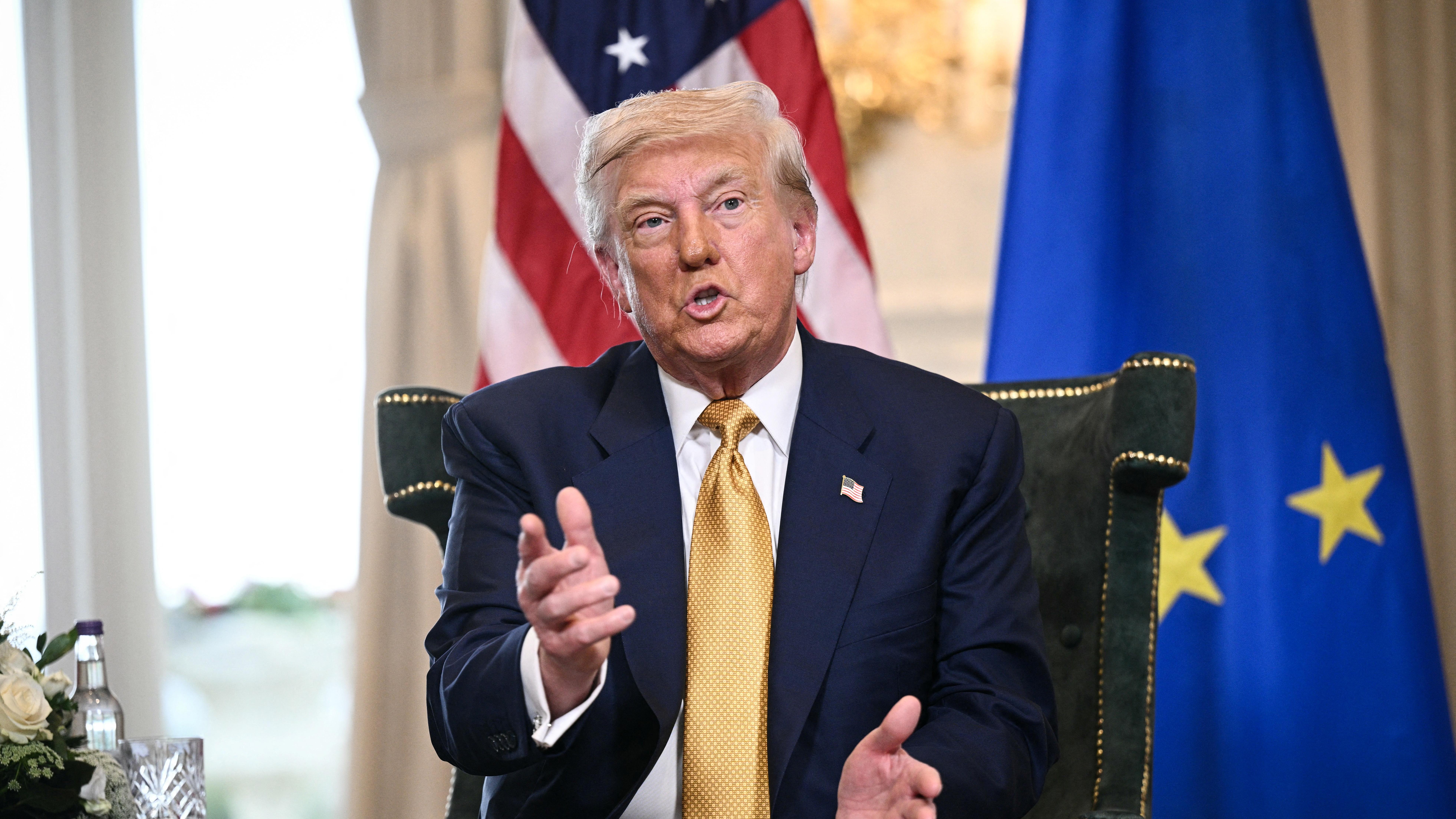
Trump has long complained that the ICC oversteps its authority and should not claim jurisdiction over U.S. citizens.
uncertain
ICC → complain → citizens
He amplified his campaign against the organization at the United Nations General Assembly in New York last month, taking time out of his 45-minute speech to publicly call on “all nations that are members of the ICC to officially resign from this rogue institution, immediately.”
asserted
that → amplify → institution
He said the U.S. is “opposed to the out-of-control institution known as the ICC” and “will never allow U.S. service members or anyone else to be investigated or given show trials by an anti-American tribunal with no jurisdiction over us.”
asserted
members → say → us
His call to action was swiftly rejected by European leaders.
German Foreign Minister Johann Wadephul, shortly after the speech, said: "We will, of course, not be doing that."
asserted
We → reject → that
In an interview with Germany's Deutschlandfunk radio station, he described the court as "an important institution” and said the issue is "one of the areas where we do indeed have to acknowledge a regrettable difference in policy from the U.S. Administration."
asserted
we → describe → Administration
Netherlands Prime Minister Rob Jetten also defended the ICC, asking how can anyone “possibly be opposed to prosecuting the very worst crimes?”
uncertain
anyone → defend → crimes
“I believe there can be only one response,” he continued, in his own U.N. address.
asserted
he → believe → address
“To say: 'hands off' the ICC, and all those other institutions that protect the international legal order.”
asserted
that → say → order
The remarks drew loud applause from attending delegates.
asserted
remarks → draw → delegates
Similarly, European Council president Antonio Costa stressed that the E.U. stands “firmly behind” the ICC and argued it’s “unacceptable to threaten or attack the International Criminal Court, its officials, and its staff.”
asserted
it → stress → Court
The European Union as an organization has since strongly criticized the U.S. sanctions against the ICC.
asserted
Union → criticize → ICC
In a speech on Oct. 20, E.U. policy chief Kaja Kallas said the most recent “misguided” measures were “against” European interests.
asserted
measures → say → interests
“The U.S. has already adopted individual sanctions, including against nine judges and the chief prosecutor of the ICC.
asserted
U.S. → adopt → ICC
The latest U.S. announcement [on Oct. 9] to impose institutional sanctions puts the entire court at risk,” she argued, adding that Brussels will use the next six months "to open dialogue and look for solutions.”
asserted
Brussels → impose → solutions
European lawmakers call for “concrete” action against U.S. sanctions
The European Commission’s choice to take time to consider how to counter the U.S. sanctions has fallen short of what many European lawmakers have called for.
asserted
lawmakers → call → what
Several leading MEPs, including Germany's David McAllister, chair of the Committee on Foreign Affairs, and France's Mounir Satouri, chair of the Subcommittee on Human Rights, issued a public statement on Oct. 9 calling for the Commission to activate a legislative shield referred to as the “blocking statute,” which would essentially prevent E.U. firms from complying with U.S. sanctions.
asserted
which → lead → sanctions
“The European Union must now demonstrate unwavering solidarity with the ICC and its personnel—not only with words, but also with concrete acts,” the leading Members of the European Parliament (MEPs) said in a joint statement.
asserted
Members → demonstrate → statement
“The European Commission must immediately trigger the E.U. blocking statute, shielding the court and European actors from the extraterritorial reach of these sanctions.
asserted
Commission → trigger → sanctions
Europe must stand firm in defence of international law and the rule of law."
asserted
Europe → stand → law
This request was bolstered as 58 MEPs reportedly sent a letter to European Commission president Ursula von der Leyen for the Commission to activate the measure.
uncertain
Commission → bolster → measure
According to the Commission, the purpose of the European Union’s blocking statute is to “protect E.U. operators from the extra-territorial application of third country laws.”
uncertain
purpose → accord → laws
The blocking statute came into force in 1996 in direct response to the U.S. sanctions against Cuba.
asserted
statute → block → Cuba
The aim of the measure was to protect economic operators within the E.U. from the effects of such extraterritorial sanctions, according to the Norton Rose Fulbright law firm.
uncertain
aim → protect → firm
As such, the blocking statute shields European economic operators from the application of the U.S. legislation and sanctions specified in the Annex to the E.U. blocking statute.
asserted
statute → block → statute
More recently, the E.U.'s updated blocking statute entered into force in response to U.S. sanctions on Iran after the U.S. withdrew from the nuclear agreement in 2018.
asserted
U.S. → update → 2018
Kallas has expressed an openness to the measure, but also advised caution when delivering her statement on European support for the ICC.
asserted
Kallas → express → ICC
…and 20 more, not listed.
 The Aporia