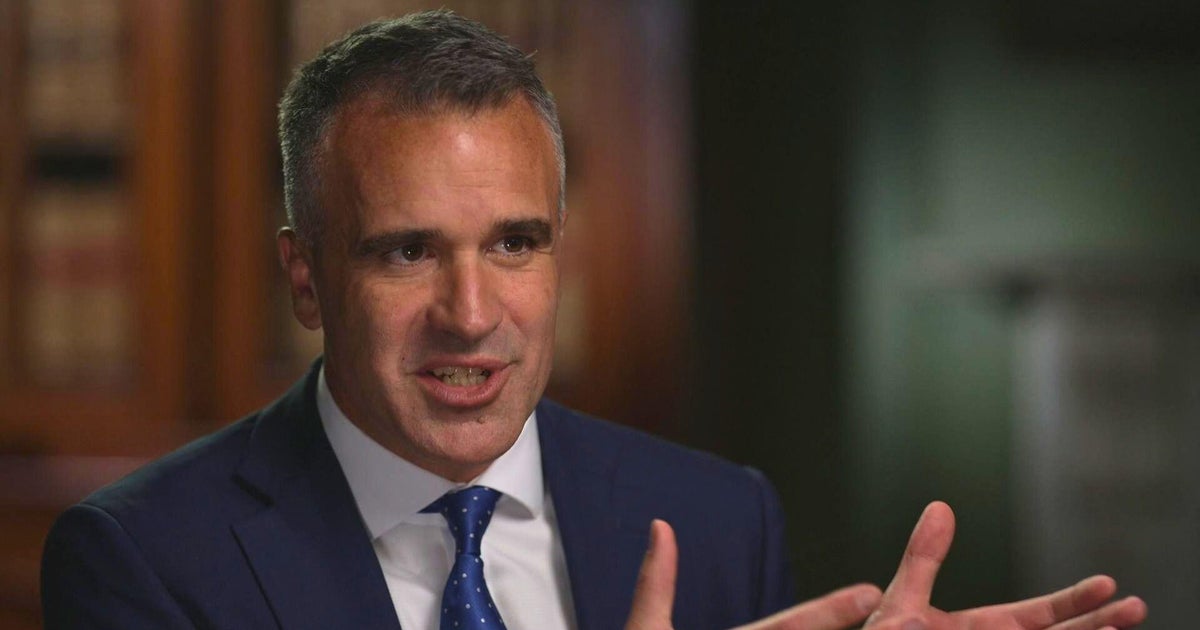
Photo via The Guardian

UK social media ban may lock out more than 100,000 teenagers without ID

Read the original at The Guardian ↗
Cite

editor, D. M. G. t. (2026, October 29). UK social media ban may lock out more than 100,000 teenagers without ID. The Guardian. https://www.theguardian.com/uk-news/2026/oct/29/id-social-media-ban-snapchat-tiktok-teenagers

Dated from the outlet's own feed. Check the original for its byline.

The Guardian · collected 2026-10-29 · by Dan Milmo Global technology editor

Quick Summary

Ofcom, the UK’s online watchdog, reported that more than 100,000 British teenagers aged 16 to 17 could be locked out of social media platforms next year if they lack official identification such as a passport or driving licence. The upcoming ban on under-16s accessing these services is expected to impact popular sites like Instagram and TikTok. Ofcom suggests that obtaining an official form of ID will likely become necessary for teens to access age-restricted online content, although the methods proposed include facial age estimation which may be inaccurate.
Written by AI on 2026-10-29, from this article's own text only (the story summary below draws on all the coverage).

AI analysis

Story summary

As of October 29, 2026, more than 100,000 British teenagers aged 16 to 17 risk being locked out of social media platforms like Instagram and TikTok due to a new under-16 ban set to take effect in the spring. According to Ofcom, the UK's online watchdog, approximately 150,000 teens in this age group do not possess a passport or driving license, which will likely be required for access to these services. The ban follows Australia’s model and aims to restrict social media use among younger individuals. However, Dame Melanie Dawes, the head of Ofcom, warned that determined children might find ways to bypass such restrictions, similar to what has occurred in Australia. To enforce the age verification, Ofcom proposes methods including official ID checks against live selfies or bank account verifications, with a likely need for an official ID as backup for facial age estimation techniques.

Written for “UK Social Media Ban Controversy” on 2026-10-29, grounded in this article and the 0 other(s) covering the same event.
Why this leaning score
This article does not take a side on a contested political question, so it has no leaning score. That is an answer rather than a gap: a match report or a rescue can be warmly or critically written without being left or right, and scoring it anyway is how approval of a subject gets recorded as a political position.
No political leaning scored for article 114800 · logged 2026-10-29

Story

📰 UK Social Media Ban Controversy
Politics · 1 article(s) covering the same event.

Compared with similar articles

This article reads unscored and hedges 18% of its claims. Each row says how that neighbour differs.
CBS News
Hedges 0 of 2 claims Outlet record 66/100
“The articles discuss different implementations and implications of age-restricted social media access laws in Australia versus the proposed UK legislation.”
How this article was measured signals, leaning charts, publisher record, byline, topics and claims

Signals How these are calculated →

Claims extracted
17
sentences that state something as happening or true
Uncertain
18%
3 of 17 hedged ("reportedly", "may", "according to")
Leaning
not political
takes no side on a contested political question
Publisher signals
66/100
The Guardian's corrections and hedging, across everything collected from it. Not a measure of accuracy.
Outlets on this story
1
Politics
Same framing elsewhere
1
articles that frame the event the way this one does
Analyzed 2026-10-29 · how these are computed

How this is being covered How these are calculated →

Article leaning vs. publisher reliability
Source leaning vs. consistency

Publisher

The Guardian · 2669 article(s) · 6 correction(s) detected
Running correction rate · 6 correction(s)

Who wrote this

Dan Milmo Global technology editor
8 article(s) here · 1 carrying a prediction
🔮 The head of Ofcom, Dame Melanie Dawes, warned that “motivated children” will seek to bypass the restrictions, as has been the case in Australia.
🔮 The donation from the world’s most valuable company comes as the UK government confirmed its AI Security Institute, which tests advance AI models, will be able to examine cutting-edge technology developed by companies such as OpenAI, Anthropic and Google before they are released.
🔮 The UK’s communications watchdog, Ofcom, is investigating whether the $1.9tn (£1.4tn) company infringed the Online Safety Act (OSA) by failing to carry out adequate checks on whether its Instagram Instants product could show illegal content or be accessed by children.
🔮 Pornhub’s age checking regime may not be “highly effective”, according to Ofcom, and could be in breach of online safety laws requiring strict measures to prevent under-18s from accessing sexually explicit content.
🔮 Nick Clegg could make approximately $40m (£30m) from the planned float of Nscale as the UK-based datacentre company prepares for a US stock market listing.
🔮 “The scope of what we could theoretically access was huge,” said researchers at Hacktron AI.
🔮 You would expect that they move quickly.
Also by Dan Milmo Global technology editor
Nothing else under this byline is closely related to this article, so these are simply their most recent.
All 8 articles by Dan Milmo Global technology editor →

Topics

Australia Australian Instagram Ofcom TikTok

Subjects

Ofcom ORG · 7× Australia GPE · 4× Australian NORP · 2× Instagram ORG · 2× TikTok ORG · 2× British NORP · 1× Britons NORP · 1× Facebook ORG · 1× Kick ORG · 1× Melanie Dawes PERSON · 1×

Narrative

Facial age estimation has been a popular measure for enforcing over-18 access to pornographic websites in the UK, which have been subject to stringent age checks since last year, indicating that this method will be used by social media plaforms as well. The UK government has not confirmed which platforms will be affected by the ban but it is expected to cover the same sites as in Australia.
framing: assertive · carried by 1 article(s) · first seen 2026-10-29
🔮 The head of Ofcom, Dame Melanie Dawes, warned that “motivated children” will seek to bypass the restrictions, as has been the case in Australia.
2026-10-29 · The Guardian
UK social media ban may lock out more than 100,000 teenagers without ID · assertive framing

Claims (17 extracted, 3 hedged)

More than 100,000 British teenagers risk being locked out of social media in the UK if they do not have a passport or driving licence when an under-16 ban is introduced next year. asserted
ban → risk → passport
Ofcom, the UK’s online watchdog, said about 150,000 16 to 17-year-olds do not own a passport or driving licence, which are likely to be needed to access age-restricted platforms. asserted
which → say → platforms
The Australia-style ban on under-16s accessing social media services including Instagram, TikTok and YouTube is due to come into force next spring. asserted
under-16s → access → force
The head of Ofcom, Dame Melanie Dawes, warned that “motivated children” will seek to bypass the restrictions, as has been the case in Australia. asserted
children → warn → Australia
On Thursday, Ofcom published an assessment of age verification measures that could underpin the ban, outlining four “highly effective” methods: checking a person’s official ID against a live selfie, a bank verifying an account holder’s age, an official digital ID service like the Young Scot card, or estimating someone’s age via a selfie. uncertain
bank → publish → selfie
However, the watchdog said a form of official ID will probably be needed as a “backstop” for other methods, such as facial age estimation – which could be inaccurate by several years. uncertain
which → say → years
Ofcom said a cohort of 16 to 17-year-olds could miss out as a result. uncertain
cohort → say → result
“This means that people without a form of photo ID will likely need to take steps to obtain one to access age-restricted services,” said the regulator. asserted
regulator → mean → services
An estimated 150,000 16 to 17 year-olds do not have a passport or driving licence, Ofcom said, leaving a substantial number of teens at risk of being cut off by the ban. asserted
Ofcom → estimate → ban
More than nine out of 10 Britons over 16 have passports or driving licences. asserted
Britons → have → passports
Facial age estimation has been a popular measure for enforcing over-18 access to pornographic websites in the UK, which have been subject to stringent age checks since last year, indicating that this method will be used by social media plaforms as well. The UK government has not confirmed which platforms will be affected by the ban but it is expected to cover the same sites as in Australia. asserted
it → enforce → Australia
In March, Australia’s eSafety commissioner said a “substantial proportion” of Australian children under the age of 16 had flouted the ban since it was imposed in December last year. asserted
it → say → December
A survey of 900 Australian parents found around a third said their children still had one or more social media accounts after the ban, compared to 49% before the laws. asserted
children → find → laws
Ofcom’s chief executive acknowledged the risk of evasion and said the ban will be a “huge cultural shift for the UK”. asserted
ban → acknowledge → UK
“We should expect that motivated children will seek to bypass the restrictions – just like alcohol laws can’t completely eradicate underage drinking – but there’ll be ways for platforms to mitigate this risk,” said Dawes. asserted
Dawes → expect → risk
“This will be a huge cultural shift for our society, so it’ll take time to adjust, and everyone will have a part to play.” asserted
everyone → take → part
The government is expected to introduce regulations confirming the ban by the end of the year, with Ofcom also opening a consultation on the best age verification methods before issuing official guidance on which measures to adopt. asserted
Ofcom → expect → measures

💬Give feedback
🕘History 🎫Support