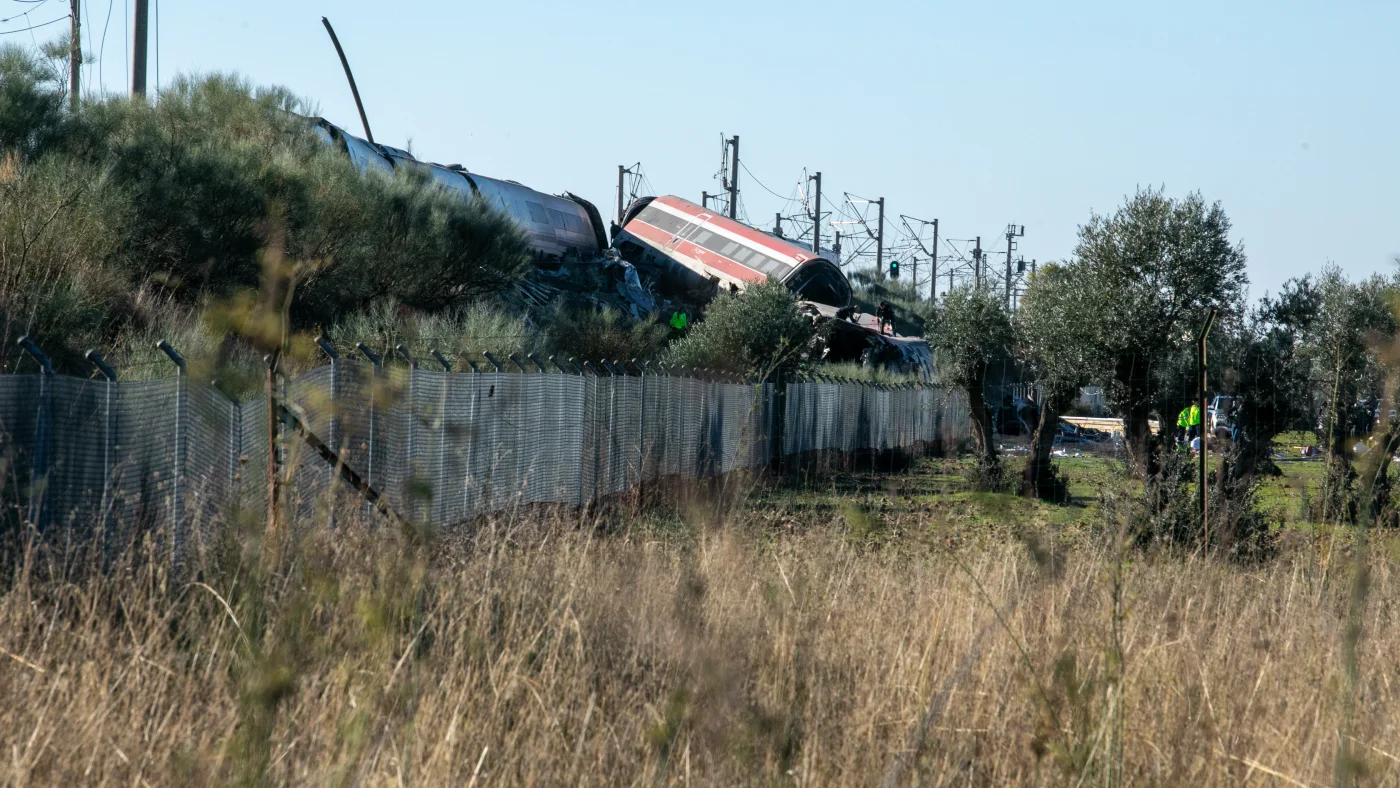
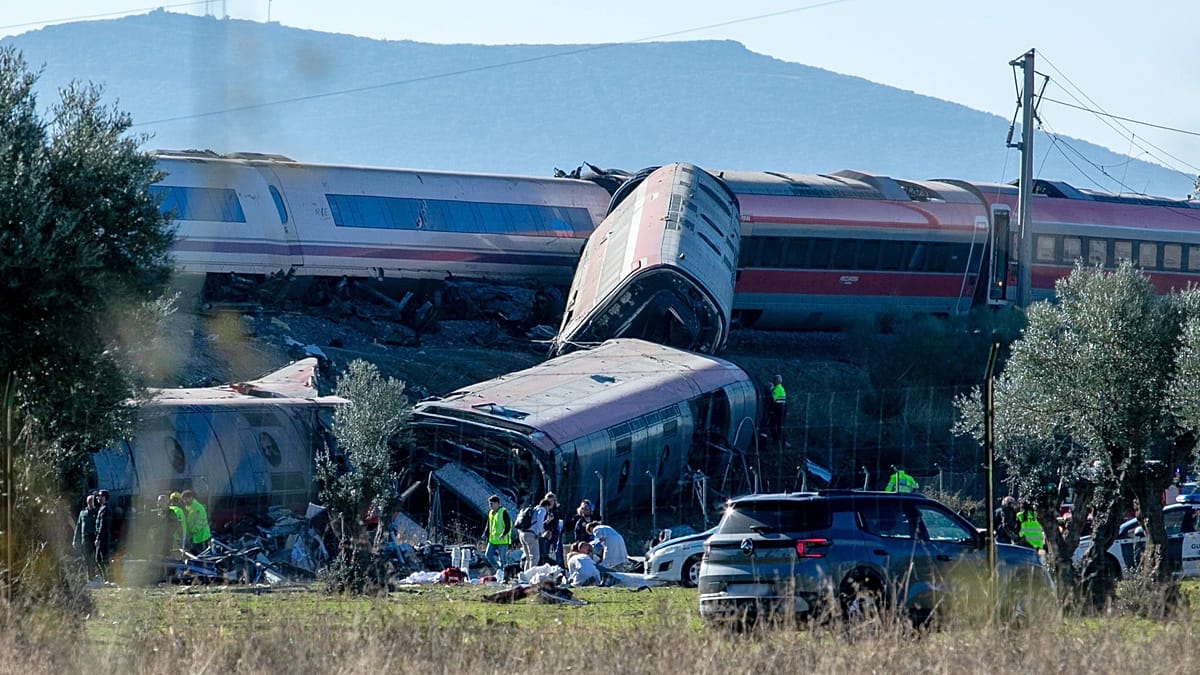
Josimar Medina woke a little before 9am on Wednesday to find himself airborne and hurtling through his carriage on the fast train from Madrid to Seville.
asserted
himself → wake → Seville
“I remember flying through the air and looking for my girlfriend, who was also shooting through the air,” said Medina, a 37-year-old tourist from the northern Peruvian city of Chiclayo.
asserted
Medina → remember → Chiclayo
Once he landed, he looked around and realised just how lucky he and his girlfriend, Vitoria Maia, had been.
asserted
he → land → ?
“I saw people with cuts, people covered in blood, people missing limbs, and I saw one person who had nothing left below the chest,” said Medina.
asserted
Medina → see → chest
“I saw people with their heads crushed and people with mutilated arms
asserted
heads → see → arms
The Peruvian stood recounting the details of Wednesday’s deadly rail crash, in which at least 68 people were killed and dozens more were injured, wearing a light brown T-shirt stained with the blood of a young American man he had helped move to safety.
asserted
he → stand → safety
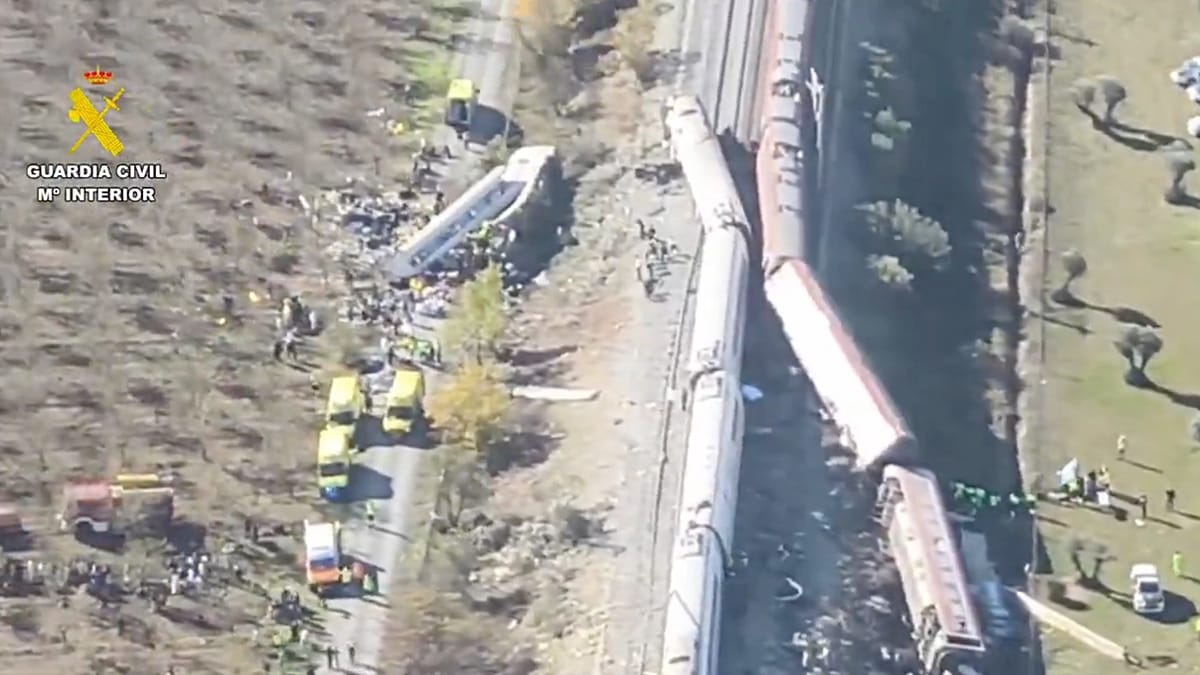
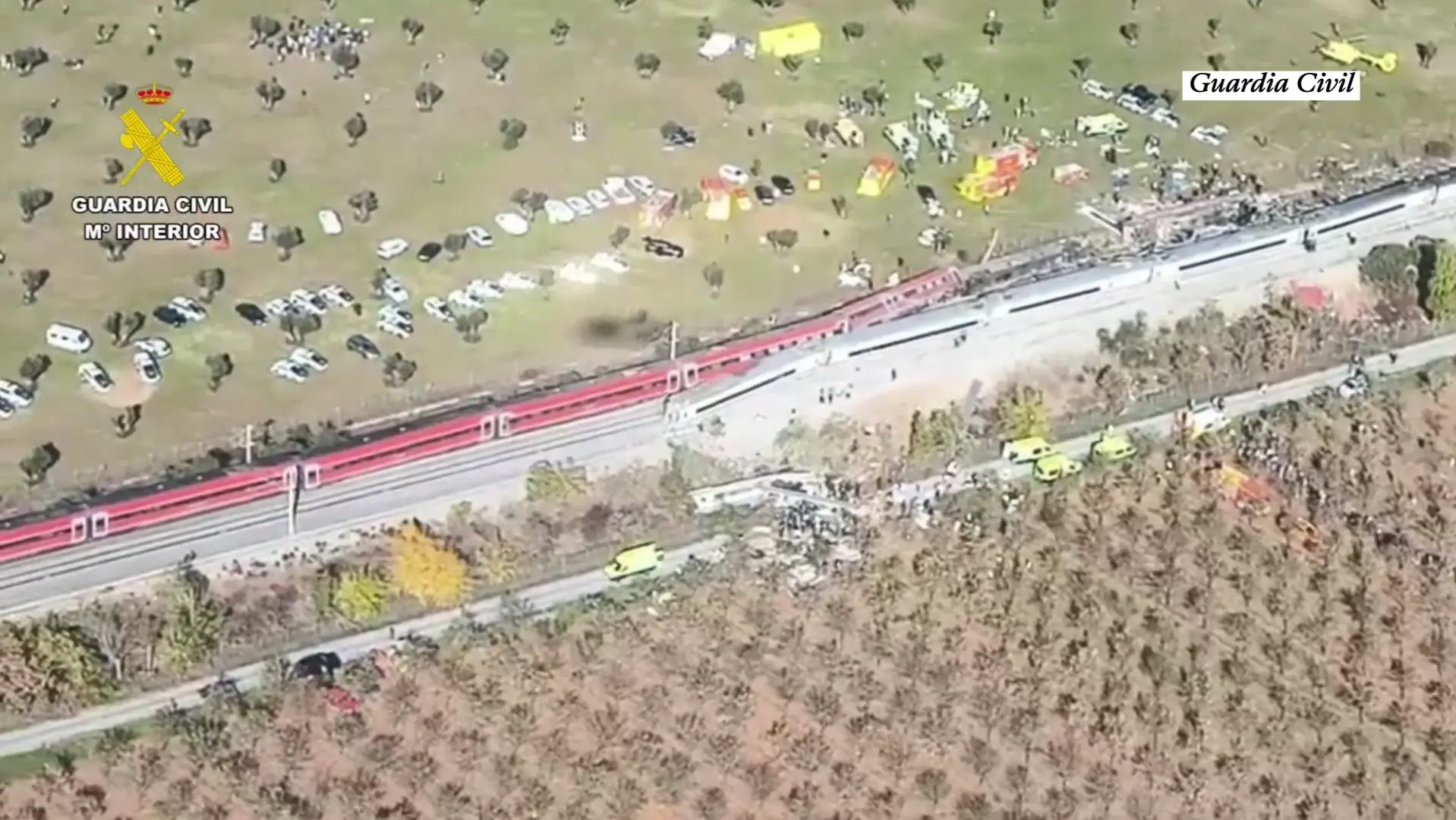
Medina and Maia had been in the seventh carriage of the state-operated Renfe train that smashed into the back of a train run by the private Iryo company on the same line from the capital to the south of Spain.
asserted
that → operate → Spain
As it was, the couple climbed out of the train and helped the injured while they waited for medics and Guardia Civil officers to arrive at the scene of the crash, which took place amid vineyards and olive groves near the small town of Urda in the central region of Castilla-La Mancha, near the city of Toledo.
asserted
which → climb → Toledo
Within hours of the crash, Urda had been transformed into a frantic emergency response centre, with a local sports centre pressed into service as a triage post for the walking wounded.
asserted
centre → transform → wounded
Cars, vans and trucks from the emergency services in Castilla-La Mancha and neighbouring Madrid crowded the streets.
asserted
Cars → neighbour → streets
Fredrich and Arabella Barilea, a couple from the Philippines who now live in Dubai, were on the Iryo train, and Fredrich was sent flying by the impact.
asserted
Fredrich → live → impact
“One guy was shouting, ‘Get out! Get out!
asserted
guy → shout → ?
Another train could hit!” said Fredrich.
uncertain
Fredrich → hit → ?
“We saw all the people were also getting off.
asserted
people → see → ?
Many of them had head injuries and were covered in blood.
asserted
Many → have → blood
We just got as far away from the train as we could.”
uncertain
we → get → train
Eventually, buses arrived to ferry the lightly injured survivors to Urda – although the Barileas said they were too shocked and confused to know where exactly they had been brought.
asserted
they → arrive → Urda
“It all happened in a split second,” said Arabella.
asserted
Arabella → happen → second
“The table we were sitting at just disappeared in the crash.
asserted
we → sit → crash
I feel like we’re on our second life.
asserted
we → feel → life
You never know what could happen.
uncertain
what → know → ?
We’re very grateful.”
asserted
We → ’re → ?
Around the couple, people queued patiently on the street as they waited to board coaches.
asserted
they → queue → coaches
Wearing torn and bloodstained clothes and, in some cases, bandages on their heads, they stared, mute and uncomprehending.
asserted
they → wear → heads
Spain may have been in mourning, as the prime minister, Pedro Sánchez, said during his visit to Urda, but many of those fortunate enough to survive Spain’s second fatal rail crash in less than a year were still too deep in shock to begin grieving.
uncertain
many → say → shock
Ata Yelkaya, a young tourist from Turkey, usually takes the bus when he travels around Spain.
asserted
Yelkaya → take → Spain
On Wednesday, however, he had decided to try the Iryo.
asserted
he → decide → Iryo
Sleepy and assuming his train had come to a halt at a station, he had switched off his tablet and pulled up his hood in preparation for a nap.
asserted
he → assume → nap
At 8.53am, he felt what he would later learn was the impact of the Renfe train smashing into the carriages behind him.
asserted
train → feel → him
“I woke up with a bump and hit my head on the seat in front of me,” he said, “I looked across at an elderly couple near me and saw that the woman had a cut in her eyebrow.
asserted
woman → wake → eyebrow
That’s when I knew something serious had happened.”
asserted
something → ’ → ?
When he looked out of the window, he saw the carriages behind his – carriage No 5 – had come off the track and that many people had been killed or injured.
asserted
people → look → track
“Everyone was in shock but I tried to help other people get off the train,” he said.
asserted
he → try → train
“I’m from Turkey and I lived through the 2023 earthquake there, so I stayed calm and tried to think about what to do and how to get out.
asserted
I → ’m → what
It was only when I got out and saw some of the dead people that it hit me.
asserted
it → get → me
I think everyone was in shock; too shocked even to panic or to scream.”
asserted
everyone → think → shock
Wednesday’s disaster stirs memories of the Adamuz rail crash in January, in which 46 people died.
asserted
people → stir → which
Once again, a small town has found itself at the centre of a national disaster and, once again, local people have rallied to help, bringing food and water to a hall that had been set up as a centre for those searching for their relatives.
asserted
that → find → relatives
But, as also happened at Adamuz, the solidarity and kindness on display is likely to turn to anger over the coming hours as people seek answers as to how one of Europe’s most modern and extensive high-speed rail networks could experience two deadly accidents that have between them claimed at least 114 lives in the space of just 10 months.
uncertain
that → happen → months
With a snap general election just a month away, many voters could use their votes to register their fury over another rail disaster.
uncertain
voters → use → disaster
…and 3 more, not listed.
 The Aporia