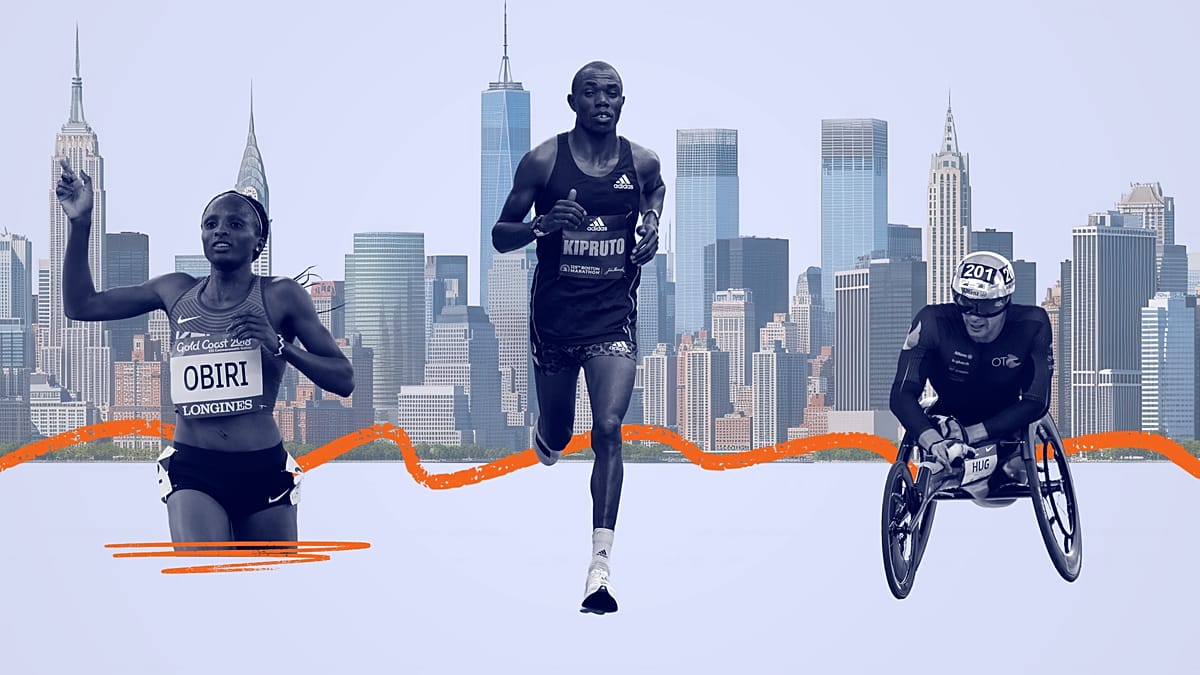
New York will become the running capital of the world this Sunday.
asserted
York → become → world
On November 1, nearly 60,000 people will line up at the start of the NYC Marathon, one of the world’s most iconic races.
asserted
people → line → races
But what’s getting people running?
asserted
people → get → ?
Running is entering a new golden age.
asserted
Running → enter → age
NYC Marathon is the second largest marathon ever held in the world, with a record-breaking 59,226 finishers last year.
asserted
Marathon → hold → finishers
This year, that record is expected to be broken.
asserted
record → expect → ?
More than two million spectators will watch the marathon from along the course.
asserted
spectators → watch → course
For most runners, the goal will be to achieve something they have spent months preparing for.
asserted
they → achieve → something
Running is becoming more popular every year, and securing a place in one of the world's major marathons is becoming almost as difficult as winning the lottery.
The numbers are astonishing.
asserted
numbers → become → lottery
A record number of people have applied to take on the race: over 240,000 applications from 160 countries, more than ever before.
asserted
number → apply → countries
Perhaps that is also why taking part in such an event is becoming increasingly popular: 60,000 people get to experience a race alongside world record holders.
asserted
people → take → holders
Champions Hellen Obiri of Kenya, Benson Kipruto of Kenya and Marcel Hug of Switzerland will return this year to defend their New York City Marathon titles.
asserted
Obiri → return → titles
What's getting people running?
asserted
people → get → ?
When you dig into what's happening, some aspects really stand out.
asserted
aspects → dig → ?
The running boom, fuelled by Gen Z and Social Media, is one that few people saw coming.
asserted
people → fuel → Z
The younger generations are choosing to connect: they're logging off and lacing up.
asserted
they → choose → ?
They are turning away from passive scrolling toward active, real-world experiences.
asserted
They → turn → experiences
And for them, running is the perfect way to find a community and connect with others, the report shows.
asserted
report → find → others
Gen Z is 75% more likely than Gen X to name racing as their motivation for exercise, according to the Strava data.
uncertain
Z → name → data
Running clubs are also booming, with their numbers on Strava almost quadrupling over the last year.
asserted
numbers → boom → year
For most of them, their emphasis isn't usually on super-fast times but rather on being inclusive, enjoying a run together and a chat.
asserted
emphasis → enjoy → run
A race that began with a one-dollar entry fee
At its first edition on September 13 in 1970, the New York Marathon consisted of four laps within the Central Park.
asserted
Marathon → begin → Park
Of the 127 runners who entered, only 55 finished.
asserted
55 → enter → runners
The entry fee was one dollar, and the entire event had a budget of $1,000.
asserted
event → have → 1,000
In 1976, the course was extended to all five boroughs, turning the race into a citywide event.
asserted
course → extend → event
This year's edition marks 50 years since that major change.
asserted
edition → mark → change
Organisers have also set the fundraising goal: $100 million.
asserted
Organisers → set → goal
The 42.195-kilometre course crosses the city's five boroughs: Staten Island, Brooklyn, Queens, the Bronx and Manhattan.
asserted
course → cross → boroughs
The race starts on Staten Island and finishes in Central Park.
asserted
race → start → Park
Everyone follows the same course, but each runner has their own goal and pace.
asserted
runner → follow → goal
 The Aporia