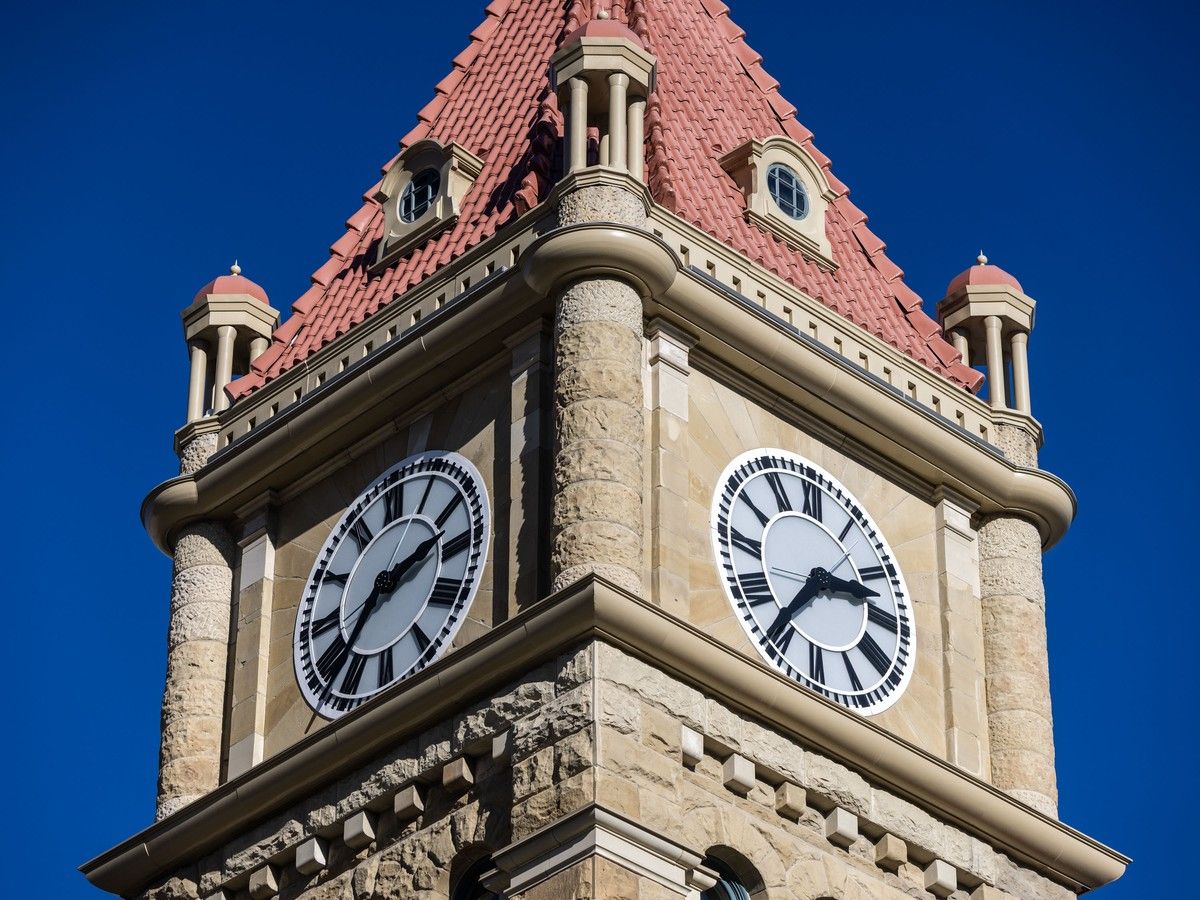
Quebec plans to end twice-a-year time changes

Read the original at The Globe and Mail ↗
Cite

Paquette, M. (2026, October 28). Quebec plans to end twice-a-year time changes. The Globe and Mail. https://www.theglobeandmail.com/canada/article-quebec-to-end-time-change/

Dated from the outlet's own feed. Check the original for its byline.

The Globe and Mail · collected 2026-10-28 · by Mathieu Paquette

Quick Summary

Quebec Premier Paul St-Pierre Plamondon announced plans to end the twice-yearly time changes, stating that this will likely be the last year Quebeckers set their clocks back for daylight saving time this weekend. The government intends to consult experts and hold parliamentary hearings before deciding whether to permanently adopt standard or daylight time. A 2024 online consultation showed that 91% of participants wanted to end the practice, with 72% preferring permanent daylight time. However, recent analysis in the Canadian Medical Association Journal suggests health benefits favor permanent standard time due to better alignment with natural body rhythms.
Written by AI on 2026-10-29, from this article's own text only (the story summary below draws on all the coverage).

AI analysis

Story summary

Paul St-Pierre Plamondon, leader of the Parti Québécois, announced on October 28, 2026, that if elected, he plans to abolish the twice-yearly clock changes in Quebec starting next year. This decision follows a public consultation by the previous CAQ government in 2024 where nearly 91% of respondents supported ending the practice. St-Pierre Plamondon also stated on social media that this upcoming weekend will likely see the last time change in Quebec, as the province moves towards either permanent standard or daylight saving time based on further expert consultations scheduled for the coming months. The decision aims to alleviate health issues and adjustment difficulties, particularly for children.

Written for “Quebec Ends Time Changes Planning” on 2026-10-29, grounded in this article and the 1 other(s) covering the same event.
Why this leaning score
This article does not take a side on a contested political question, so it has no leaning score. That is an answer rather than a gap: a match report or a rescue can be warmly or critically written without being left or right, and scoring it anyway is how approval of a subject gets recorded as a political position.
No political leaning scored for article 112126 · logged 2026-10-29

Story

📰 Quebec Ends Time Changes Planning
Politics · 2 article(s) covering the same event. See how they differ ↓

Compared with similar articles

This article reads unscored and hedges 5% of its claims. Each row says how that neighbour differs.
CBC News
Hedges 1 of 13 claims Outlet record 74/100
Toronto Star
Hedges 7 of 101 claims Outlet record 64/100
“Article A discusses multiple provinces and states changing their daylight saving policies, while Article B specifically mentions Quebec's plan to end twice-a-year time changes.”
National Post
Hedges 3 of 34 claims Outlet record 60/100
“The articles discuss different provinces' decisions regarding daylight saving time, not the same specific incident or decision.”
How this article was measured signals, leaning charts, publisher record, byline, topics and claims

Signals How these are calculated →

Claims extracted
21
sentences that state something as happening or true
Uncertain
5%
1 of 21 hedged ("reportedly", "may", "according to")
Leaning
not political
takes no side on a contested political question
Publisher signals
53/100
The Globe and Mail's corrections and hedging, across everything collected from it. Not a measure of accuracy.
Outlets on this story
2
Politics
Same framing elsewhere
1
articles that frame the event the way this one does
Analyzed 2026-10-29 · how these are computed

How this is being covered How these are calculated →

Article leaning vs. publisher reliability
Source leaning vs. consistency

Publisher

The Globe and Mail · 986 article(s) · 32 correction(s) detected
Running correction rate · 32 correction(s)

Who wrote this

Mathieu Paquette
1 article(s) here · 1 carrying a prediction
🔮 St-Pierre Plamondon wrote on social media on Wednesday that Quebeckers will most likely set their clocks back one hour for the final time this weekend.
2026-10-28 · assertive framing · Quebec plans to end twice-a-year time changes
The only article under this byline in the corpus.

Topics

Coalition Avenir Québec Manitoba Ontario Quebec Quebeckers

Subjects

Quebec GPE · 3× Manitoba GPE · 2× Ontario GPE · 2× Quebeckers NORP · 2× St-Pierre Plamondon PERSON · 2× Canadian NORP · 1× Coalition Avenir Québec ORG · 1× Paul St-Pierre Plamondon PERSON · 1× Simon Jolin-Barrette PERSON · 1× the Canadian Medical Association Journal ORG · 1×

Narrative

The analysis published in the Canadian Medical Association Journal a few weeks ago examined multiple studies and concluded that health evidence favours moving to permanent standard time – not daylight time – in part because it better aligns with the body’s rhythm.
framing: assertive · carried by 1 article(s) · first seen 2026-10-29
🔮 St-Pierre Plamondon wrote on social media on Wednesday that Quebeckers will most likely set their clocks back one hour for the final time this weekend.
2026-10-29 · The Globe and Mail
Quebec plans to end twice-a-year time changes · assertive framing

Claims (21 extracted, 1 hedged)

Quebec Premier Paul St-Pierre Plamondon says his government intends to abolish the time change. asserted
government → say → change
He says the province hasn’t yet decided whether to keep daylight time or standard time year-round. asserted
province → say → time
St-Pierre Plamondon wrote on social media on Wednesday that Quebeckers will most likely set their clocks back one hour for the final time this weekend. asserted
Quebeckers → write → time
He said studies have found the time change is counterproductive to health and is hard for children to adjust to. asserted
children → say → health
St-Pierre Plamondon said he plans to consult with experts during a series of hearings in the coming months before making a final decision on whether to stay on permanent summer or winter time. asserted
he → say → time
He said there will be a short parliamentary commission on the topic. asserted
He → say → topic
“Dear parents who have to spend several weeks managing your children’s reaction to this time change, this is likely the last year we’ll be imposing such unnecessary constraints on ourselves. asserted
we → have → ourselves
We invite the public to follow our work closely,” he wrote on social media. asserted
he → invite → media
The previous Coalition Avenir Québec held an online consultation in 2024 that found 91 per cent of the approximately 214,000 respondents said they wanted to end the time change, and 72 per cent wanted to keep daylight time year-round. asserted
cent → hold → time
But then-justice minister Simon Jolin-Barrette noted that the consultation had highlighted several issues, including expert opinions and alignment with neighbouring jurisdictions. asserted
consultation → note → jurisdictions
He said in 2025 that further deliberation and consultation were necessary. asserted
deliberation → say → 2025
By keeping daylight time year-round, Quebeckers would enjoy a later sunset during the winter. asserted
Quebeckers → keep → winter
But this would mean the sun would rise an hour later during the short winter days, which could have negative consequences, according to several experts. uncertain
which → mean → experts
The analysis published in the Canadian Medical Association Journal a few weeks ago examined multiple studies and concluded that health evidence favours moving to permanent standard time – not daylight time – in part because it better aligns with the body’s rhythm. asserted
it → publish → rhythm
If Quebec were to move forward with abolishing the time change, it would follow in the footsteps of several Canadian provinces. asserted
it → move → provinces
Those include British Columbia, Alberta, and Manitoba, which ended the practice this year. asserted
which → include → practice
These three provinces have chosen to keep daylight time year-round, as has the Northwest Territories. asserted
Territories → choose → time
In Ontario, certain regions in the northwestern part of the province will also maintain daylight time year-round to align with Manitoba. asserted
regions → maintain → Manitoba
In 2020, Ontario passed a law to make daylight time permanent, but it has not yet taken effect. asserted
it → pass → effect
The province noted that co-ordination with its neighbours, such as Quebec and New York, was essential. asserted
ordination → note → Quebec
Saskatchewan has not changed its time since 1966, while the Yukon ended the practice in 2020. asserted
Yukon → change → 2020

💬Give feedback
🕘History 🎫Support