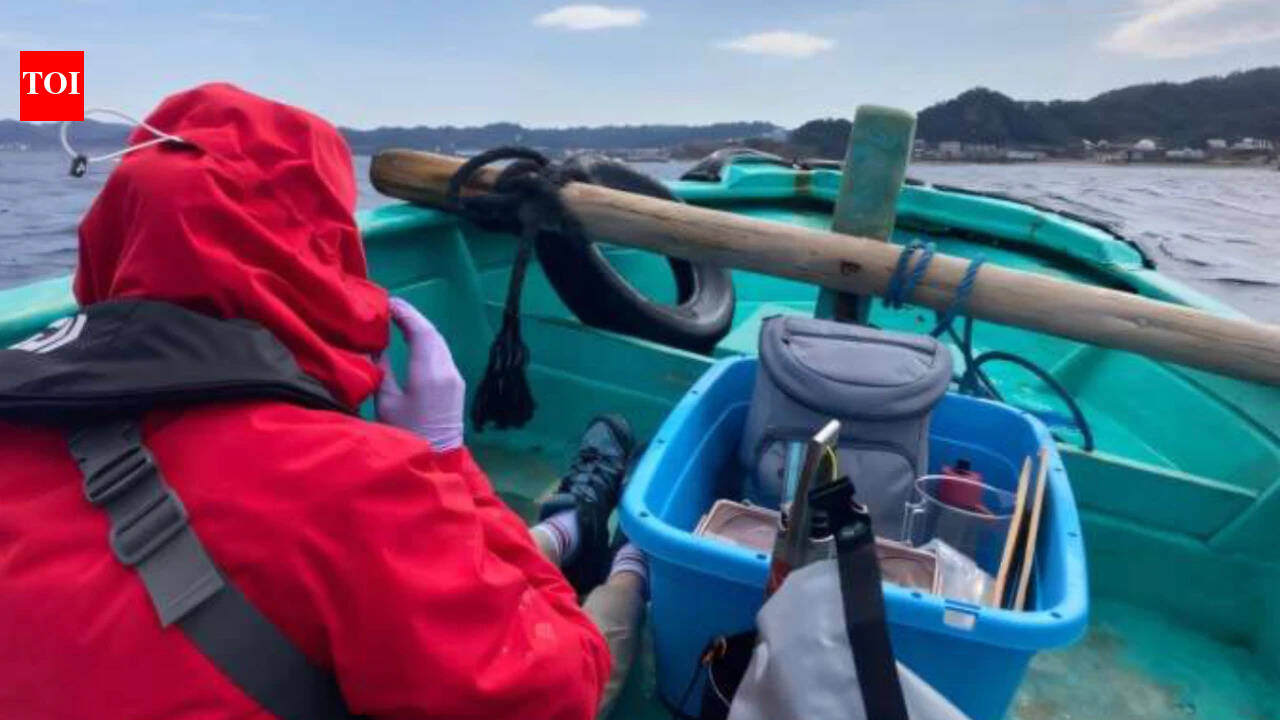
The waters surrounding Japan have been changing in ways that may not be immediately visible to the people who depend on them.
uncertain
who → surround → them
But one day the oceans may not look like before and may not inhabit the same species we are familiar with.
uncertain
we → look → species
According to Phys.org, a nationwide study of marine environmental DNA (eDNA) in Japan has found evidence of fish species appearing farther north than previously recorded.
uncertain
study → accord → species
Scientists are turning to a disparate source of evidence to understand these changes: the DNA left behind in seawater.
asserted
Scientists → turn → seawater
In a nationwide study, researchers analysed thousands of water samples collected along Japan's coastline, noting 126 fish species in locations farther north in previously recorded indications.
asserted
researchers → analyse → indications
The findings offer a closer look at how marine habitats may be changing as ocean temperatures rise, with potential consequences for fishing communities, local food traditions and the ecosystems that support coastal life.
uncertain
that → offer → life
How a bucket of seawater can reveal marine life
Researchers at the Okinawa Institute of Science and Technology (OIST) conducted what the institution described as Japan's largest marine environmental DNA study.
asserted
institution → reveal → study
Published in the journal Diversity and Distributions on October 26, 2026, the research studied 2,672 seawater samples collected from 316 different locations along Japan's coastline between the years 2017 and 2024.
asserted
research → publish → years
The sampling technique used in the study, known as environmental DNA, or eDNA examines how fish leave traces of genetic material in their surroundings by shedding of their skin, scales and the deposition of other biological matter.
asserted
fish → use → matter
By collecting seawater and extracting the DNA it contains, researchers can compare the resulting sequences with reference DNA data to identify the species likely to be present in a particular area without having to directly capture or observe each marine animal.
asserted
researchers → collect → animal
According to OIST, Japan's extensive sequencing of local marine fauna and the development of the MiFish primers in Japan has helped improve the coverage and accuracy in detection of species.
uncertain
sequencing → accord → species
This approach offers a practical way to study marine biodiversity across extensive stretches of coastline.
asserted
approach → offer → coastline
The research team, led by first author Ayşe Haruka Oshima Açıkbaş, a former doctoral student at OIST, combined nearly 1,000 newly collected samples with existing data.
asserted
team → lead → data
The resulting dataset helped researchers examine fish distributions across Japan in greater detail, including locations where previous observations had been limited.
asserted
observations → result → locations
What warmer oceans could mean for Japan's coastal communities
uncertain
mean → mean → communities
With global warming and climate change affecting marine habitats, rising ocean temperatures may be contributing to shifts in the ranges of species towards cooler waters.
uncertain
temperatures → affect → waters
The eDNA sampling method can help inform further research into the societal and environmental implications of these changing seascapes in Japan.
asserted
method → help → Japan
For Japan, where fishing is closely connected to food, regional identity and local economies, the changes in the ocean and the marine could extend beyond the study of marine biology itself.
uncertain
changes → connect → biology
Fish that have traditionally been caught in particular regions may become less common, while species unfamiliar to local fishing communities could begin appearing more frequently.
uncertain
species → catch → communities
Timothy Ravasi, head of OIST's Marine Climate Change Unit and a senior author of the study noted that fishermen across Japan have already observed differences in their catches as compared to previous decades.
asserted
fishermen → note → decades
He further highlighted the difficulties that unfamiliar fish can create for small, family-run fishing businesses that may need to adapt their equipment, techniques and knowledge in accordance with new species.
uncertain
that → highlight → species
The fish appearing farther north could affect marine ecosystems too
The study has further identified commercially important species among those recorded beyond their previously documented northern ranges including Japanese scad and blacktip grouper.
uncertain
study → appear → scad
Another species identified was the black rabbitfish (S. fuscescens), which is suspected of contributing to the irrecoverable damage to seaweed beds, a phenomenon known in Japan as isoyake.
asserted
which → identify → isoyake
Such seaweed beds have provided important habitats for marine organisms, making changes in the distribution of species that feed on them relevant to wider ecosystem health.
asserted
that → provide → health
The findings therefore raise questions about how changing fish distributions across the ocean can influence the relationship between species, the condition of the coastal habitats and the communities that depend on them.
asserted
that → raise → them
As more samples are collected, environmental DNA databases could help researchers identify emerging patterns, compare observations across years and improve their understanding of where marine species are being detected.
uncertain
species → collect → understanding
The research team has also identified predictive modelling as a potential direction for future work, moving beyond recording the presence or absence of DNA towards investigating why certain species appear in particular locations.
asserted
species → identify → locations
By examining DNA traces in seawater, scientists are developing another way to follow these changes, offering a clearer picture of how Japan's marine environments may be responding to a warming world.
uncertain
environments → examine → world
 The Aporia