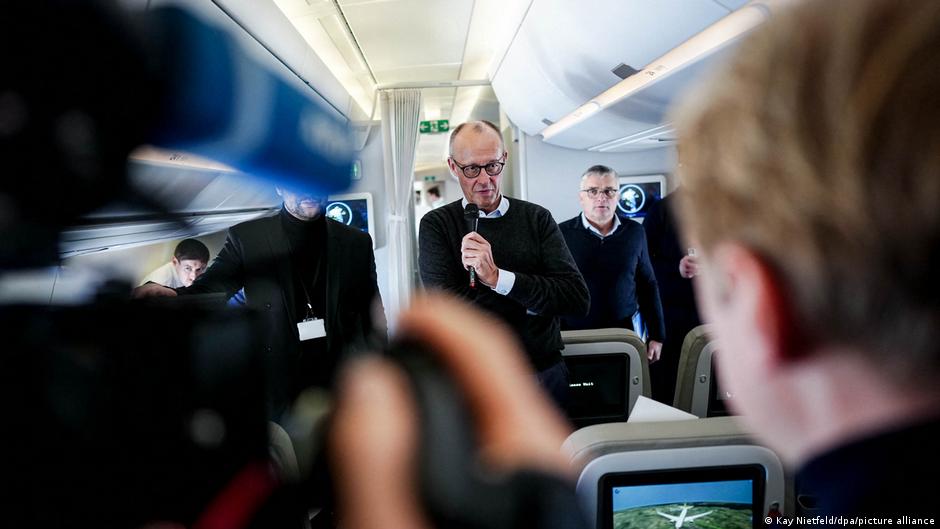
German Chancellor Friedrich Merz kicked off a five-day tour of Asia on Monday, traveling to Singapore before his scheduled visits to Japan and South Korea.
asserted
Merz → kick → Japan
Merz is accompanied by an entourage of 30 senior businesspeople, including representatives of Germany's industry, tech and defense companies, and energy suppliers.
asserted
Merz → accompany → companies
At the same time, Germany's President Frank-Walter Steinmeier is visiting China.
asserted
Steinmeier → visit → China
While the trips are not officially related, they both seem aimed at boosting Berlin's economic and security relationships at a time of geopolitical instability, which threatens global supply chains.
asserted
which → relate → chains
Japan needs close allies
In Singapore, Merz is set to deliver a major foreign policy speech and meet Prime Minister Lawrence Wong.
asserted
Merz → need → Wong
He will then travel to Japan on Wednesday to meet with Prime Minister Sanae Takaichi and take part in the German-Japanese Business Summit.
asserted
He → travel → Summit
Merz's visit "will be very much welcomed in Tokyo," said Ben Ascione, an assistant professor of politics and international relations at Tokyo's Waseda University.
asserted
Ascione → welcome → University
"For more than a decade, Japan has been looking to generate new security allies and closer trade partnerships," he told DW.
asserted
he → look → DW
"This greater outreach was started under Prime Minister [Shinzo] Abe, but Takaichi is very much following that blueprint because of the growing tensions in the Indo-Pacific region and the greater uncertainty around the second administration of [US President] Donald Trump," he added.
asserted
he → start → Trump
Germany and Japan face different, but connected threats
The challenges posed by an increasingly expansionist China in the region are of deep concern to Tokyo, particularly as Beijing is forging closer ties with both Russia and the unpredictable regime in North Korea.
asserted
Beijing → face → Korea
China and Russia have conducted joint military exercises off Japan, and Beijing is resolute in its insistence that Taiwan be brought under the control of the mainland.
asserted
Taiwan → conduct → mainland
Ascione points out that any conflict over Taiwan, the disputed islands of the South China Sea or territorial claims elsewhere in the region would have a major impact on global trade.
uncertain
conflict → point → trade
Such disruptions would also impact Germany.
asserted
disruptions → impact → Germany
"Japan and Germany have different primary security threats at the moment, with Germany focused on the Russian invasion of Ukraine and Japan keeping a close watch on China, North Korea and Russia, but I do believe that Germany has come more into line with Takaichi's perception of the security threat that is posed by China
asserted
that → focus → China
," Ascione said.
asserted
Ascione → say → ?
"Takaichi is going to underline the importance of a rules-based order and the policy of a free and open Indo-Pacific at a time of such geopolitical uncertainty," he added.
asserted
he → go → uncertainty
"Japan has in recent years moved towards greater resilience building, supply chain resilience and more and deeper security partnerships.
asserted
Japan → move → building
German military assets welcome in Japan
asserted
assets → welcome → Japan
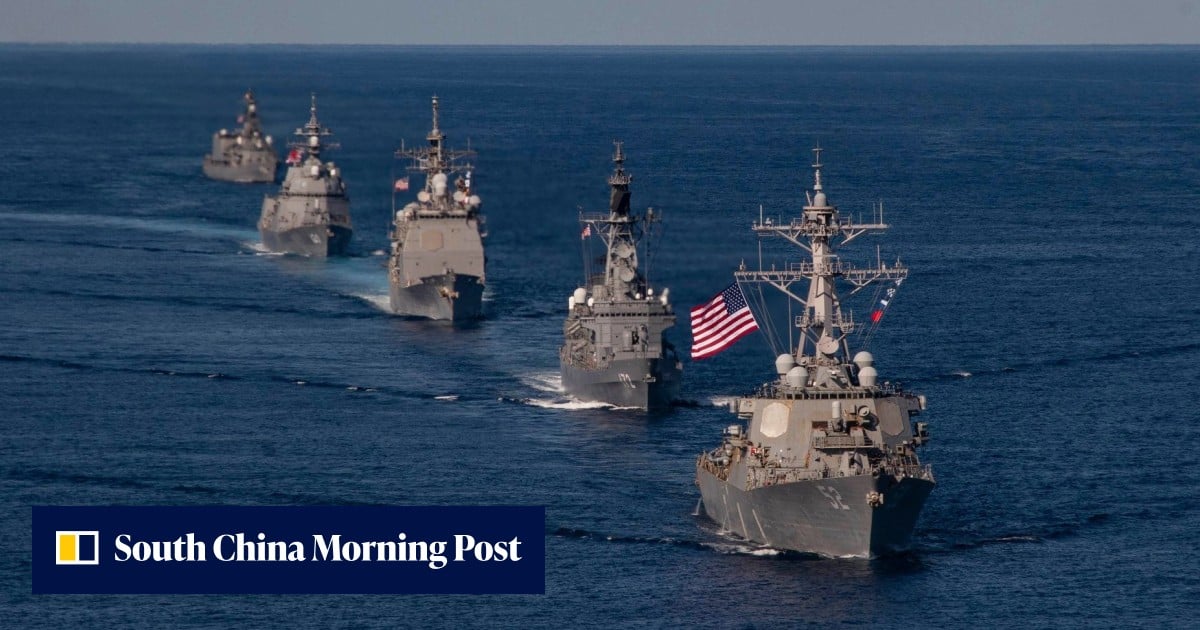
According to Ascione, Japan would also "welcome" Germany deploying its military assets to the region, following its Bayern frigate docking in Tokyo in 2021 and its fighter jets conducting air drills with Japanese fighters in 2024.
uncertain
jets → accord → 2024
The frigate Bayern became the first German Navy warship to dock in Tokyo in 20 years in May 2021 and went on to conduct air and maritime exercises with Japanese units.
uncertain
frigate → become → units
In July 2024, German Eurofighter Typhoon aircraft similarly carried out air drills with Japanese fighters over northern Japan.
asserted
aircraft → carry → Japan
Merz and Takaichi are expected to exchange views on responding to geopolitical threats.
asserted
Merz → expect → threats
This would include ensuring supply chain resilience, protecting strategically important industries and ensuring access to technologies and components, such as the rare earths that are critical to a range of advanced technologies but remain largely controlled by China.
asserted
that → include → China
European nations 'irritated' by Seoul's outreach to North Korea
Merz is then scheduled to visit South Korea, where he will meet with President Lee Jae-myung and open the 19th Asia-Pacific Conference of German Business in Seoul.
asserted
he → schedule → Seoul
He is also due to visit the Demilitarized Zone that marks the border between North and South Korea.
asserted
that → visit → Korea
Security issues will again dominate discussions in Seoul, believes Saeme Kim, a research fellow at The Asan Institute for Policy Studies.
asserted
Kim → dominate → Studies
However, the German leader could voice concerns about South Korea's perceived "outreach" efforts towards North Korea and, by extension, Russia.
uncertain
leader → voice → extension
"There has been discussion recently about exports of petroleum to Russia, although Seoul says it has not breached sanctions," she said.
asserted
she → say → sanctions
South Korea is trying to set up a way to communicate with Pyongyang, according to the expert, despite the regime of Kim Jong Un sending troops to the conflict in Ukraine.
uncertain
Korea → try → Ukraine
"It's not just Germany, I think a lot of European countries will be irritated by the Lee administration trying to improve relations with North Korea and Russia," Kim said.
asserted
Kim → think → Korea
The South also continues to provide humanitarian assistance to North Korea, even as the regime forges ever closer economic ties with China and Russia.
asserted
regime → continue → China
"The government needs to keep in mind that some of these policies are going to be damaging to South Korea's own interests over the long-run," she said.
asserted
she → need → run
Can South Korea learn from German reunification?
asserted
Korea → learn → reunification
At the same time, Merz could also offer insight into two Koreas trying to work with one another, drawing on the German experience of reuniting in 1990.
uncertain
Koreas → offer → 1990
"There are lessons that South Korea can learn, of course, but there are a lot of differences," Kim said.
asserted
Kim → be → differences
"The two Koreas are still technically at war and Seoul has to deal with an aspiring nuclear power on its border.
asserted
Seoul → have → border
Merz will have the opportunity to see the North at a distance when he visits the DMZ.
asserted
he → have → DMZ
His visit to the border, however, could also be canceled due to lingering tensions over the North Korean mine injuring three South Korean soldiers last month.
uncertain
mine → cancel → soldiers
Pyongyang has accused the South of staging the incident.
asserted
Pyongyang → accuse → incident
 The Aporia