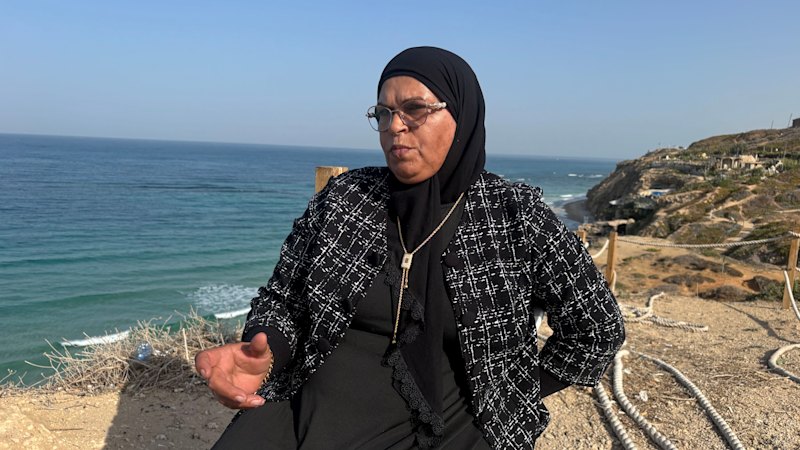
They were the 30 seconds that changed Watfa Jebali’s life forever.
asserted
that → change → life
The 30 seconds that still haunt her dreams.
asserted
that → haunt → dreams
In November 2018, Jebali and her husband were preparing to celebrate their wedding anniversary at their home in Tayibe, an Arab town in Israel near the border with the West Bank.
asserted
Jebali → prepare → Bank
Jebali’s son Saad, 26, was working in the family grocery store downstairs when a masked man walked in, shot him dead and ran away.
asserted
man → work → him
Jebali watched the murder unfold in real time on the family’s closed-circuit television set.
asserted
murder → watch → set
“It was all over in 30 seconds,” she says.
asserted
she → say → seconds
Saad left behind a wife and six-month-old daughter.
asserted
Saad → leave → wife
According to Israeli police, the murder stemmed from a dispute with the killer’s family over a rental apartment the Jebalis had asked them to vacate.
uncertain
Jebalis → accord → them
Three months after the shooting, two men, aged 18 and 19, were charged with murder and were later sent to jail.
asserted
men → age → jail
Determined to prevent other mothers from suffering the same fate, Jebali helped found a group of grieving mothers demanding action from authorities to reduce violent crime in Israel’s Arab communities.
asserted
Jebali → prevent → communities
The Mothers for Life gained national attention here in 2020 when they walked for six days from Haifa, in northern Israel, to the Israeli president’s residence in Jerusalem to bring attention to the issue.
asserted
they → gain → issue
To their dismay, the problem has only worsened in the years since.
asserted
problem → worsen → years
Saad Jebali was one of 74 Arab-Israeli citizens murdered in 2018.
asserted
Jebali → murder → 2018
That figure soared to 241 last year, an all-time high.
asserted
figure → soar → 241
Arab-Israelis – many of whom identify as Palestinian citizens of Israel – make up 20 per cent of Israel’s population, but 80 per cent of the country’s murder victims.
asserted
many → identify → victims
The vast majority of killings involve Arab perpetrators and victims, with many murders linked to gang violence, racketeering, family feuds and entrenched disadvantage.
asserted
murders → involve → violence
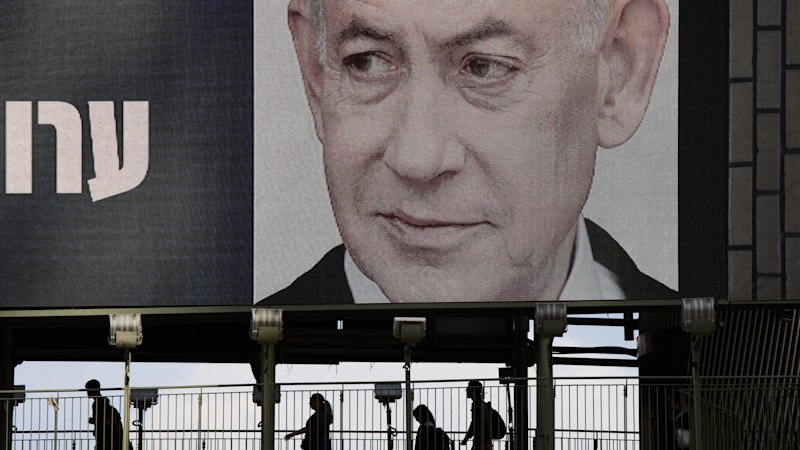
The Arab-Israeli murder rate doubled within a year when Prime Minister Benjamin Netanyahu appointed far-right agitator Itamar Ben-Gvir as national security minister after Israel’s last elections in 2022.
asserted
Netanyahu → double → 2022
In his youth, Ben-Gvir was convicted of incitement to racism and supporting a terror organisation when he brandished signs at a protest rally calling for Arabs to be expelled from Israel.
asserted
Arabs → convict → Israel
For the last four years, he has run Israel’s police force and prison system.
asserted
he → run → force
One of his signature policies has been a dramatic expansion of gun ownership, a move that has allowed firearms to flood the black market.
asserted
firearms → allow → market
“We have nobody to talk to in this government.
asserted
We → have → government
We are desperate,” Jebali says.
asserted
Jebali → say → ?
“We live in Israel, we are citizens of this country, but no one is helping us.
asserted
one → live → us
‘We are suffering in the Arab society because of the fascist ministers.’Mohammed, history teacher, Qalansawe
While the Arab-Israeli murder rate is far higher than for Israeli Jews, the voter turnout rate is far lower.
asserted
rate → suffer → Jews
In the last election, just 53 per cent of Arab citizens voted compared with a national average of 70 per cent.
asserted
cent → vote → cent
Some decline to vote on principle, on the grounds they do not want to legitimise the Israeli government, while others stay home because of apathy and disillusionment.
asserted
others → decline → apathy
That is expected to change when Israelis vote on Tuesday (Israeli time) because of Arab voters’ pent-up fury at the most right-wing government in Israeli history.
asserted
Israelis → expect → history
Pollsters and campaigners estimate Arab turnout will reach 65 per cent, and perhaps as high as 70 per cent.
asserted
turnout → estimate → cent
Buying fresh bread for his family at a bakery in Qalansawe, one of the towns that comprise “The Triangle”, a concentration of Arab-Israeli towns on the border of the West Bank, history teacher Mohammed says: “I never used to vote, but this time I will.”
asserted
I → buy → Bank
“We are suffering in the Arab society because of the fascist ministers,” he says.
asserted
he → suffer → ministers
“Crime families control the area and no-one is stopping them.
asserted
one → control → them
At night people are afraid to leave their homes.
asserted
people → leave → homes
It didn’t use to be this way.”
asserted
It → use → ?
Making falafels at his restaurant a few doors down, Omar Abu Rass, 41, says he has only voted once before, but is considering doing so this time.
asserted
he → make → restaurant
His relatives are pleading with him to cast a ballot, telling him this is not a normal election.
asserted
this → plead → him
“There is a lot of shootings, a lot of murders,” he says.
asserted
he → be → murders
“The police are not doing what they are supposed to do.
asserted
they → do → what
Ben-Gvir is deliberately trying to hurt us.
asserted
Gvir → try → us
The two main Arab groupings are the Joint List (a far-left alliance opposed to Israel’s occupation of the Palestinian territories) and Ra’am (a socially conservative, more pragmatic party that made history by forming part of a short-lived government in 2021).
asserted
that → oppose → 2021
In what looks to be a canny move, Ra’am leader Mansour Abbas has put former top police officer Yoav Segalovitz second on his list — the first time a Jewish Israeli has run for an Arab party.
asserted
Israeli → look → party
…and 59 more, not listed.
 The Aporia