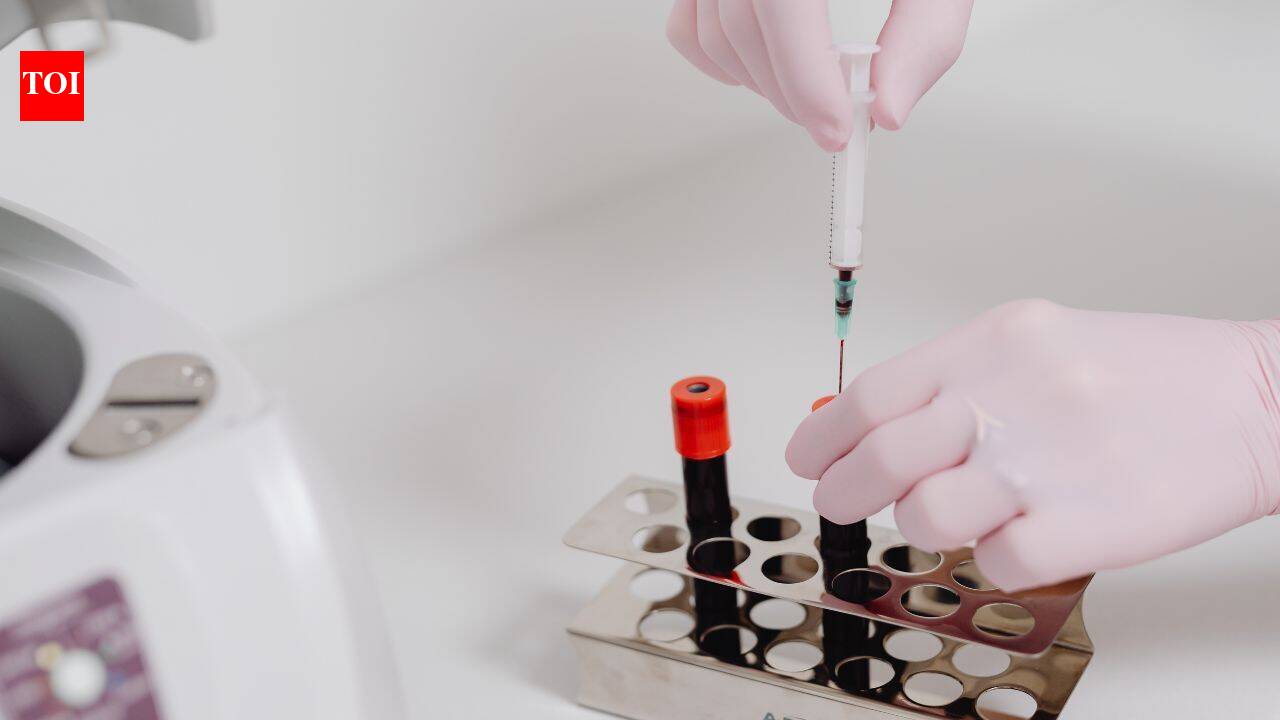
A new blood testing platform could make it easier to identify people who are genuinely allergic to amoxicillin, one of the most widely used penicillin antibiotics.
uncertain
who → make → antibiotics
Researchers tested 30 nanometre magnetic particles on blood samples from 94 people, including 50 patients with confirmed amoxicillin allergy and 44 who tolerated the drug.
asserted
who → test → drug
The experimental system detected allergic patients with 98 percent sensitivity, while the commonly used ImmunoCAP commercial test detected only about 17 percent in the same comparison.
asserted
test → detect → comparison
As reported by Phys.org, the technology uses tiny iron oxide particles coated with silica and molecular structures designed to capture allergy-related antibodies.
asserted
technology → report → antibodies
The early results are promising, but the test still needs larger clinical studies and regulatory validation before it can replace existing diagnostic methods or influence routine prescribing.
asserted
it → need → prescribing
Why amoxicillin allergy is hard to diagnoseIf patients develop a rash, swelling, breathing problems or other symptoms after taking amoxicillin, their doctors may record a penicillin allergy in their medical history.
uncertain
doctors → diagnoseif → history
That label can remain for years, even when the original reaction was caused by an infection, another medicine or a temporary condition.
asserted
reaction → remain → infection
A reported allergy can influence future treatment decisions.
asserted
allergy → report → decisions
Doctors may avoid penicillin antibiotics and prescribe alternatives that are broader spectrum, more costly or less suitable for the infection.
uncertain
that → avoid → infection
Research has linked inaccurate penicillin allergy labels with increased healthcare use and a higher risk of antibiotic resistance.
asserted
Research → link → resistance
The difficulty is that confirming the allergy is not always simple.
asserted
confirming → confirm → allergy
Skin tests and blood tests can miss genuine cases, especially when the level of drug-specific immunoglobulin E, known as IgE, is low.
asserted
level → miss → IgE
The most definitive approach may involve a supervised drug challenge, but that can carry risks for people who are truly allergic.
uncertain
who → involve → people
A reliable blood test could help doctors identify more patients who need specialist evaluation and distinguish them from people who can safely receive penicillin based on further assessment.
uncertain
who → help → assessment
How the magnetic particles workThe particles used in the study are approximately 30 nanometres in diameter.
asserted
particles → workthe → diameter
A nanometre is one billionth of a metre, so the particles are far too small to see individually without specialised equipment.
asserted
particles → see → equipment
Each particle has a magnetic iron oxide core surrounded by a silica coating.
asserted
particle → have → coating
The surface is then modified with dendrimers, branched molecular structures that provide multiple attachment points.
asserted
that → modify → points
Researchers attach amoxicillin-related molecules to those structures so the particles can interact with antibodies in a blood sample.
asserted
particles → attach → sample
When blood serum is mixed with the particles, antibodies that recognise amoxicillin can bind to the drug molecules on the particle surface.
asserted
that → mix → surface
A magnetic field can then collect the particles, separating the captured material from the rest of the sample.
asserted
field → collect → sample
This design increases the effective surface area available for detection.
asserted
design → increase → detection
It also allows researchers to manipulate the particles magnetically, making it easier to concentrate the relevant antibodies and analyse them.
asserted
it → allow → them
The test is not trying to create an allergic reaction in the patient.
asserted
test → try → patient
It analyses a blood sample in the laboratory for antibodies associated with immediate amoxicillin allergy.
asserted
It → analyse → allergy
The 94 sample comparisonThe research team analysed blood from nearly 100 people.
asserted
team → analyse → people
The group included 50 patients with confirmed amoxicillin allergy and 44 people who tolerated amoxicillin and other beta lactam antibiotics.
asserted
who → include → amoxicillin
The experimental magnetic nanoparticle platform was compared with established testing methods, including ImmunoCAP, the most widely used commercial blood test, and conventional radioallergosorbent testing, often called RAST.
asserted
platform → compare → ImmunoCAP
For amoxicillin, the nanoparticle system achieved 98 percent sensitivity and 100 percent specificity in the reported analysis.
asserted
system → achieve → analysis
ImmunoCAP showed about 17 percent sensitivity and 100 percent specificity.
asserted
ImmunoCAP → show → sensitivity
A conventional polymer-based test had about 38 percent sensitivity and 98 percent specificity.
asserted
test → base → sensitivity
Sensitivity refers to the ability of a test to correctly identify those who are truly diseased.
asserted
who → refer → those
A sensitivity of 98 percent means that the experimental method identified nearly all confirmed allergic patients in this sample.
asserted
method → mean → sample
Specificity refers to the ability of a test to correctly identify those who are truly not diseased.
asserted
who → refer → those
A specificity of 100 percent means that the test did not misclassify tolerant participants as allergic in the study group.
asserted
test → mean → group
Both measures matter.
asserted
measures → matter → ?
A test that misses genuine allergy can create a false sense of safety, while a test that wrongly labels tolerant patients as allergic can restrict treatment choices unnecessarily.
asserted
that → miss → choices
Why higher sensitivity mattersThe low sensitivity of some existing blood tests is a major problem.
asserted
sensitivity → mattersThe → tests
If a test detects only around 17 percent of genuinely allergic patients, a negative result cannot reliably rule out allergy.
asserted
result → detect → allergy
Patients may then need additional testing or supervised drug challenges.
uncertain
Patients → need → testing
…and 48 more, not listed.
 The Aporia