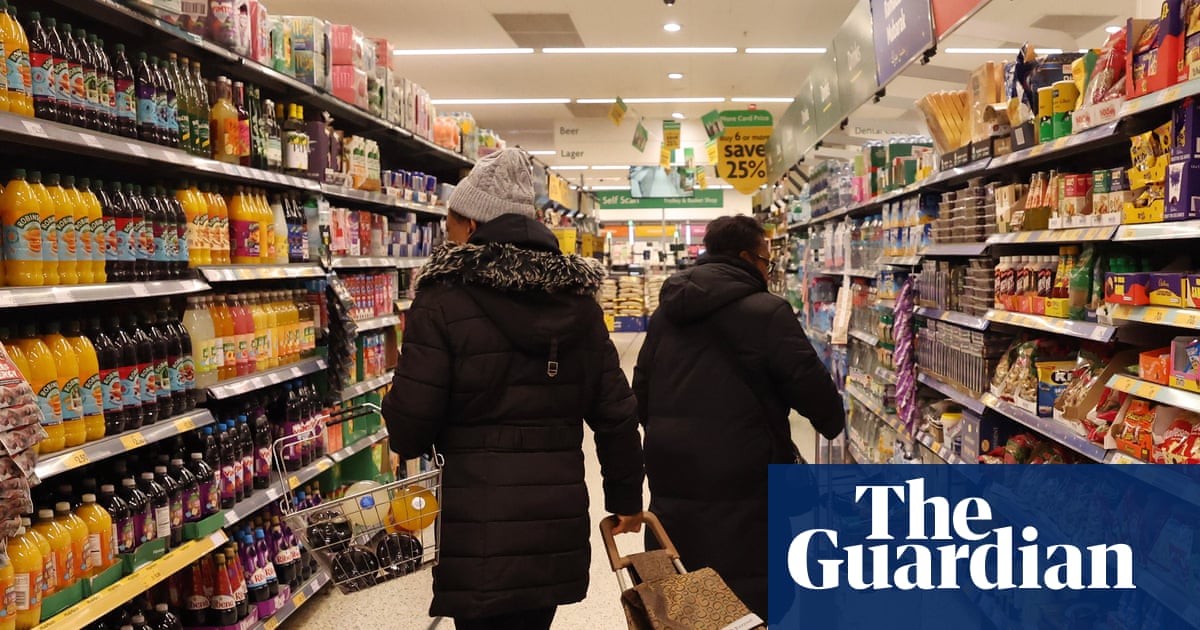
UK shop price inflation ‘highest since 2024’ as retailers struggle to limit price rises

Read the original at The Guardian ↗
Cite

writer, P. I. S. e. (2026, October 27). UK shop price inflation ‘highest since 2024’ as retailers struggle to limit price rises. The Guardian. https://www.theguardian.com/business/2026/oct/27/uk-shop-price-inflation-highest-since-2024-as-retailers-struggle-to-limit-price-rises

Dated from the outlet's own feed. Check the original for its byline.

The Guardian · collected 2026-10-27 · by Phillip Inman Senior economics writer

Quick Summary

Shop price inflation in the UK reached a two-and-a-half-year high of 2.1% year on year in October, up from 1.4% in September, according to the British Retail Consortium (BRC). This increase is attributed to rising energy and food ingredient costs due to the Middle East conflict, with food inflation at 2.9%. Non-food items saw a significant rise from 0.8% to 1.7%, indicating retailers are passing on higher costs to consumers. The BRC warns that this trend may force further interest rate hikes by the Bank of England and put pressure on Chancellor John Healey ahead of his upcoming budget.
Written locally by qwen2.5:14b on 2026-10-27, using this article's own text rather than the other coverage of the same event (that is the story summary below).

AI analysis runs on qwen2.5:14b, locally

Story summary

Shop price inflation in the UK reached its highest level since 2024, climbing to 2.1% year over year in October according to the British Retail Consortium (BRC). This marks a significant increase from September's rate of 1.4%, reflecting rising costs for energy and food ingredients amid the Middle East conflict. Food inflation specifically rose to 2.9% in October, up from 2.5% the previous month, putting additional pressure on Chancellor John Healey ahead of his budget announcement scheduled for Wednesday.

Non-food items saw a more than doubling of inflation rates, rising to 1.7%, compared to September's 0.8%. The cost of Brent crude oil has surged to $117 per barrel, significantly higher than the pre-conflict average of around $70, contributing to increased gas prices and overall consumer pressure. Retailers have begun passing on these costs to consumers, leading the BRC to warn that efforts to limit price rises are "starting to break."

Written for “UK Shop Price Inflation Highest Since 2024” on 2026-10-27, grounded in this article and the 0 other(s) covering the same event.
Why this leaning score
The article's own words the score was based on. Each is quoted verbatim and was checked against the article text before being stored, so you can find it in the original.
Reading Leans left (beta estimate) Confidence medium
Leaning: leans left for article 109113 (medium confidence, 2 verified quotes) · logged 2026-10-27

Story

📰 UK Shop Price Inflation Highest Since 2024
Economy/Business · 1 article(s) covering the same event.

Compared with similar articles

This article reads leans left and hedges 14% of its claims. Each row says how that neighbour differs.
The Guardian
⚖️ Leans left 🔴 21% hedged 4 of 19 📰 publisher trust 66
“The articles discuss different aspects of the economic situation in the UK related to cost of living and shop price inflation but describe distinct events.”
How this article was measured signals, leaning charts, publisher record, byline, topics and claims

Signals How these are calculated →

Claims extracted
22
sentences that state something as happening or true
Uncertain
14%
3 of 22 hedged ("reportedly", "may", "according to")
Leaning
Leans left
of the writing, not the subject · beta estimate
Publisher signals
66/100
The Guardian's corrections and hedging, across everything collected from it. Not a measure of accuracy.
Outlets on this story
1
Economy/Business
Same framing elsewhere
1
articles that frame the event the way this one does
Analyzed 2026-10-27 · how these are computed

How this is being covered How these are calculated →

Article leaning vs. publisher reliability
Source leaning vs. consistency

Publisher

The Guardian · 2506 article(s) · 6 correction(s) detected
Running correction rate · 6 correction(s)

Who wrote this

Phillip Inman Senior economics writer
1 article(s) here · 1 carrying a prediction
🔮 Bank of England officials are expected to raise interest rates next week from 3.75% to 4%.
The only article under this byline in the corpus.

Topics

Bank Bank of England Iran Israel the British Retail Consortium

Subjects

Patrick PERSON · 2× BRC ORG · 1× Bank ORG · 1× Bank of England ORG · 1× Helen Dickinson PERSON · 1× Iran GPE · 1× Israel GPE · 1× John Healey PERSON · 1× Ruth Patrick PERSON · 1× the British Retail Consortium ORG · 1×

Narrative

“Taking sustainable and long-term steps to secure the adequacy of social security would be a vital step here, and there is particular scope in restoring the real value of child benefit, traditionally a vital source of support with the additional costs that come with children.”
framing: assertive · carried by 1 article(s) · first seen 2026-10-27
🔮 Bank of England officials are expected to raise interest rates next week from 3.75% to 4%.

Claims (22 extracted, 3 hedged)

Shop price inflation has risen to the highest level in two and a half years, according to the British Retail Consortium, which warned that “the dam is starting to break” when it comes to retailers trying to limit price rises for customers. uncertain
retailers → rise → customers
The lobby group said shop price inflation was 2.1% year on year in October, a sharp rise compared with 1.4% in September, and an indication that retailers were beginning to pass on the rising costs of energy and food ingredients since the Middle East conflict broke out. asserted
conflict → say → energy
It said food inflation, which has remained low during the past year, increased this month to 2.9% year on year – against a 2.5% rise in September – putting further pressure on the chancellor, John Healey, before his first budget on Wednesday. asserted
which → say → Wednesday
Non-food inflation, which includes items such as clothing and footwear, more than doubled in October, from 0.8% to 1.7% year on year. asserted
which → include → year
The price of Brent crude oil reached $117 a barrel in recent days, well above the $70 average in the months before the US and Israel attacked Iran in February. asserted
US → reach → February
Gas prices have also risen sharply, pushing the UK consumer prices index to 3.5% last month. asserted
prices → rise → %
Until this month, retailers had largely absorbed the higher costs of raw materials, mainly in response to weak demand from customers. asserted
retailers → absorb → customers
In surveys, consumer confidence has declined sharply since the summer, when it became clearer the conflict in the Middle East was unlikely to end swiftly. asserted
conflict → decline → East
Bank of England officials are expected to raise interest rates next week from 3.75% to 4%. asserted
officials → expect → %
If the rise in retail prices persists, it is likely to persuade many of the Bank’s nine-member monetary policy committee to raise rates still further in December or the new year. asserted
it → persist → December
Helen Dickinson, the chief executive of the BRC, said: “The dam is starting to break on the huge wave of costs retailers have absorbed over the last two years.” asserted
retailers → say → years
She said that while there was heavy discounting to attract shoppers ahead of Halloween celebrations, supermarkets could no longer keep the prices of tins and packets on their shelves from going up. uncertain
supermarkets → say → shelves
The chancellor is expected to come under intense pressure from his own backbenchers concerned that the high cost of living is harming many of their constituents. asserted
cost → expect → constituents
Based on a long-term study, it shows that high petrol and diesel prices are hitting families who need to transport disabled children to and from school and health appointments, and workers who use a car to travel to and from their jobs. asserted
who → base → jobs
Petrol prices above £1.75 a litre in many places and diesel often above £2 a litre can mean that work doesn’t pay, according to Patrick, who leads Changing Realities, an online project tracking 100 low-income families. She said that in the last month almost three-quarters (73%) of participants in the project had shopped in the reduced-items aisle, while 62% had changed the food they buy and 63% had left the heating off even when cold. uncertain
% → mean → heating
One respondent, Rosie L, who lives in rural Scotland, said: “It’s getting to a point where I don’t know how we are going to keep managing to run our car.” asserted
we → live → car
She added: “Public transport is not accessible or reliable where we are [and] not having access to a car would affect every single aspect of our lives. asserted
having → add → lives
Particularly as my children are disabled asserted
children → disable → ?
The report involves in-depth interviews with 70 participants, of which 67 shared strategies they had taken to reduce costs over the previous month. asserted
they → involve → month
Patrick said the help provided by governments and local authorities so far did not match the scale of the problem. asserted
help → say → problem
“The budget provides an opportunity to make good on Andy Burnham’s pledge that his will be a ‘cost of living government’,” she argued. asserted
she → provide → living
“Taking sustainable and long-term steps to secure the adequacy of social security would be a vital step here, and there is particular scope in restoring the real value of child benefit, traditionally a vital source of support with the additional costs that come with children.” asserted
that → take → children

💬Give feedback
🕘History 🎫Support