Serbia’s Student List preparing for talks on forming government despite no clear leader

Read the original at The Guardian ↗
Cite

Henley, J., & Belgrade, A. M. i. (2026, October 26). Serbia’s Student List preparing for talks on forming government despite no clear leader. The Guardian. https://www.theguardian.com/world/2026/oct/26/serbia-student-list-preparing-for-talks-on-forming-government-despite-no-clear-leader

Dated from the outlet's own feed. Check the original for its byline.

The Guardian · collected 2026-10-26 · by Jon Henley, Ana Milosavljevic in Belgrade

Quick Summary

Serbia’s Student List movement secured a decisive victory in recent elections, winning 53% of the vote and gaining 141 seats out of 250 in parliament. The election marks the end of Aleksandar Vučić's 14-year rule, characterized as increasingly authoritarian. Despite having no clear leader or experience governing, the Student List plans to start talks for forming a government focused on reversing corruption and restoring the rule of law. Prominent figures within the movement include Ilija Srdanović, Dejan Šoškić, and Radomir Saičić, who stress their commitment to addressing social issues in Serbia.
Written locally by qwen2.5:14b on 2026-10-26, using this article's own text rather than the other coverage of the same event (that is the story summary below).

AI analysis runs on qwen2.5:14b, locally

Story summary

On October 25, 2026, Serbia held a tense parliamentary election where the student-led opposition movement called The Students' List won by a convincing majority, ousting long-time leader Aleksandar Vucic. With 100% of ballot samples counted, The Student List secured 53% of the vote, translating to 141 seats in the 250-seat parliament, while Vucic’s Serbian Progressive Party (SNS) received 39%, resulting in 103 seats. The election was largely seen as a reaction to the collapse of a canopy at Novi Sad railway station in 2024, which killed 16 people and spurred widespread protests against corruption.

Post-election celebrations erupted across Serbia with jubilant crowds lighting flares and fireworks, but questions remain about how this leaderless movement will form an effective government. The Students' List must now address critical issues such as economic stability, rooting out corruption, and navigating complex international relations with China, Russia, and the European Union. As of October 26, 2026, The Student List was preparing to start talks on forming a new government despite having no clear leader or previous experience in governance. Vucic conceded defeat late Sunday night, marking an abrupt end to his decade-long dominance over Serbian politics. European officials congratulated the students and pledged support for Serbia's reforms moving forward. However, concerns linger about the ability of these political newcomers to handle the responsibilities of governing a country with significant economic and geopolitical challenges.

Written for “Serbia Student Protests Election” on 2026-10-26, grounded in this article and the 40 other(s) covering the same event.
Why this leaning score
The article's own words the score was based on. Each is quoted verbatim and was checked against the article text before being stored, so you can find it in the original.
Reading Leans strongly left (beta estimate) Confidence high 1 quote(s) discarded as not found in the article
Leaning: leans strongly left for article 108315 (high confidence, 3 verified quotes) · logged 2026-10-26

Story

📰 Serbia Student Protests Election
Politics · 41 article(s) covering the same event. Compare every outlet's account →

Compared with similar articles

This article reads leans strongly left and hedges 9% of its claims. Each row says how that neighbour differs.
The Straits Times · 0.87 cosine similarity
⚖️ leaning not scored 🔴 17% hedged 3 of 18 📰 publisher trust 68
“Both articles describe the aftermath of the same historic election on October 26, 2026, where Aleksandar Vucic was defeated by a student-backed protest movement in Serbia.”
Toronto Star
⚖️ Leans left further right than this 🔴 7% hedged 3 of 42 📰 publisher trust 64
“Both articles describe the same specific election event in Serbia where Aleksandar Vucic conceded defeat to a grassroots student movement, marking a historic change in government.”
The Straits Times
⚖️ Leans left further right than this 🔴 4% hedged 1 of 26 📰 publisher trust 68
“Both articles describe the immediate aftermath of the same election where Serbia's student movement defeated longtime leader Aleksandar Vucic on October 26, 2026.”
Toronto Star
⚖️ Leans left further right than this 🔴 8% hedged 2 of 24 📰 publisher trust 64
“Article A describes a march of students into Belgrade before election day, while Article B discusses the aftermath and implications of the actual election results.”
Toronto Star
⚖️ Leans left further right than this 🔴 0% hedged 0 of 3 📰 publisher trust 64
“The articles describe different events: one is about a pre-election rally, while the other reports on post-election activities and preparations for forming a government.”
Washington Examiner
⚖️ Leans strongly left 🔴 9% hedged 1 of 11 📰 publisher trust 70
“The articles describe different stages of a broader movement, with Article A focusing on the initial trigger event (the railway station collapse) and subsequent protests, while Article B discusses the election results and aftermath two years later.”
BBC News
⚖️ Leans left further right than this 🔴 9% hedged 3 of 35 📰 publisher trust 69
“Article A reports on early high turnout during Serbia's election day, while Article B discusses Student List's preparations for forming a government after winning the election.”
The Straits Times
⚖️ leaning not scored 🔴 0% hedged 0 of 5 📰 publisher trust 68
“Both articles describe Vucic's concession following a parliamentary election where a student-led movement won, clearly referring to the same specific event.”
ABC News (AU)
⚖️ leaning not scored 🔴 0% hedged 0 of 7 📰 publisher trust 68
“Both articles discuss Serbian President Aleksandar Vucic's concession following a student-led movement victory in parliamentary elections, indicating they describe the same specific event.”
Mother Jones
⚖️ Leans strongly left 🔴 5% hedged 1 of 22 📰 publisher trust 95
“Both articles describe the same election results in Serbia where Aleksandar Vucic conceded defeat to a student-led anti-corruption movement on October 23-24, 2026.”
How this article was measured signals, leaning charts, publisher record, byline, topics and claims

Signals How these are calculated →

Claims extracted
35
sentences that state something as happening or true
Uncertain
9%
3 of 35 hedged ("reportedly", "may", "according to")
Leaning
Leans strongly left
of the writing, not the subject · beta estimate
Publisher signals
66/100
The Guardian's corrections and hedging, across everything collected from it. Not a measure of accuracy.
Outlets on this story
41
Politics
Same framing elsewhere
1
articles that frame the event the way this one does
Analyzed 2026-10-26 · how these are computed

How this is being covered How these are calculated →

Article leaning vs. publisher reliability
Source leaning vs. consistency

Publisher

The Guardian · 2486 article(s) · 6 correction(s) detected
Running correction rate · 6 correction(s)

Who wrote this

Jon Henley
2 article(s) here · 1 carrying a prediction
🔮 With 100% of ballot samples counted, projected results from the Centre for Free Elections and Democracy in Belgrade showed the Student List on 53% of the vote, giving it 141 MPs in the 250-seat parliament, while Vučić’s Serbian Progressive party (SNS) won 39%, giving it 103.
🔮 A Basarnas helicopter had joined the operation, he said, adding that evacuees had been transported using a number of different ships and some of them would be taken to an East Java port.
Also by Jon Henley
Nothing else under this byline is closely related to this article, so these are simply their most recent.
Ana Milosavljevic in Belgrade
1 article(s) here · 1 carrying a prediction
🔮 With 100% of ballot samples counted, projected results from the Centre for Free Elections and Democracy in Belgrade showed the Student List on 53% of the vote, giving it 141 MPs in the 250-seat parliament, while Vučić’s Serbian Progressive party (SNS) won 39%, giving it 103.
The only article under this byline in the corpus.

Topics

Balkan List Serb Serbia Student List

Subjects

Serbia GPE · 3× Student List ORG · 3× Vučić PERSON · 3× List ORG · 2× Mirković PERSON · 2× Russia GPE · 2× the Student List ORG · 2× Aleksandar Vučić PERSON · 1× Balkan NORP · 1× Serb NORP · 1×

Narrative

With 100% of ballot samples counted, projected results from the Centre for Free Elections and Democracy in Belgrade showed the Student List on 53% of the vote, giving it 141 MPs in the 250-seat parliament, while Vučić’s Serbian Progressive party (SNS) won 39%, giving it 103.
framing: assertive · carried by 1 article(s) · first seen 2026-10-26
🔮 With 100% of ballot samples counted, projected results from the Centre for Free Elections and Democracy in Belgrade showed the Student List on 53% of the vote, giving it 141 MPs in the 250-seat parliament, while Vučić’s Serbian Progressive party (SNS) won 39%, giving it 103.

Claims (35 extracted, 3 hedged)

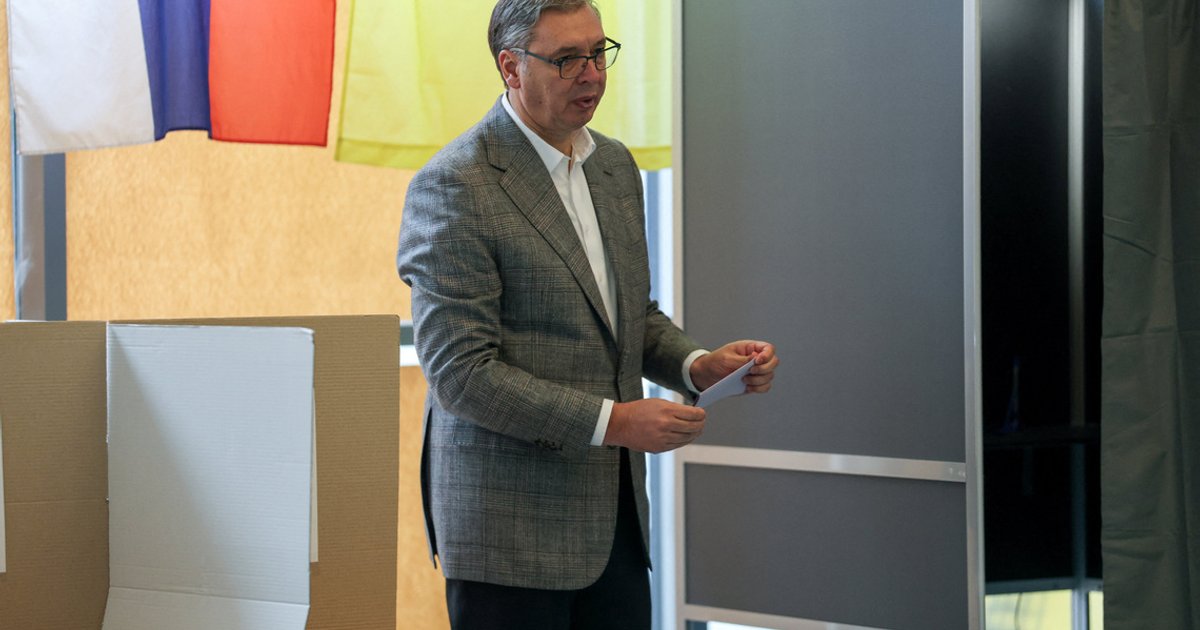
Serbia’s triumphant but untested Student List movement is preparing to start talks on forming a government capable of reversing 14 years of increasingly authoritarian nationalist rule, after a seismic weekend election win. asserted
movement → prepare → win
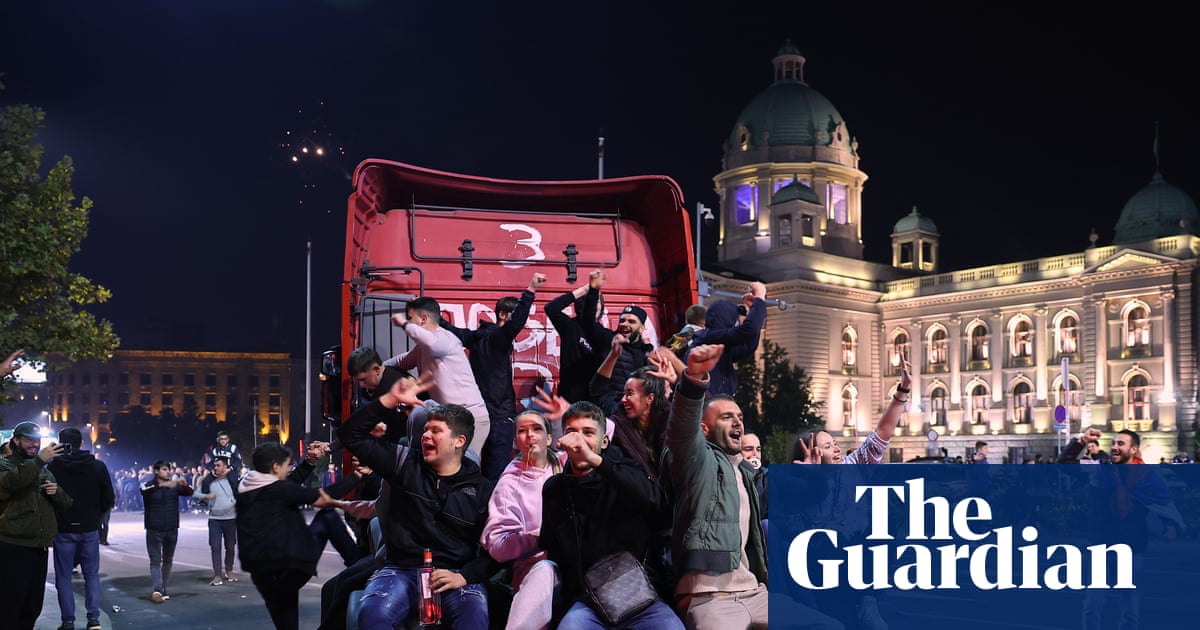
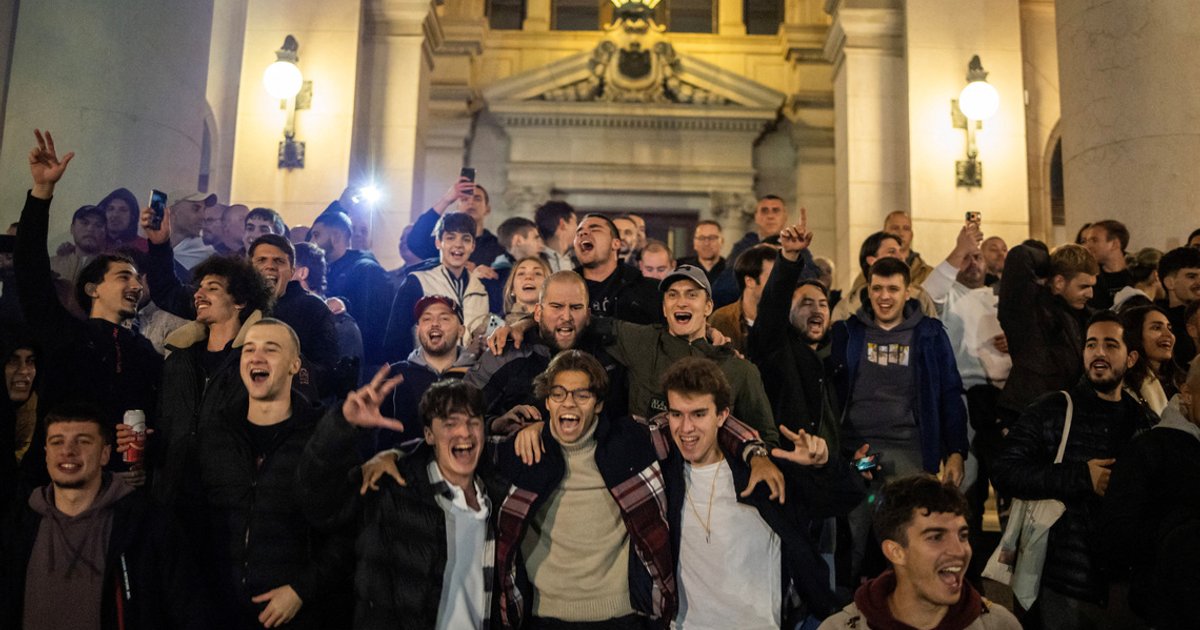
Supporters of the movement, which has no experience of government, took to the streets in the west Balkan country on Monday after the strongman former president, Aleksandar Vučić, was defeated in a historic landslide. asserted
president → have → landslide
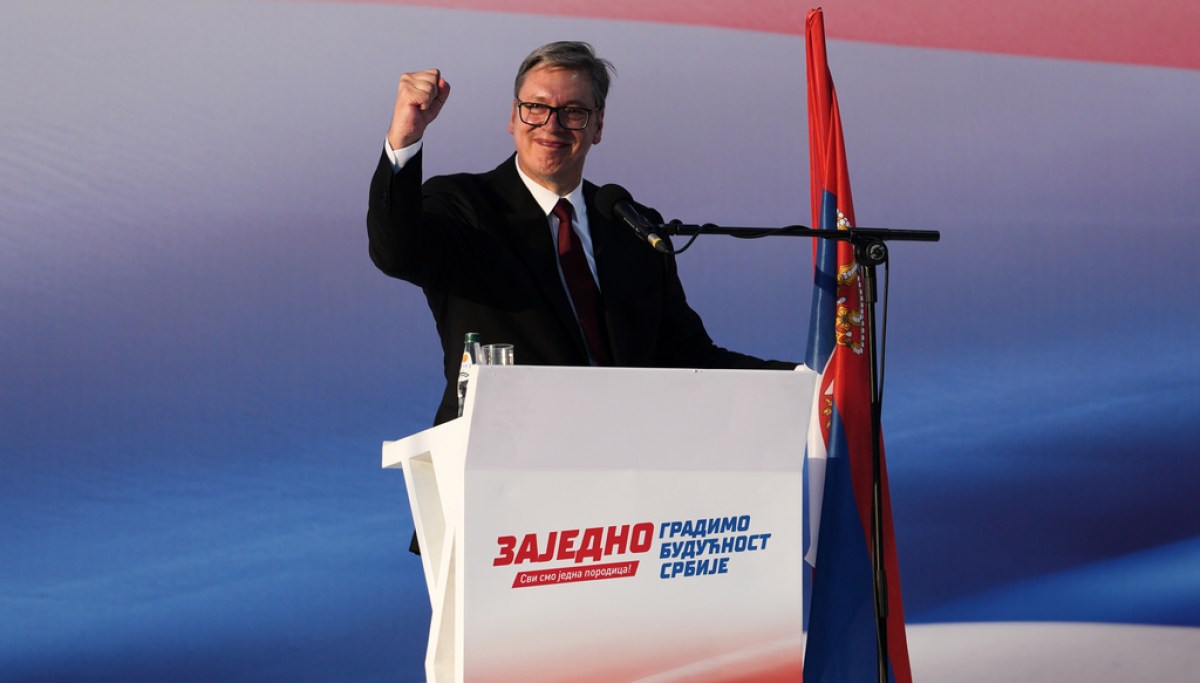
Vučić conceded defeat late on Sunday, bringing his domination of Serb politics to an abrupt end and capping two years of anti-government protests triggered by the collapse of a canopy at the Novi Sad railway station that killed 16 people. asserted
that → concede → people
With 100% of ballot samples counted, projected results from the Centre for Free Elections and Democracy in Belgrade showed the Student List on 53% of the vote, giving it 141 MPs in the 250-seat parliament, while Vučić’s Serbian Progressive party (SNS) won 39%, giving it 103. asserted
party → count → 103
The remaining seats went to national minority party lists. asserted
seats → remain → lists
As yet, there are few clues as to how the winning movement, built around collective decision-making, will actually govern. asserted
movement → be → making
Its candidates included academics, actors and farmers as well as students, but it is deliberately leaderless with no hierarchy, so it is unclear who it will appoint as the prime minister and cabinet. uncertain
it → include → minister
Prominent Student List figures include Ilija Srdanović, a cardiologist who headed the candidate list; Dejan Šoškić, a former central bank governor; and Radomir Saičić, a chemistry professor at Belgrade University who spoke on behalf of the List after its victory. asserted
who → include → victory
Much like Peter Magyar’s Tisza party, which ended Viktor Orbán’s 16 years of illiberal government in Hungary this spring, the List faces public institutions staffed with civil servants loyal to the outgoing regime, complicating the task of institutional overhaul. asserted
List → end → overhaul
“Everyone in the student movement, and every candidate on the list, has a complete and very clear understanding of the weight of the responsibility before us,” said Ana Mirković, a university educationalist, psychologist and Student List candidate. asserted
Mirković → have → us
“We do not see the election result as gaining power and privileges, but as taking on a historic debt to our own people and to our own children.” asserted
We → see → children
Mirković told the Guardian the movement’s first priority was “the social and psychological detoxification” of the country. asserted
priority → tell → country
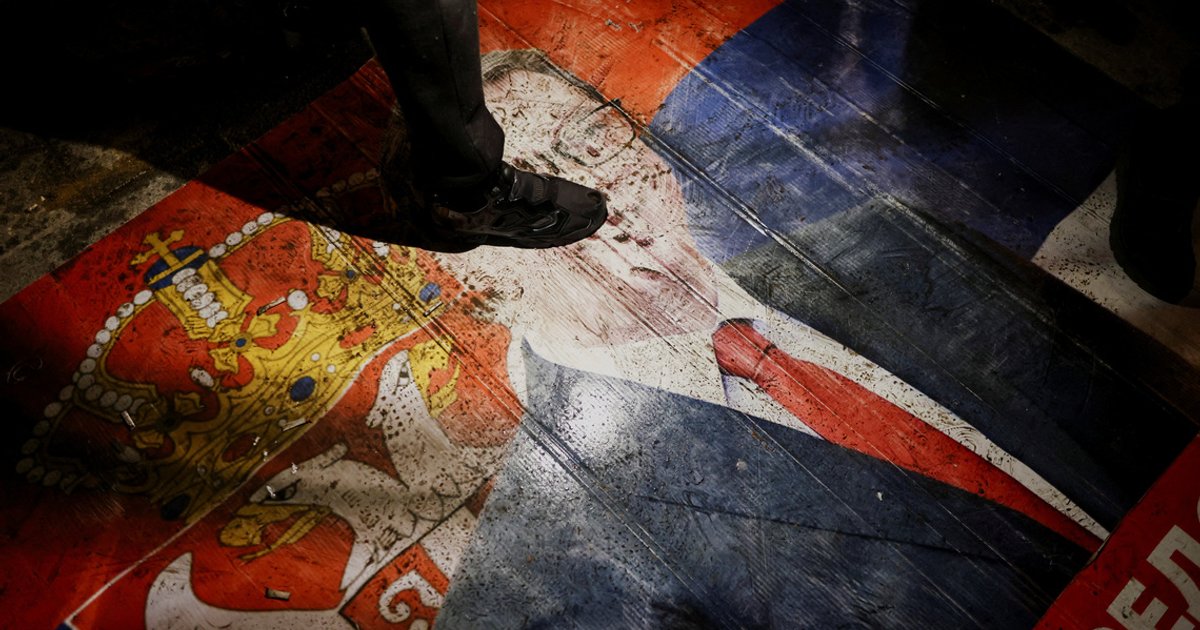
Vučić’s 14-year rule has been described as a “textbook regime” of autocracy, with his party extending control over the media, judiciary and other state institutions and elections marred by registration irregularities, media bias and voter bribes. asserted
party → describe → irregularities
The students’ platform centres on a pledge to fight corruption and restore the rule of law, including creating an independent police unit accountable to prosecutors, not the interior ministry, and a purge of police officers linked to organised crime. asserted
platform → centre → crime
It also aims to ban appointments of party loyalists to state-owned companies and promote financial accountability and public scrutiny by new independent bodies of all major state infrastructure contracts to curb the misuse of public funds. asserted
It → aim → funds
Mirković said the new government would dismantle a “system of intimidation” that encouraged “fear and polarisation”, by “urgently opening up” the media, putting an end to pressure on public-sector workers and “stopping institutional violence”. asserted
that → say → violence
She added that the aim was to “rebuild society from the ground up: full disclosure of all contracts and financial flows; depoliticising and strengthening the judiciary; renewing the education and healthcare systems”, and that state capture should “never again” be possible. asserted
capture → add → systems
The Student List deliberately kept divisive foreign policy issues, including relations with the EU and Russia, in the background. asserted
List → keep → background
The Kremlin said on Monday it hoped the new leaders “understand that cooperation with Russia is in Serbia’s interests”. asserted
cooperation → say → interests
Dušan Vučićević, an analyst, said that, from the outset, the movement “insisted as much as possible that Serbia must first and foremost address domestic political issues – the literal dismantling of every institution, from the national to the local level”. asserted
Serbia → say → level
The students’ win marks a profound political shift in Serbia and could potentially offer inspiration to other student movements that have cropped up across Europe in recent weeks demanding better education standards and prospects. uncertain
that → mark → standards
However, Vučićević said it was distinct from other protests. asserted
it → say → protests
“This experiment in grassroots democracy ultimately secured more than 50% of the vote,” he told Agence France-Presse, but it was “unclear whether a similar model could work in other countries”. uncertain
model → secure → countries
Nikola Burazer, programme director at the Belgrade-based Centre for Contemporary Politics, said the movement’s decision-making process also needed to “be sped up”, as its process for choosing candidates “actually took a long time – months”. asserted
process → base → time
He added: “After people are done celebrating and thinking about what happened yesterday, we will focus a bit more on what’s coming up, and how the government will look. asserted
government → add → ?
Twenty-four hours ago that all seemed like a fantasy.” asserted
that → seem → fantasy
On Sunday, Vučić, who maintained close ties with Russia throughout his tenure, blamed his party’s defeat on “the direct support of various European countries and the US deep state, the one that is also against President Trump”. asserted
that → maintain → Trump
International leaders, meanwhile, joined a chorus of welcome to the students on Monday. asserted
leaders → join → Monday
“This is clearly a new chapter in the history of the country and its people,” said the Ukrainian president, Volodymyr Zelenskyy. asserted
president → say → country
“We wish Serbia success, real development, and warm relations with the European community. asserted
We → wish → community
We in Ukraine thank Serbia for respecting our people, our state, and our independence. asserted
We → thank → people
And we always celebrate our shared achievements.” asserted
we → celebrate → achievements
The German chancellor, Friedrich Merz, said Berlin would “actively support Serbia’s European path” after the victory, saying the students “with their demand for the rule of law, fighting corruption and fundamental freedoms, have reached the people”. asserted
students → say → people
Serbia’s constitution requires the new parliamant to convene within 30 days of the official election result, and sets a 90-day deadline after that for formation of the new government. asserted
constitution → require → government
The country must also hold new presidential elections before 27 December, since Vučić stepped down to run for prime minister. asserted
Vučić → hold → minister

💬Give feedback
🕘History 🎫Support