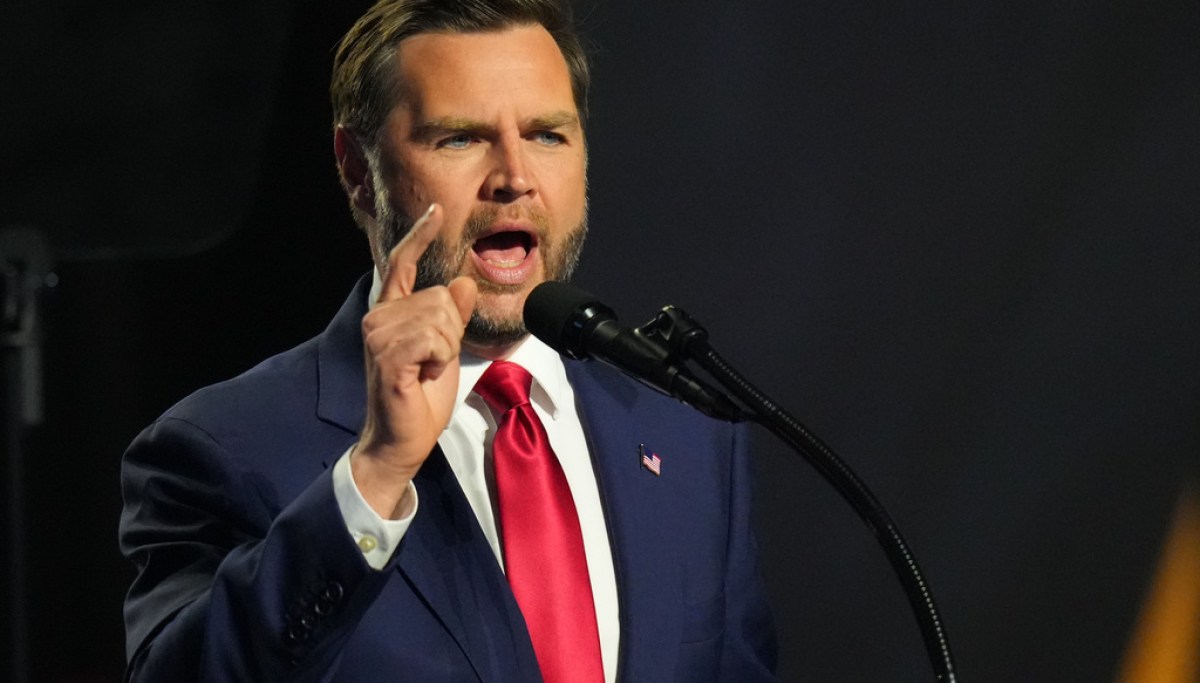
JD Vance, the native son of Appalachia who rose from the Rust Belt holler to become second-in-line to the highest office in the land, has been making the rounds.
asserted
who → rise → rounds
No doubt you’ve seen him out there defending the Trump White House’s policies on the Iran war, rising costs, and more.
asserted
you → see → war
A generational political talent and brilliant mind, Vance’s thoughtful statements routinely make headlines for their clues about what the post-Trump Republican Party will look like, particularly on economic policy, as he unofficially begins his 2028 presidential run.
asserted
he → make → run
“I think what you can guarantee is that if you don’t bring more manufacturing jobs back into this country, you don’t make our supply chains more stable, you’re going to cause higher prices over the long term,” he recently said on NBC’s Meet the Press.
asserted
he → think → Press
This sounds great, of course.
asserted
This → sound → course
There are few sadder images than the abandoned steel towns of America’s formerly vibrant Rust Belt, and the all-too-true trope of a once-successful miner resorting to driving for Uber.
asserted
miner → be → Uber
We know this is a powerful motivator and is a reason for President Donald Trump’s rise.
asserted
this → know → rise
And who better to talk about this than Vance, who emerged from dire circumstances against all odds, who knows firsthand the afflictions faced by the working poor as prices on just about everything continue to rise?
asserted
prices → talk → everything
Except that if you listen closely, bitter irony overflows from Vance’s populist crusade: To save the working class, he wants to adopt the exact big-government policies that broke the economy in the first place.
asserted
that → listen → place
We can respect Vance’s worldview and the experiences that formed it, but as we near the midterm elections and 2028, it’s imperative that voters understand just how big a departure Vance’s populist economic views are from the conservative free-market ideals that made this country the economic envy of the world.
asserted
country → respect → world
A main premise of Vance’s first book, Hillbilly Elegy, is to reject the temptation to blame government and institutions for economic struggles and instead take personal responsibility.
asserted
premise → reject → responsibility
He writes, “I don’t know what the answer is, precisely, but I know it starts when we stop blaming Obama or Bush or faceless companies and ask ourselves what we can do to make things better.
asserted
things → write → what
But just a few weeks ago, Vance told Fox News’s Laura Ingraham, “What the president is doing is changing [40] years of failed bipartisan consensus in Washington, D.C. that has sold out American workers and destroyed the underlying economic strength of the United States of America.”
asserted
that → tell → America
This argument — that 40 years of free-market policy is the source of all economic distress — is exactly the type of blame-placing he rejected in his first book.
asserted
he → reject → book
It’s also a dangerous misdiagnosis and, most importantly, historically false.
asserted
It → ’ → ?
The four decades Vance condemned were not a period of economic decline, but an era of unprecedented wealth creation and expanding living standards.
asserted
Vance → condemn → creation
While it may be true that U.S. manufacturing jobs steadily dropped by roughly 35% between 1989 and 2019, U.S. manufacturing output actually grew by more than 80% over the same period due to massive technological innovation and automation gains.
uncertain
output → drop → innovation
Meanwhile, family wealth nearly quadrupled, surging from $52 trillion to $199 trillion over that same period.
asserted
wealth → quadruple → period
This foundational era of American prosperity was built precisely because open markets, capital mobility, and dynamic competition allowed industries to innovate, lowering the cost of living.
asserted
industries → build → living
Today’s price pressures have been fueled by federal overreach, including massive deficit spending on a costly Iran war and the White House’s aggressive, anti-free-trade agenda.
asserted
pressures → fuel → war
Defending broad tariffs on Meet the Press, Vance claimed, “Anything that you lose on the tariff, from the perspective of the consumer, you gain in higher wages, so you’re ultimately much better off.”
asserted
you → defend → wages
This statement defies basic economic reality.
asserted
statement → defy → reality
A tariff is not a magic tax paid by foreign adversaries, but rather an internal consumption tax levied directly on American businesses and families.
asserted
tariff → pay → businesses
Stacking the deck in favor of hand-picked domestic industries through government trade barriers does not generate net wealth.
asserted
Stacking → stack → wealth
Instead, it misallocates capital away from productive sectors, artificially inflates the cost of everyday goods — from cars to clothes to groceries — and penalizes the very working-class consumers Vance claims to champion.
uncertain
Vance → misallocate → consumers
The deeper irony is how closely Vance’s populist economic agenda aligns with the progressive Left he purports to oppose.
asserted
he → align → Left
Whether it’s supporting government-mandated wage floors or using federal power to pick winning and losing industries under the guise of an “industrial policy,” Vance is advocating top-down, state-directed economic planning.
asserted
Vance → ’ → planning
It is nothing more than pick-and-choose socialism wrapped in a nationalist flag.
asserted
It → pick → flag
Both progressive populists and nationalist conservatives share the flawed premise that central planners in Washington know how to manage capital better than free individuals acting in competitive markets.
asserted
planners → share → markets
But history has proven repeatedly that when the government overrides market price signals in the name of the “common good,” it destroys economic predictability, creates shortages, and drives up costs.
asserted
it → prove → costs
If conservatives want to deliver real, lasting relief to working families, they must reject Vance’s populist alignment.
asserted
they → want → alignment
Prosperity will not be restored by imitating the big-government central planning tools of the Left, but by returning to the core truths of free enterprise, fiscal restraint, and individual liberty that made the American economy the most prosperous and dynamic in human history.
asserted
economy → restore → history
Norbert J. Michel is vice president and director of the Center for Monetary and Financial Alternatives at the Cato Institute, former director of data analysis at the Heritage Foundation, and author of Crushing Capitalism: How Populist Policies are Threatening the American Dream.
asserted
Policies → crush → Dream
 The Aporia