The
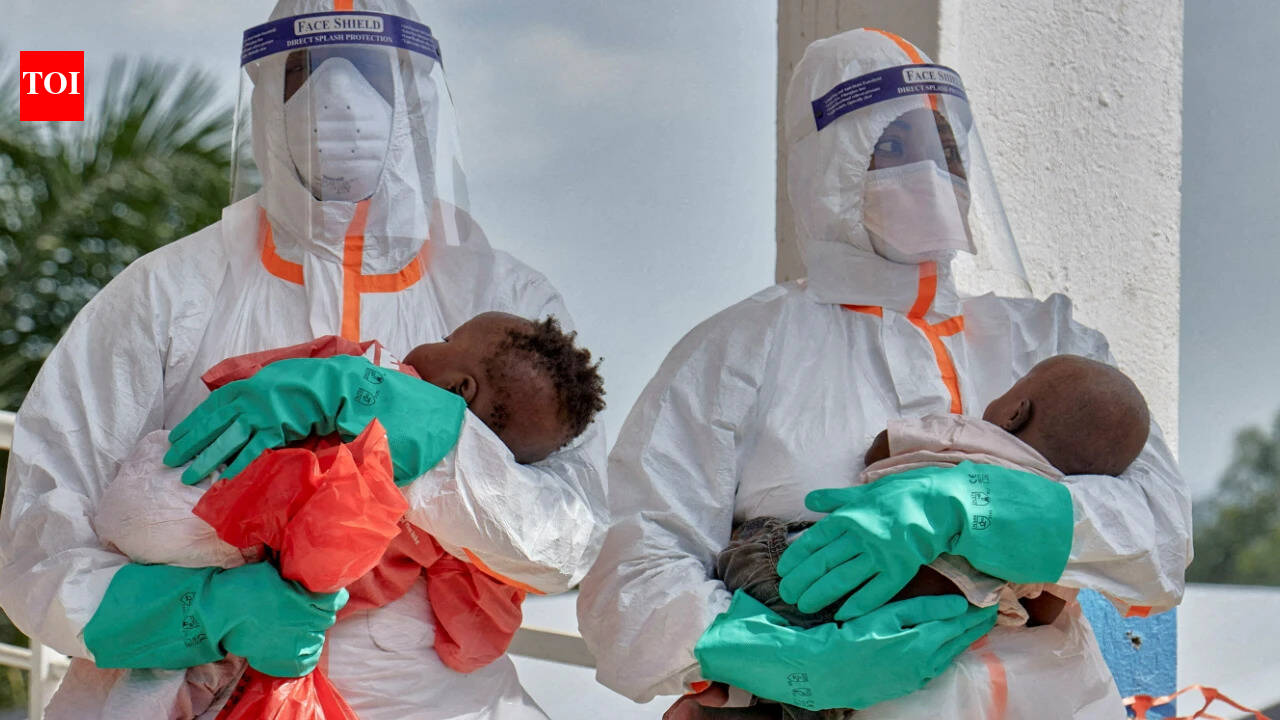
Ebola outbreak in eastern Democratic Republic of Congo is showing early signs of slowing, but UN officials have warned that it is too soon to conclude that the epidemic has passed its peak, with transmission continuing to rise in some areas.
asserted
transmission → show → areas
"It's too early to confidently say we have passed a peak", said
World Health Organization's Olivier le Polain, when asked whether the epidemic has reached a turning point.
asserted
epidemic → say → point
According to the latest Congolese health ministry data cited by The Guardian, more than 7,200 confirmed cases and over 3,475 deaths had been recorded as of Monday.
uncertain
cases → accord → Monday
Congolese health minister Samuel Roger Kamba said the rate of transmission of the Bundibugyo variant had declined, with daily infections falling from around 120 at the height of the outbreak to about 80.
asserted
infections → say → 80
“At one point, we were recording about 120 cases per day; today, we’re seeing about 80 per day.
asserted
we → record → day
So the number of new cases is decreasing every day", he said.
asserted
he → decrease → cases
However, UN officials cautioned that the decline is not uniform across the affected region.
asserted
decline → caution → region
"It remains a deadly and a massive epidemic.
asserted
It → remain → ?
There are some areas of progress, but nonetheless, in other areas, we continue to see growth in cases", UN special Ebola coordinator Julien Harneis told a press briefing in Geneva.
asserted
Harneis → be → Geneva
Mobile data used to track Ebola spread
Health officials are also using anonymised mobile-phone data to track population movements and identify areas where the virus could spread next.
uncertain
virus → use → areas
The approach, developed with Swedish non-profit Flowminder, analyses aggregated and anonymised records generated when mobile-phone users connect to telecommunications networks.
asserted
users → develop → networks
Researchers use the data to estimate movement between different areas and identify locations at risk of receiving infected travellers.
asserted
Researchers → use → travellers
"It gives us a more nuanced understanding of risk," Le Polain said.
asserted
Polain → give → risk
He pointed to Ituri province, where mining and trade drive substantial population movement.
asserted
mining → point → movement
Understanding those movements is crucial to understanding how the outbreak spreads."
asserted
outbreak → understand → movements
Flowminder founder Linus Bengtsson said the system tracks movement patterns rather than individual subscribers.
asserted
system → say → subscribers
"We seek to provide estimates of how people move, which in turn is a predictor of how infectious people move," Bengtsson told Reuters.
asserted
Bengtsson → seek → Reuters
The data is provided free of charge by Vodacom, Congo's largest mobile operator.
asserted
data → provide → Vodacom
Flowminder said it receives aggregated and anonymised records and does not have access to information identifying individual subscribers.
asserted
it → say → subscribers
Kisangani emerges as key area of concern
Flowminder's initial analysis focused on Bunia, Mongbwalu and Rwampara, three areas where the outbreak was believed to have started.
asserted
outbreak → emerge → Bunia
Researchers tracked where people who had travelled from those areas subsequently went.
asserted
who → track → areas
The largest flows were towards other parts of Ituri and neighbouring North Kivu province.
asserted
flows → neighbour → Ituri
By the end of June, all 10 destinations receiving the largest traveller flows from the original outbreak areas had reported confirmed Ebola cases.
asserted
destinations → receive → cases
The analysis was later expanded as the virus spread to other areas, with Kisangani emerging as a particular concern because of its role as a major transport hub on the Congo River.
asserted
Kisangani → expand → River
"The fact that Kisangani was at risk was not a huge surprise, even if it was not bordering the affected areas," Le Polain said.
asserted
Polain → border → areas
"By mid-June, the data showed the risk was significant and that the outbreak could spread there faster than we initially thought.
uncertain
we → show → June
We strengthened operations there before the first cases were detected."
asserted
cases → strengthen → operations
The analysis also identified links between Kisangani, Kinshasa, settlements along the Congo River and areas near the borders with the Central African Republic and South Sudan.
asserted
analysis → identify → Republic
The WHO has warned that the outbreak could spread to Kinshasa and neighbouring countries.
uncertain
outbreak → warn → Kinshasa
A modelling exercise presented in late June estimated a 70% probability of an Ebola case being detected in South Sudan by the end of September.
asserted
exercise → present → September
Conflict complicates response
asserted
Conflict → complicate → response
The outbreak, declared on May 15, is the Democratic Republic of Congo's 17th Ebola outbreak since the disease was identified in the country in 1976.
uncertain
disease → declare → 1976
It is caused by the Bundibugyo species of Ebola.
asserted
It → cause → Ebola
Ituri province remains the main focus of the outbreak, while an ongoing conflict in the region has complicated efforts to monitor infections, trace contacts and deliver medical assistance.
asserted
conflict → remain → assistance
The mobile-phone analysis also has limitations.
asserted
analysis → have → limitations
It relies on data from Congolese networks and provides only a partial picture of cross-border movements.
asserted
It → rely → movements
It currently uses data from Vodacom, which has more than 26 million active subscriptions and a market share of nearly 35%, meaning movements by users of other networks are not captured.
asserted
movements → use → networks
Flowminder and UN officials said efforts are underway to secure similar arrangements with other telecom operators to improve coverage.
asserted
efforts → say → coverage
 The Aporia