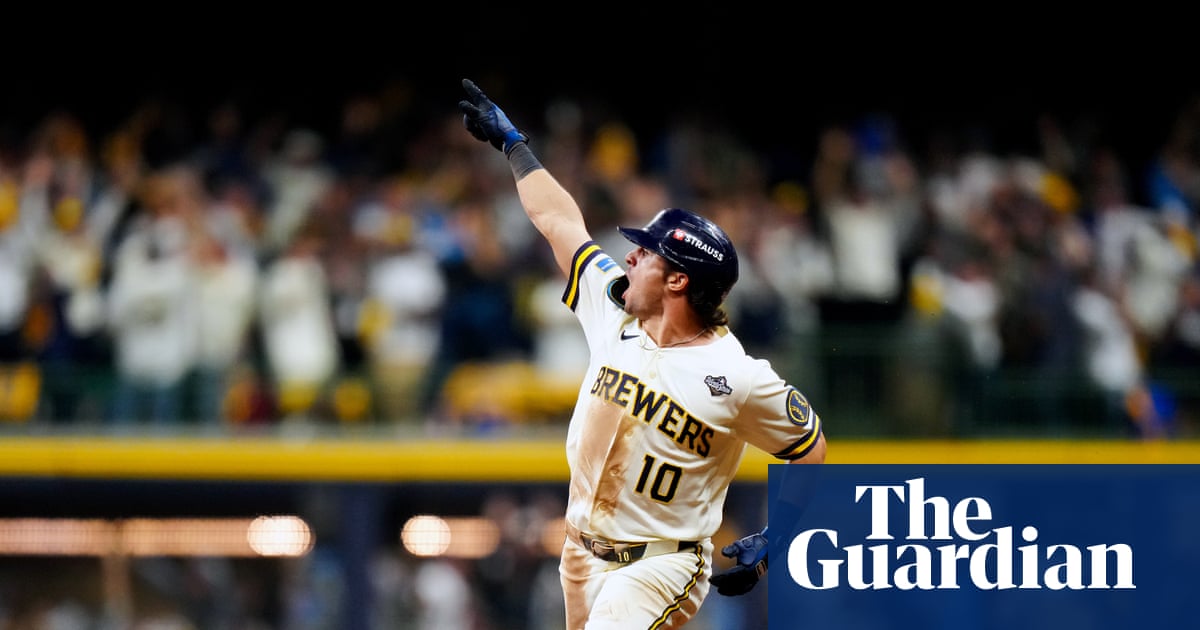
The Milwaukee Brewers are two wins away from the first World Series title in franchise history, and they got a little help from an incredibly close call Saturday night.
asserted
they → get → call
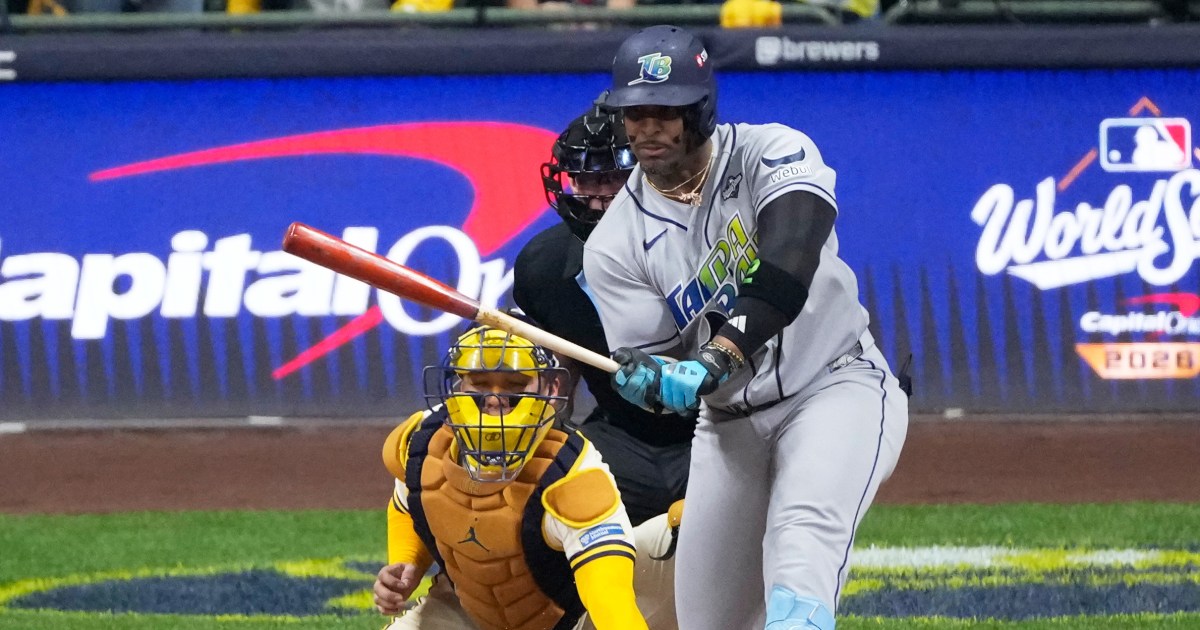
With the Brewers leading 5-4 in the top of the ninth, the Rays had a runner on third with two outs and designated hitter Yandy Díaz at the plate.
asserted
Rays → lead → plate
On a 3-2 pitch that would have been ball four, Díaz tried to check his swing on a curveball from Aaron Ashby.
asserted
Díaz → try → Ashby
Home plate umpire Jim Wolf initially ruled that Díaz hadn’t swung, which would have sent him to first base.
asserted
which → rule → base
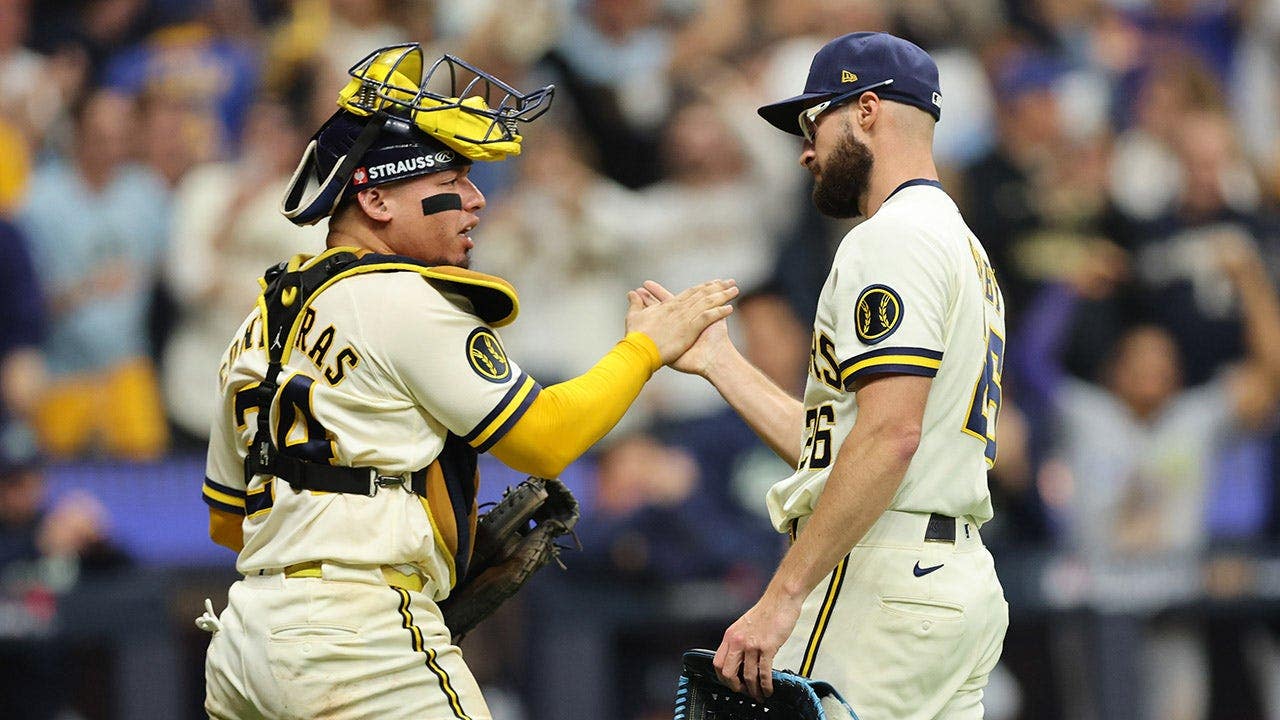
But Milwaukee catcher William Contreras appealed to the first base umpire, who ruled that Díaz had gone around.
asserted
Díaz → appeal → umpire
The strikeout ended the game.
asserted
strikeout → end → game
Here’s how the swing looked in real time:
asserted
swing → ’ → time
And here’s how it looked on replay:
asserted
it → ’ → replay
“In the moment, yeah, I disagreed.
asserted
I → disagree → moment
But the umpire said it was a swing and it is what it is,” Díaz said after the game.
asserted
Díaz → say → game
“I didn’t go look at it, but from my vantage point, it did look like that he swung,” Tampa Bay manager Kevin Cash said.
asserted
Cash → look → point
The postgame crew on the Fox broadcast seemed split over the swing as well.
asserted
crew → seem → swing
It’s a great question, and one that MLB’s rulebook doesn’t answer.
asserted
rulebook → ’ → that
The closest thing comes in the definition of terms where the first example of a strike is a pitch that ‘is struck at by the batter.’
asserted
that → come → batter
That leaves it to the umpires’ discretion when a pitch is considered to be “struck at.”
asserted
pitch → leave → discretion
Colloquially, a batter has to break an imaginary plane for a check swing to be considered a full one.
asserted
swing → have → plane
As with obscenity in Jacobellis v. Ohio, umpires typically know it when they see it.
asserted
they → know → it
Why didn’t the Rays challenge the call?
asserted
Rays → challenge → call
Much to the delight of fans, MLB introduced the automated ball-strike (ABS) system this season, allowing players to challenge, as the name suggests, balls and strikes.
uncertain
name → introduce → balls
ABS came on top of the expanded replay review rules instituted in 2014, which granted managers at least one challenge per game on calls such as force plays, tag plays and even fan interference.
asserted
which → come → plays
Unfortunately for Tampa Bay, check swings aren’t on the list of reviewable plays, so the Rays couldn’t ask for a review of the play in Game 2.
asserted
Rays → ask → Game
“We got ABS for the first time this year, getting the balls and strikes right.
asserted
balls → get → time
We need to get a system that can get [check-swings] right,” Fox play-by-play announcer Joe Davis said during a replay of Díaz‘s swing.
asserted
Davis → need → swing
Will this happen again?
asserted
this → happen → ?
Given all the technology MLB has at its disposal, it’s hard to believe the league and players’ union will let a situation like Game 2’s happen again, particularly when the stakes are as high as the World Series.
asserted
stakes → give → Series
In 2024, MLB tested check-swing challenges in the Arizona Fall League, using the same Hawk-Eye technology used for the ABS system.
asserted
MLB → test → system
In those challenges, teams were able to review if a check swing “crossed a 45-degree threshold from home plate,” according to MLB.com.
uncertain
swing → review → MLB.com
The check-swing challenge has since made it to the minors, being used in the single-A Florida State League beginning in 2025, and the triple-A Pacific Coast League beginning this year.
asserted
League → make → 2025
In June 2025, MLB Commissioner Rob Manfred said he wanted teams to be accustomed to the ABS system before introducing the check-swing challenge to the majors.
asserted
teams → say → majors
“We haven’t made a decision about the check-swing thing,” Manfred said then.
asserted
Manfred → make → thing
“We do try to think sequentially about what’s coming.
asserted
what → try → ?
I think we got to get over the hump in terms of either doing ABS or not doing it before you’d get into the complication of a separate kind of challenge involved in an at-bat, right?
asserted
you → think → bat
You think about them, they’re two different systems operating at the same time.
asserted
they → think → time
We really got to think that one through.”
asserted
We → got → one
 The Aporia