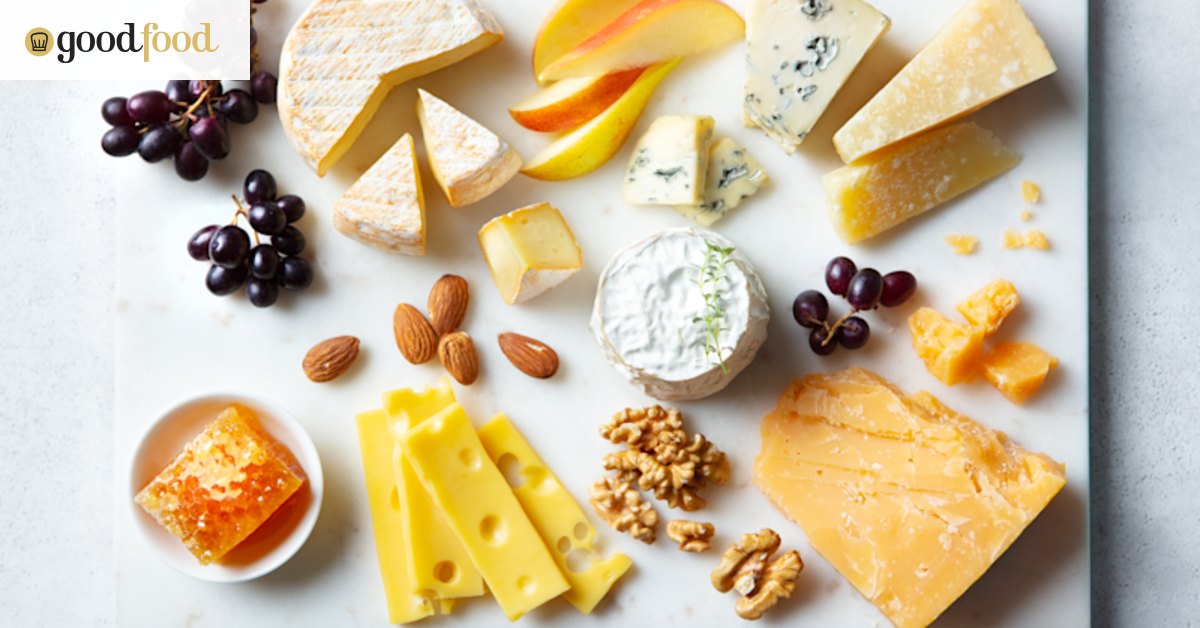
We are a nation of cheese lovers, but it may come as a surprise to discover that this household staple is also a secret superfood.
uncertain
staple → come → surprise
A recent study has revealed that the microbes in different cheeses could also offer a surprising boost for gut health.
uncertain
microbes → reveal → health
Scientists from the University of Reading tracked the microbial and biochemical changes that took place as three cheeses matured.
asserted
cheeses → track → place
Their findings suggest that some of the bacteria responsible for developing each cheese’s unique flavour profile may also be beneficial, “potentially producing compounds linked to reduced inflammation, cholesterol regulation and appetite control”.
uncertain
some → suggest → inflammation
“The theory is that cheese acts as a kind of carrier and protector for [good] bacteria,” says Stephanie Moore, a clinical nutritionist, health coach and author of Eat Your Brain Happy.
asserted
Moore → act → Brain
“Certain families of microbes found in cheeses – the Bifidobacterium and Lactobacillus families in particular – are likely to be having a positive influence as they pass through the digestive system.
asserted
they → find → system
The process of making cheese invariably begins with microbes being added to milk.
asserted
microbes → make → milk
Depending on the type of cheese the cheesemaker wants to produce, they inoculate the milk with different moulds, yeasts and bacteria.
asserted
they → depend → moulds
After that, the environment the cheese is stored in for ageing, what it’s wrapped in and anything else that’s been added to the milk will determine the course of the fermentation, encouraging different microbial families to bloom.
asserted
that → store → families
It’s a complex process, with many variables, which is why there are so many different varieties of cheese.
asserted
which → ’ → cheese
The best cheeses for gut health
Cheddar
Cheddar is the most consumed cheese in Australia and it’s excellent for gut health.
asserted
it → consume → health
A mature cheddar will have gone through around six months of maturation through the work of helpful bacteria.
asserted
cheddar → go → bacteria
“Generally speaking, the longer it is matured, the more intense and complex the flavour,” says Moore.
asserted
Moore → speak → ?
“This tends to directly correlate with the diversity of microbes and other compounds that have developed naturally through the process.
asserted
that → tend → process
A very mild cheddar may not have as much complexity of flavour or variety of microbes, but that doesn’t make it bad for you.
uncertain
it → make → you
“Even standard supermarket cheddar has to have gone through the milk-to-cheese maturation process,” says Moore.
asserted
Moore → have → process
Parmesan
Parmesan has to be matured for a minimum of 12 months, with some being aged for up to two years, making it one of the longest-fermented cheeses.
asserted
it → have → cheeses
“That doesn’t automatically correlate with more helpful microbes, but it does tend to,” says Moore.
asserted
Moore → correlate → microbes
There’s also evidence that hard cheeses’ dense structure and high fat content help protect bacteria from the stomach’s harsh, acidic environment, meaning a lot of the good bacteria can actually reach the gut.
asserted
lot → ’ → gut
A landmark study published in Nature Communications by researchers at the University of Parma found that the microbial communities (such as the gut-friendly Bifidobacterium strains) present in Parmigiano Reggiano could survive digestion and be detected in the human gut.
uncertain
communities → publish → gut
Soft cheeses like brie and camembert are relatively young compared to cheddar and parmesan, as they’re usually aged for up to two months.
asserted
they → compare → months
However, they’re still fermented cheeses, so can contain gut-friendly microbes.
asserted
they → ’re → microbes
The white mould Penicillium candidum, which forms the characteristic rind on brie and camembert, produces a substance called chitin that’s unique to this type of cheese.
asserted
that → form → cheese
“Chitin contains a prebiotic fibre that feeds beneficial gut bacteria,” Moore explains.
asserted
Moore → contain → bacteria
A small 2022 study found that 4.5g of chitin per day improved gut diversity over three weeks, though it is worth noting that the amount of chitin found in cheese is significantly less than the amount in the study.
asserted
amount → find → study
Moore cites burger cheese slices and cheese strings as the worst examples.
asserted
Moore → cite → examples
“These highly processed products [contain no beneficial microbes],” she says.
asserted
she → process → microbes
With real cheese, once you’ve opened it, it changes over time.
asserted
it → open → time
It gets mouldier or changes consistency.
asserted
It → get → consistency
Whereas these ultra-processed cheeses can sit in your fridge for ages and barely change in appearance.
asserted
cheeses → sit → appearance
Anything in a tube or a triangle
“So-called ‘squeezy cheese’ is an ultra-processed food [UPF] containing artificial colourings and additives,” says Moore.
asserted
Moore → call → colourings
UPFs have been found to have a detrimental effect on gut health, with a 2025 study concluding that these foods decrease the amount of good bacteria in the gut, damage the gut lining and contribute to inflammation.
asserted
foods → find → inflammation
Soft cheese triangles like Laughing Cow are also classified as a “processed cheese spread”.
asserted
triangles → classify → spread
“Babybel is fine,” says Moore.
asserted
Moore → say → ?
“It’s a traditional Edam-style cheese; it’s just very mild, which is why kids like it.”
asserted
kids → ’ → it
In the middle
Boursin
Boursin is made with pasteurised cow’s milk and cream, but is unaged – it’s more like a fromage frais than a cheese.
asserted
it → make → cheese
It’s relatively high in calories and saturated fat but low in protein compared with hard cheeses.
asserted
It → ’ → cheeses
“Boursin has gone through the [maturation] process, but not for very long,” says Moore.
asserted
Moore → go → long
“It has then had cultures added to it, along with garlic and chopped herbs or basil and chives, which is what provides its flavour.
asserted
what → have → flavour
It’s by no means microbiologically complex, but nor is it ultra-processed.”
asserted
it → ’ → means
…and 16 more, not listed.
 The Aporia