That is 0 articles you have read today.
The Aporia is free and carries no advertising, so readers are the only
thing paying for it. If you are getting this much out of it, a small
donation is what keeps it independent.
Daily limit reached
You have read 0 articles today.
That is more than the 15 a day The Aporia gives away,
and well past what it can carry on nothing. Your allowance resets at
midnight.
There is no advertising here and nothing about you is sold, so readers
are the only thing paying for it. If the site is worth this much of
your day, it is worth a few dollars.
Everything else stays open: the
maps, the
directory and
search do
not count against this, and neither does re-opening something you have
already read today.
Semafor
· collected 2026-09-15 · by J.D. Capelouto
J.D.’s opinion piece argues that governments are ill-equipped to handle AI safety due to slow decision-making processes and geopolitical tensions. He cites a recent security threat in Chinese superapp WeChat, where an American company discovered a worm capable of spreading through user contacts without their interaction. Despite the severity, it was private companies taking initiative to address the issue rather than government intervention. The article suggests that cross-border collaboration among private entities is more effective for addressing AI safety issues than governmental efforts, given the current lack of trust between major tech powers like China and the US.
Written by the local model on 2026-09-15,
using this article's own text rather than the other coverage of the
same event (that is the story summary below).
Story summary
A US security firm named Calif discovered an AI-powered worm that can hijack WeChat accounts and spread through users' contacts without any action from the victims. The vulnerability affects China’s most popular messaging app, used by over 1.4 billion people, owned by Chinese tech giant Tencent. Calif alerted Tencent, which promptly fixed the issue before it could cause widespread damage. This incident highlights the global nature of cybersecurity threats that do not respect national borders and underscores the need for private companies to take proactive measures since governments often move slowly or lack cooperation on such issues. Following recent high-profile AI-powered hacks, this discovery adds urgency to ongoing discussions about AI safety between the US and China, with talks reportedly scheduled for later in the month.
Written for “AI Safety And Security Concerns” on 2026-09-17,
grounded in this article and the 1 other(s) covering the same event.
Why this leaning score
The model judged this article politically coded and scored it -0.65, but every quote it verified points right, so the score is not published.
Written under an earlier scoring contract, which gave a paragraph
rather than checkable quotes. Re-analysing this article replaces it.
Leaning score withheld for article 10612: score contradicts its own evidence · logged 2026-09-15
A potentially devastating bug in Chinese superapp WeChat is the latest security scare underscoring why relying on slow-moving — and often opposing — governments won’t solve AI’s thorniest problems.
asserted
relying → underscore → problems
Instead, it’s falling to private companies to voluntarily step in and handle the threats themselves.
asserted
it → fall → threats
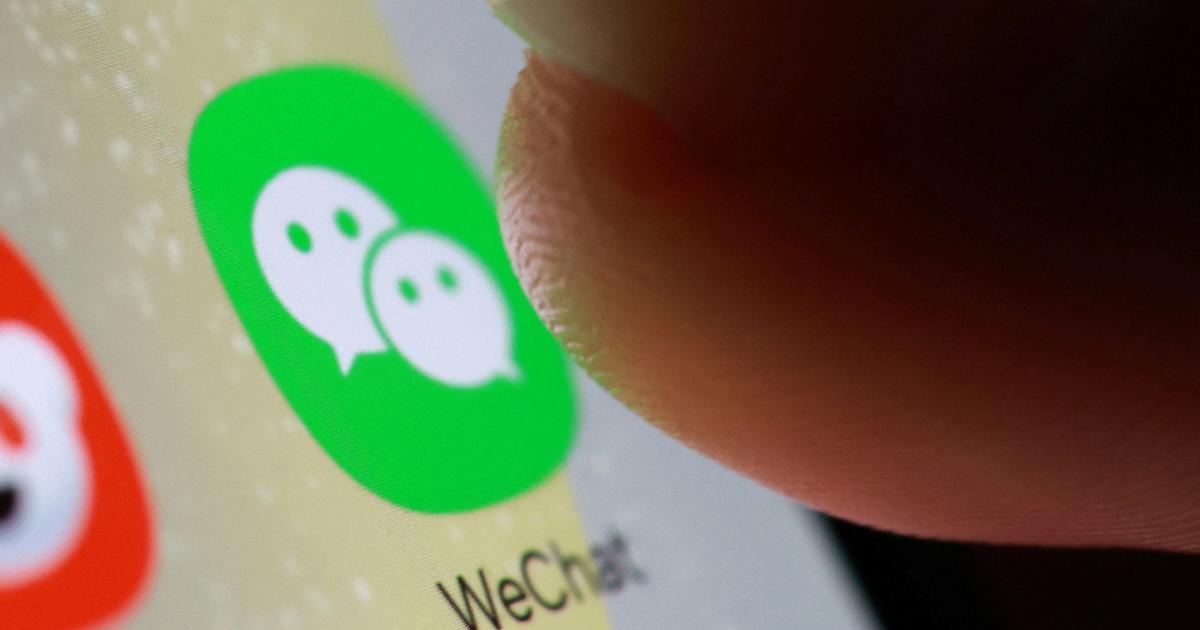
US security company Calif this week revealed an attack tool, known as a worm, that can hijack a WeChat account and spread seamlessly through victims’ contacts regardless of whether any of its users click on anything to let the worm in.
asserted
worm → reveal → anything
It came weeks after the AI-powered hack of Hugging Face — and the use of a Chinese open-source model to figure out what happened — reverberated across companies and governments.
asserted
what → come → companies
The episode goes to show that “cyber vulnerabilities don’t map neatly onto state borders,” US-China tech expert Samm Sacks told me.
asserted
Sacks → go → me
It’s true.
asserted
It → ’ → ?
Fortunately for WeChat’s 1.4 billion users, the exploit was fixed.
asserted
exploit → fix → users
But only after the American startup alerted the app’s owner Tencent, the Chinese tech giant the Pentagon has sworn off due to its alleged ties to the Chinese military
asserted
Pentagon → alert → military
While AI superpowers like China and the US have equal incentives to manage cyber risks, trust between the countries remains nearly nonexistent.
asserted
trust → have → countries
So does the very definition of AI safety: Beijing doesn’t want to be dominated by US frontier labs and is working hard to define the discourse “under its own worldview,” ChinaTalk wrote recently.
asserted
ChinaTalk → do → worldview
Meanwhile, the US government is warning of Chinese AI firms’ “malicious” distillation campaigns.
asserted
government → warn → campaigns
A more technical approach to the idea of AI safety, one driven by private companies, researchers, and technologists rather than ideology, can serve as a stronger foundation for any bilateral agreement.
asserted
approach → drive → agreement
In absence of that, the private sector will have no choice but to lean on unofficial cross-border communication and collaboration to keep the next WeChat worm from leaving the lab.
asserted
sector → have → lab
 The Aporia