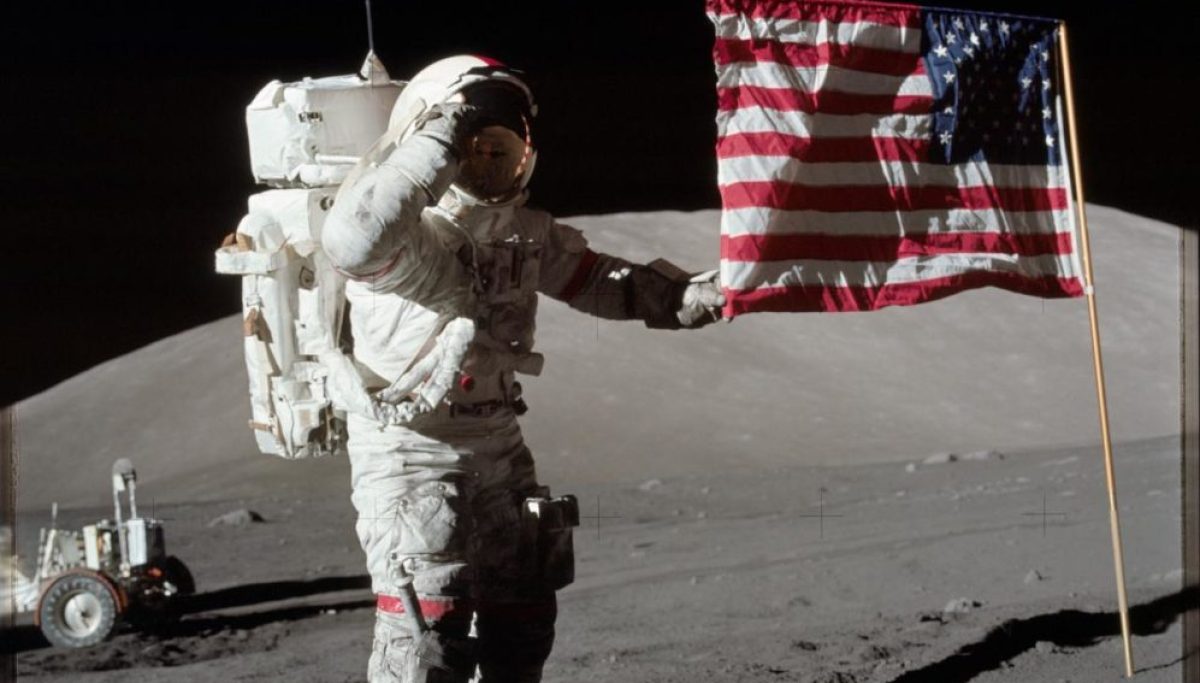
What it took to put Americans on the moon

Read the original at Washington Examiner ↗
Cite

Abrams, S. J. (2026, October 25). What it took to put Americans on the moon. Washington Examiner. https://www.washingtonexaminer.com/restoring-america/patriotism-unity/4777805/what-it-took-to-put-americans-on-the-moon/

Dated from the outlet's own feed. Check the original for its byline.

Washington Examiner · collected 2026-10-25 · by Samuel J. Abrams

Quick Summary

This article is an opinion piece reflecting on American achievements through personal experience and recent inspiration from Walter Isaacson's speech about Grumman, the company that built lunar modules for NASA. The author connects their teenage work with NASA to emphasize the collaborative effort behind significant accomplishments like landing humans on the moon, highlighting the importance of teamwork over individual success.
Written locally by qwen2.5:14b on 2026-10-25, using this article's own text rather than the other coverage of the same event (that is the story summary below).

AI analysis runs on qwen2.5:14b, locally

Story summary

On October 25, 2026, Samuel J. Abrams wrote about the significance of sharing American stories at an event in New York for the launch of the Center for the American Experience at The New School. Abrams highlighted Grumman, a company based in Long Island, whose workers built the lunar modules that took Americans to the moon during the Apollo missions. This historical example underscores the collaborative effort and teamwork behind America's greatest achievements. Abrams, who spent his teenage years working with NASA in Texas, emphasized the importance of being part of a larger mission, reflecting on experiences from various NASA locations including Langley, Virginia, and Huntsville, Alabama.


Written for “Apollo Moon Landings” on 2026-10-25, grounded in this article and the 0 other(s) covering the same event.

Story

📰 Apollo Moon Landings
Science · 1 article(s) covering the same event.

Compared with similar articles

Nothing to compare against. No article is close enough to this one for the pipeline to have linked or judged the pair.
How this article was measured signals, leaning charts, publisher record, byline, topics and claims

Signals How these are calculated →

Claims extracted
5
sentences that state something as happening or true
Uncertain
0%
0 of 5 hedged ("reportedly", "may", "according to")
Leaning
not political
takes no side on a contested political question
Publisher signals
66/100
Washington Examiner's corrections and hedging, across everything collected from it. Not a measure of accuracy.
Outlets on this story
1
Science
Same framing elsewhere
1
articles that frame the event the way this one does
Analyzed 2026-10-25 · how these are computed

How this is being covered How these are calculated →

Article leaning vs. publisher reliability
Source leaning vs. consistency

Publisher

Washington Examiner · 3481 article(s) · 6 correction(s) detected
Running correction rate · 6 correction(s)

Who wrote this

Samuel J. Abrams
5 article(s) here · 0 carrying a prediction
🔮 I have spent much of the past three years fighting battles at my college that I never imagined I would have to fight.
🔮 In foundations courses, the most frequently assigned authors included Paulo Freire, Henry Giroux, Jonathan Kozol, and John Dewey, while E.D. Hirsch turned up on only two syllabi and Diane Ravitch on one, and aspiring teachers were seldom asked to show they could teach children to read.
2026-09-18 · assertive framing · Education schools prioritize activism over teaching
🔮 For the Fourth of July, we drove down to Colonial Williamsburg to hear the Declaration of Independence read aloud from the balcony of the old Capitol.
Also by Samuel J. Abrams
Education schools prioritize activism over teaching
2026-09-18 · Washington Examiner
Nothing else under this byline is closely related to this article, so these are simply their most recent.

Topics

American Grumman New York The New School the Center for the American Experience

Subjects

American NORP · 1× Americans NORP · 1× Grumman ORG · 1× Long Island GPE · 1× NASA ORG · 1× New York GPE · 1× Texas GPE · 1× The New School ORG · 1× Walter Isaacson PERSON · 1× the Center for the American Experience ORG · 1×

Narrative

I had just heard Walter Isaacson speak at the launch of the Center for the American Experience at The New School in New York, and one example stayed with me: Grumman, the Long Island company whose workers built the lunar modules that took Americans to the moon.
framing: assertive · carried by 1 article(s) · first seen 2026-10-25
2026-10-25 · Washington Examiner
What it took to put Americans on the moon · assertive framing

Claims (5 extracted, 0 hedged)

I recently wrote about sharing American stories and the people behind our greatest achievements. asserted
I → write → achievements
I had just heard Walter Isaacson speak at the launch of the Center for the American Experience at The New School in New York, and one example stayed with me: Grumman, the Long Island company whose workers built the lunar modules that took Americans to the moon. asserted
that → hear → moon
When I was a teenager, I spent several years doing work with NASA in Texas. asserted
I → spend → Texas
Over the years, I’ve seen the Saturn V; visited places such as Langley, Virginia, and Huntsville, Alabama; and encountered all sorts of rockets, machinery, and mock-ups. asserted
I → see → rockets
But what stayed with me most was the good fortune of being part of a team working toward something much bigger than any one person. asserted
stayed → stay → person
💬Give feedback
🕘History 🎫Support