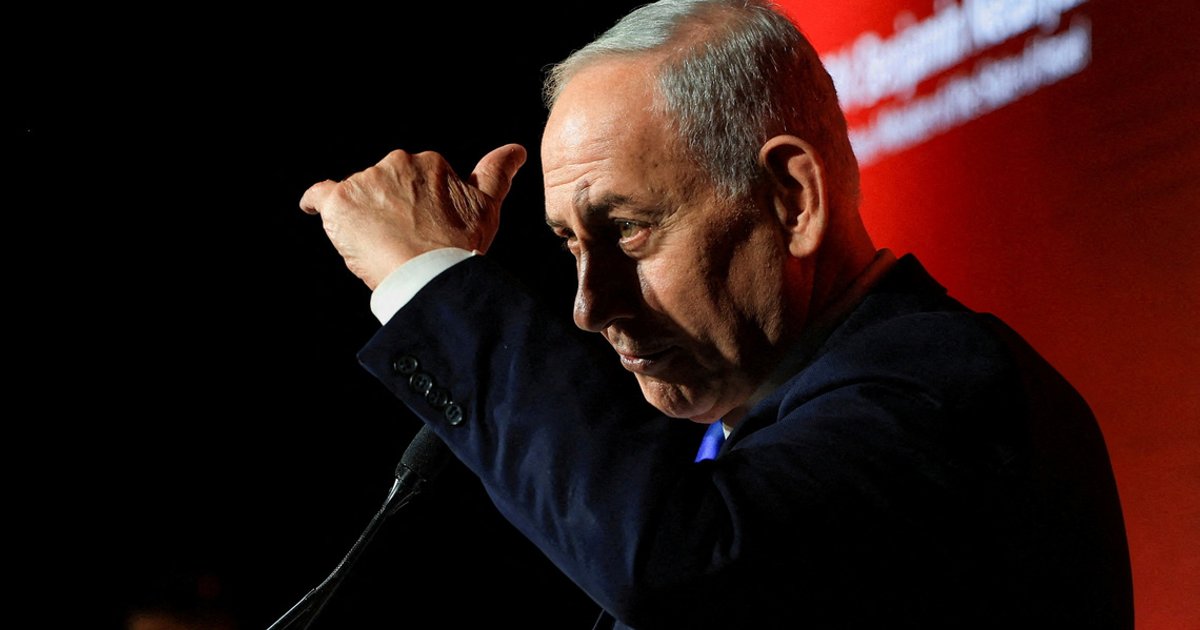
Two days before the general elections, Prime Minister Benjamin Netanyahu has said that Israel should prepare to use cryptocurrency to circumvent potential sanctions on the country amid growing global isolation over its genocidal war on Gaza and settlement expansions in the occupied West Bank.
asserted
Israel → say → Bank
Netanyahu on Friday said that blockchain-based cryptocurrency is the solution to bypass the mounting economic sanctions that would keep the country out of the international financial system.
asserted
that → say → system
The Bank of Israel, the country’s central bank, rejected Netanyahu’s plan, and opposition parties said the incumbent prime minister’s vision is a recipe for disaster and increasing isolation.
asserted
vision → reject → disaster
So, can Israel really circumvent sanctions by dealing in crypto?
asserted
Israel → circumvent → crypto
What’s behind Netanyahu’s crypto pitch?
asserted
What → ’ → pitch
“We need to prepare ways to evade banking sanctions through an alternative economic system,” Netanyahu said in an interview with Israel’s Channel 10 last Friday.
asserted
Netanyahu → need → Channel
“You know what that means – the currencies that can bypass them,” he said, adding that he was referring to blockchain-based crypto.
Netanyahu’s crypto pitch comes as Israel has been facing international isolation over its extreme policies against Palestinians: a surge in settler violence, anti-Palestinian rhetoric and the acceleration of illegal settlements in the occupied territories of the West Bank and East Jerusalem.
Israel has killed more than 74,500 Palestinians since launching its genocidal war on Gaza three years ago.
asserted
Israel → know → Gaza
It has also been accused of committing war crimes in southern Lebanon, which has been hit almost daily by Israeli attacks despite a “ceasefire” now in place.
asserted
which → accuse → place
Israel has also carried out attacks on regional countries, including Iran, as part of its expansionist Greater Israel project, which is rooted in the biblical claim that Israel is entitled to the land between the Nile (in present-day Egypt) and the Euphrates (present-day Iraq).
uncertain
Israel → carry → Egypt
Netanyahu has vowed to expand settlements, which are considered illegal under international laws, and has reiterated that he would not allow the formation of a Palestinian state, drawing condemnation from his European allies.
asserted
he → vow → allies
Last month, at least 12 major economies, including the United Kingdom, pledged coordinated measures against Israeli settlements in the occupied West Bank.
asserted
economies → include → Bank
The European Union has also sanctioned settlement-linked individuals and groups.
asserted
Union → sanction → individuals
Spain and the Republic of Ireland have introduced restrictions on settlement goods, while the Netherlands brought a broader ban on their import, purchase and sale into force in September.
asserted
Netherlands → introduce → September
Israel’s banking system has not yet been targeted by sanctions.
asserted
system → target → sanctions
Moreover, Netanyahu also warned that Israel needs to look out for financing its own military, in the face of less support from Washington in bankrolling its wars – because “America has changed”.
asserted
America → warn → wars
“It [financing] will end.
asserted
It → end → ?
It is only a matter of time,” Netanyahu said, adding that after US President Donald Trump’s tenure ends in two years, Israel should prepare for a less favorable White House.
asserted
Israel → say → House
The United States funnels billions of dollars to the Israeli military annually, but the genocidal war on Gaza has changed unrestricted military support for Israel, which a growing number of Americans have started to question.
asserted
number → funnel → Americans
Netanyahu also faces an arrest warrant by the International Criminal Court (ICC) for war crimes, while the International Court of Justice (ICJ) is hearing the case of genocide against Israel brought by South Africa.
asserted
Court → face → Africa
If the ICJ verdict goes against Israel, it would further intensify calls for sanctions against the country, including restrictions on arms exports, trade and financial ties, as governments around the world face mounting pressure to hold Israeli officials accountable.
Can crypto help evade sanctions?
asserted
crypto → go → sanctions
If Israeli banks are restricted from international transfers, then businesses could attempt to pay overseas suppliers using cryptocurrencies like Bitcoin, stablecoins, or other digital assets.
uncertain
businesses → restrict → Bitcoin
Cryptocurrency is digital money, transferred between people or businesses over the internet, where transactions are recorded on a digital ledger called a blockchain.
asserted
transactions → transfer → ledger
Public blockchains can transfer assets directly between digital wallets without a bank processing every transaction.
asserted
bank → transfer → transaction
Sanctioned actors have used cryptocurrencies for cross-border payments, including transactions connected to oil sales and procurement.
asserted
actors → use → sales
Russia, which has been slapped with sanctions for its invasion of Ukraine, has reportedly used cryptocurrencies to make some payments to evade sanctions.
uncertain
which → slap → sanctions
But crypto cannot replace conventional banking at the scale of today’s economy.
asserted
crypto → replace → economy
It can be a parallel medium, but cannot replace the traditional banking system, experts note.
asserted
experts → replace → system
Moreover, crypto does not solve a fundamental problem that Israel faces from sanctions: financial isolation, which by design also demoralises investors and businesses.
asserted
which → solve → investors
It also restricts access to financial institutions or penalises third parties that deal with designated entities.
asserted
that → restrict → entities
Therefore, even if a business uses crypto for payments, the transaction would still be illegal.
asserted
transaction → use → payments
Israel’s economy also depends on international trade and technology supply chains, wherein its defence and tech industry need foreign components and specialist equipment.
asserted
industry → depend → components
More than 100 experts and former Israeli officials, in a statement issued on Sunday, expressed “grave concern and anxiety” over Netanyahu’s crypto plan.
asserted
experts → issue → plan
They accused the Israeli prime minister of failing to grasp the seriousness of the threat, and criticised his proposal as a solution more commonly associated with criminal organisations.
asserted
They → accuse → organisations
Sanctions would cause “enormous and irreversible damage” to the Israeli economy, they said.
asserted
they → cause → economy
Who opposes Netanyahu’s plan in Israel?
asserted
Who → oppose → Israel
The Bank of Israel rejected Netanyahu’s plan, arguing that cryptocurrencies “cannot be used as a route for bypassing sanctions”.
asserted
cryptocurrencies → reject → sanctions
“The right thing for Israel’s economy is preserving the economic relationships with our principal trade partners and focusing on preventing sanctions and their negative influence on the economy,” the central bank said in a statement.
asserted
bank → preserve → statement
“This issue is within the responsibilities of the political echelon, and it should act to advance it.
asserted
it → act → it
However, Netanyahu responded by saying that he is grateful for the bank’s advice, “But I do what I think [is best].”
asserted
I → respond → advice
Netanyahu’s main opponent, Yashar party leader Gadi Eisenkot, said that the PM’s vision “is a threat to national security”.
asserted
vision → say → security
…and 3 more, not listed.
 The Aporia