America's little-known castles, displaying 'raw power,' are hiding in plain sight

Read the original at Fox News ↗
Cite

Margolis, A. (2026, October 25). America's little-known castles, displaying 'raw power,' are hiding in plain sight. Fox News. https://www.foxnews.com/travel/americas-little-known-castles-displaying-raw-power-hiding-plain-sight

Dated from the outlet's own feed. Check the original for its byline.

Fox News · collected 2026-10-25 · by Andrea Margolis

Quick Summary

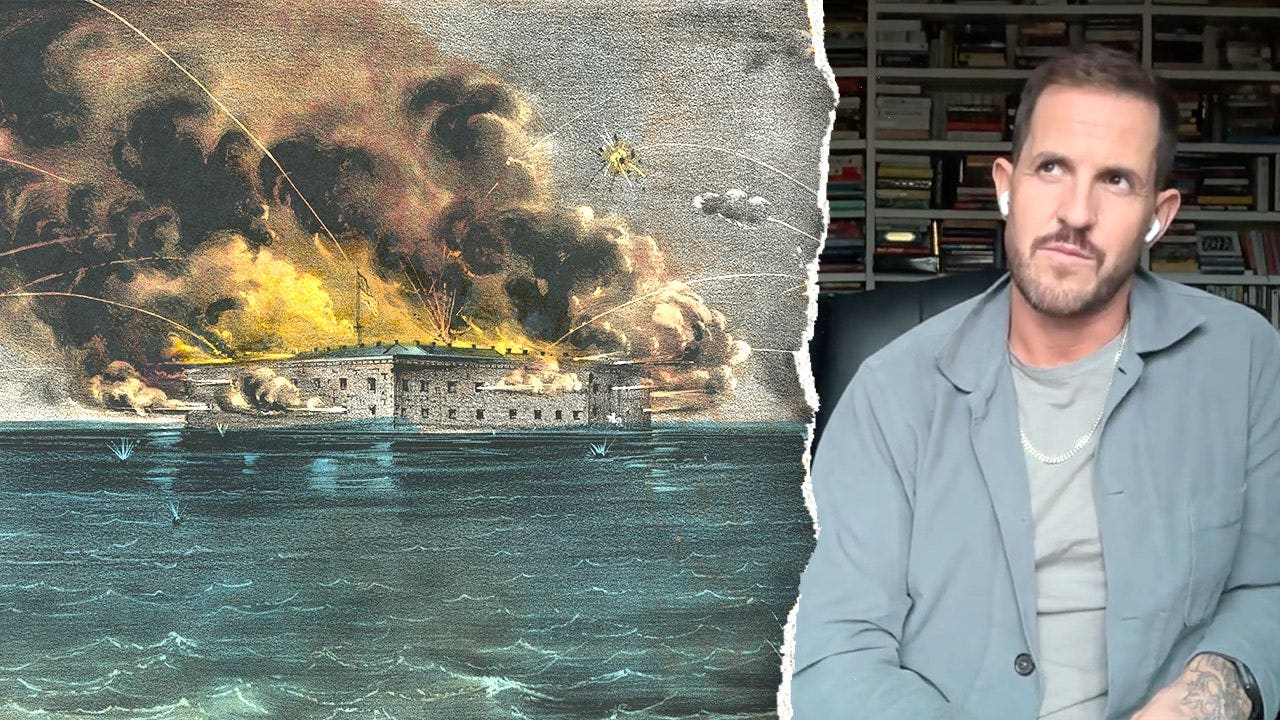
Historian Dan Jones discusses his book on the history of fortifications and castles, highlighting examples from America including Civil War forts like Fort Sumter and Fort Pulaski, which played crucial roles in military advancements during that period. He also mentions grand estates such as Hearst Castle and Biltmore Estate, noting their function as displays of wealth similar to medieval castles. Jones emphasizes the dual nature of castles—providing defense while showcasing power—and how this concept persists in modern American architecture and entertainment venues like Disneyland's Sleeping Beauty Castle.
Written locally by qwen2.5:14b on 2026-10-25, using this article's own text rather than the other coverage of the same event (that is the story summary below).

AI analysis runs on qwen2.5:14b, locally

Story summary

Historian Dan Jones discussed America's lesser-known castles and fortifications in his latest book "Castles: A Fortified History of the World," which explores structures across different eras and regions, including Japan's Himeji Castle and Cold War nuclear bunkers. According to Jones, discussing American fortifications is crucial for understanding global castle history. Notable examples include Hearst Castle in California, Biltmore Estate in North Carolina, and Belcourt in Newport, Rhode Island, which were built as displays of wealth and status rather than military defense. Additionally, Fort Sumter in South Carolina holds historical significance as the site where Confederate forces fired upon Union troops in April 1861, marking the start of the Civil War.

Written for “America's Hidden Castles” on 2026-10-25, grounded in this article and the 0 other(s) covering the same event.
Why this leaning score
This article does not take a side on a contested political question, so it has no leaning score. That is an answer rather than a gap: a match report or a rescue can be warmly or critically written without being left or right, and scoring it anyway is how approval of a subject gets recorded as a political position.
No political leaning scored for article 105898 · logged 2026-10-25

Story

📰 America's Hidden Castles
Other · 1 article(s) covering the same event.

Compared with similar articles

Nothing to compare against. No article is close enough to this one for the pipeline to have linked or judged the pair.
How this article was measured signals, leaning charts, publisher record, byline, topics and claims

Signals How these are calculated →

Claims extracted
29
sentences that state something as happening or true
Uncertain
7%
2 of 29 hedged ("reportedly", "may", "according to")
Leaning
not political
takes no side on a contested political question
Publisher signals
67/100
Fox News's corrections and hedging, across everything collected from it. Not a measure of accuracy.
Outlets on this story
1
Other
Same framing elsewhere
1
articles that frame the event the way this one does
Analyzed 2026-10-25 · how these are computed

How this is being covered How these are calculated →

Article leaning vs. publisher reliability
Source leaning vs. consistency

Publisher

Fox News · 5408 article(s) · 9 correction(s) detected
Running correction rate · 9 correction(s)

Who wrote this

Andrea Margolis
48 article(s) here · 1 carrying a prediction
🔮 Yet the history of these imposing structures is much closer to home than many might realize.
🔮 "Prepare a will," the advisory added.
🔮 An American Airlines flight departed from St. Louis Lambert International Airport on Oct. 17, bound for Philadelphia, before turning back to the airport. Gary Leff, a Texas-based aviation expert who founded the blog "View from the Wing," told Fox News Digital that engine oil entering an aircraft's air supply could potentially explain the odor, although the cause of the incident has not yet been confirmed. "When that happens, you can get smoke, you can get vibration, you can get loud noises.
🔮 The theory centered on the Taraia Object, a visual anomaly first spotted in satellite imagery in 2020 that researchers suspected could be wreckage of Earhart's Lockheed Electra 10-E. But the university said the object was "likely a collection of large trees deposited along the peninsula’s sandspit."
🔮 Later archaeological discoveries have challenged that timeline, suggesting humans may have reached North America thousands of years earlier. The researchers, led by Bethany Potter and Savannah Hay of the University of Kansas, reviewed existing ancient DNA and archaeological evidence, including 23,000-year-old human footprints found at White Sands National Park in New Mexico.
🔮 The palace, which Cleopatra may have once used, could have later served as administrative offices, possibly overseeing operations at the Lighthouse of Alexandria, Morris said.
🔮 Officials added, "This means that the approximately 7,000-year-old burial is the oldest grave discovered to date within the city limits of Leipzig." Archaeologists will continue excavating the site until the middle of this month, when the Saxony State Office for Archaeology is expected to begin its scientific analysis. State archaeologist Regina Smolnik emphasized the importance of conducting archaeological investigations even in heavily developed areas. "Our investigations in Leipzig-Möckern demonstrate very clearly how important the involvement of archaeology is, even in urban areas," Smolnik said in a statement.
🔮 Days into their expedition, the team searching for Amelia Earhart’s missing plane is battling severe weather — and racing to identify a mysterious object that could finally solve the aviator's disappearance.
🔮 Purdue University confirmed on Monday that the crew would sleep aboard its vessel rather than on the island, citing the enormous crustaceans as one reason for the decision.
🔮 "Along most of the route, the water flowed along a very gentle gradient, dropping just one meter [3.3 feet] in elevation per kilometer [0.6 miles]." The aqueduct will be preserved and incorporated into the main entrance of the planned residential development, allowing visitors to see the ancient engineering firsthand.
Also by Andrea Margolis
Nothing else under this byline is closely related to this article, so these are simply their most recent.
All 48 articles by Andrea Margolis →

Topics

America Americans European Fox News Digital Union

Subjects

Jones PERSON · 12× America GPE · 7× Fox News Digital ORG · 3× Guy Fawkes PERSON · 2× Union ORG · 2× Americans NORP · 1× Dan Jones PERSON · 1× England GPE · 1× European NORP · 1× Japan GPE · 1×

Narrative

Beyond military forts, America is also home to grand, castle-like estates built as displays of wealth and status, including Hearst Castle in California and Gilded Age mansions such as the Biltmore Estate in North Carolina and Belcourt in Newport, Rhode Island.
framing: assertive · carried by 1 article(s) · first seen 2026-10-25
🔮 Yet the history of these imposing structures is much closer to home than many might realize.

Claims (29 extracted, 2 hedged)

When most Americans think of castles, they likely picture medieval fortresses towering over European hills. asserted
they → think → hills
Yet the history of these imposing structures is much closer to home than many might realize. uncertain
many → impose → home
Speaking to Fox News Digital from England, historian Dan Jones described his latest book as a 3,000-year journey through human history, from the Sack of Troy to the Nuclear Age, as it explores the broader history of castles and fortifications. asserted
it → speak → castles
From Iron Age hillforts to classic medieval castles and beyond, "Castles: A Fortified History of the World," explores fortifications across different eras and regions of the world, including Japan's Himeji Castle and nuclear bunkers built during the Cold War. asserted
Castles → explore → War
Jones examines the role America has played in the broader history of castles, from early fortifications to Civil War-era forts. asserted
America → examine → forts
"I don't think we can truly understand it without having the American side to the story," said Jones. asserted
Jones → think → story
One notable example is Fort Sumter in South Carolina, where Confederate forces opened fire on Union troops in April 1861, marking the beginning of the Civil War. asserted
forces → open → War
Jones described Fort Sumter, a coastal fortress built with thick brick walls and artillery defenses, as one of the "descendants of castles" that emerged in America. asserted
that → describe → America
Another important moment in the history of castle building, Jones said, came when Union forces attacked Fort Pulaski in Georgia with rifled cannons in 1862. asserted
forces → say → 1862
The fort had been considered nearly impenetrable, but was "blown to bits" within 48 hours, Jones told Fox News Digital. asserted
Jones → consider → Digital
"Fort Pulaski was just thought to be so strong, you may as well bombard the Rocky Mountains," Jones said. uncertain
Jones → think → Mountains
"Well, Fort Pulaski was blown to bits in 48 hours, and that was a transformative moment in the whole history of castle building. asserted
that → blow → building
Beyond military forts, America is also home to grand, castle-like estates built as displays of wealth and status, including Hearst Castle in California and Gilded Age mansions such as the Biltmore Estate in North Carolina and Belcourt in Newport, Rhode Island. asserted
America → build → Newport
Asked about the historical significance of America's grand, castle-like estates, Jones said that castles have long served two purposes: providing defense and displaying wealth and power. asserted
castles → ask → wealth
"There's this moment in the Middle Ages where they're combined, but you can see this in America today." asserted
you → be → America
In that respect, many of the grand estates built during America's Gilded Age followed the same tradition as the magnificent residences of medieval kings and nobles. asserted
many → build → kings
"There's this moment in the Middle Ages where they're combined, but you can see this in America today," Jones said. " asserted
Jones → be → America
There are colossal fortifications and there are these colossal palatial houses that have always been built by the super wealthy." asserted
that → be → wealthy
He pointed to Disneyland's Sleeping Beauty Castle, built in 1955, as another example of the enduring appeal of castles in the popular imagination. asserted
He → point → imagination
"These are as much a part of the story of castles as the sort of classic medieval ... stronghold," he said. asserted
he → say → stronghold
Even so, the romantic image of castles often contrasts with their darker history. asserted
image → contrast → history
"The castle can sit on the landscape to intimidate, to terrify, to be a display of raw power," he said. asserted
he → sit → power
The history of castles is, of course, also filled with gruesome details, and some of the most famous fortresses served as prisons and sites of torture and execution. asserted
some → fill → torture
Jones pointed to the Tower of London, where Anne Boleyn was beheaded and Guy Fawkes was tortured following the Gunpowder Plot of 1605. asserted
Fawkes → point → 1605
"I've had dinner in the room in which Guy Fawkes was stretched out on the rack after the Gunpowder Plot of 1605, which is a slightly grisly place to be," Jones told Fox News Digital. asserted
Jones → have → Digital
But castles have also served as zoos, mints and royal residences, Jones noted. asserted
Jones → serve → zoos
Despite their sometimes dark history, Jones believes the enduring fascination with castles goes beyond what meets the eye. asserted
what → believe → eye
"Somewhere deep down the story of the castle is the story of building places to protect the things we love," he said. asserted
he → build → things
"That's what connects the whole history of fortification and castle building all the way back to almost the dawn of recorded history." asserted
what → connect → history

💬Give feedback
🕘History 🎫Support