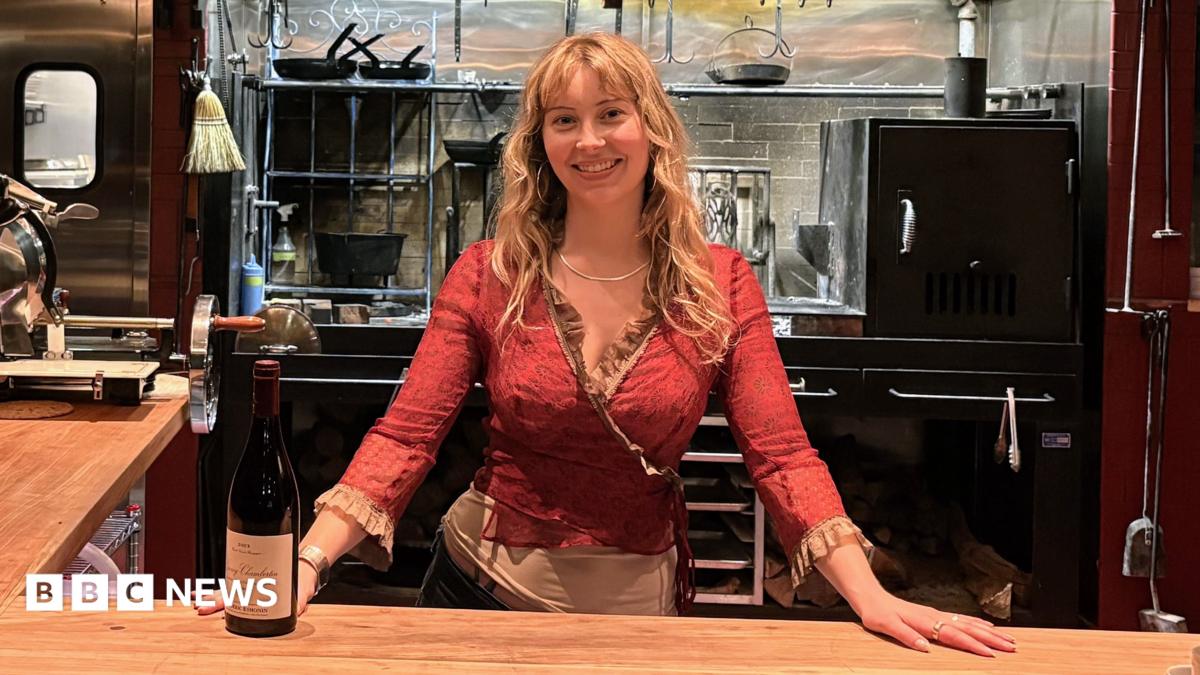
Some US restaurants are adopting a no-tipping policy, charging higher prices to ensure fair wages for staff. Caroline Kraetzer, a wine waiter at La Cigale in San Francisco, earns $40 an hour under this model, double what most service workers earn locally. Rachel Miller, chef and owner of Nightshade Noodle Bar in Lynn, Massachusetts, also moved to a no-tipping system after the pandemic to address wage disparities between kitchen and front-of-house staff, raising menu prices accordingly from $102 for seven courses to $126 for nine courses. However, maintaining such policies can be challenging; Talulla, another restaurant in Cambridge, Massachusetts,试行了无小费模式但因顾客难以接受更高的菜单价格而最终放弃了这一做法。
Written by the local model on 2026-09-15,
using this article's own text rather than the other coverage of the
same event (that is the story summary below).
- Published
Wine waiter Caroline Kraetzer earns $40 (£30) an hour, double what most service staff in San Francisco are paid but then it costs a lot to eat at her restaurant.
asserted
it → publish → restaurant
At a set price of $140 (£100) per person, La Cigale is one of a small number of US restaurants charging higher prices so it can pay high salaries - and it doesn't allow tips.
asserted
it → set → tips
It tells customers: "What you see is what you pay.
asserted
you → tell → what
We do not accept tips, your kind words and return visits will suffice."
asserted
words → accept → tips
Kraetzer says it is good to no longer be "reliant on the generosity of strangers to pay the bills".
asserted
it → say → bills
While waiting staff at other restaurants can make a lot of money from tips, she says "you're often there two hours before service, and again when you're closing after the guests have left, so you are making minimum wage during that time".
asserted
you → wait → time
On the other side of the US, Rachel Miller, chef and owner of Nightshade Noodle Bar in the town Lynn, Massachusetts, moved to a tip-free model five years ago when they reopened after the Covid-19 pandemic.
asserted
they → move → pandemic
Her motivation was to make it fairer for the kitchen staff.
asserted
it → make → staff
"The people breaking their backs and minds in the kitchen - often the least visible and the least celebrated - were taking home a fraction of what the front staff made on tips for the same hours," she says.
asserted
she → break → hours
Miller says she found it "deeply unsettling" to see higher tips going to white male staff and lower tips to everyone else.
asserted
tips → say → everyone
"Tipping lets guests, consciously or not, pay people differently based on gender, race, or sexuality and I was not willing to let that decide my team's income.
asserted
that → let → income
"
To pay the staff higher wages, Miller also increased prices at the French-Vietnamese restaurant.
asserted
Miller → pay → restaurant
Its tasting menus now start from $102 (£75) for seven courses before 18:00, and $126 (£92) for nine courses.
asserted
menus → start → courses
"Our prices are higher than a comparable restaurant's because they carry the full cost of paying people properly," says Miller.
asserted
Miller → carry → people
"That is the trade, and I stand behind it.
asserted
I → stand → it
"
Tip-free can mean higher prices
Yet not every restaurant that has switched to a tipless model has made a success of it, as sometimes customers don't appreciate the higher menu prices.
asserted
customers → mean → prices
Talulla in Cambridge, Massachusetts, dropped tips in 2020 so it could pay staff more equitably, only to then switch back in September of last year.
"We tried to keep our non-tipping model simply by raising our menu prices 23%, but we were only able to sustain this through the winter months," says co-owner Danielle Ayer.
uncertain
Ayer → drop → months
"Operating a non-tipped restaurant is more expensive overall," adds Ayer.
asserted
Ayer → operate → restaurant
This is because tips don't count as part of a restaurant's revenues, but higher menu prices do.
asserted
prices → count → revenues
So if a venue increases prices to pay staff more, its revenues go up accordingly, and it must pay more sales tax.
William Michael Lynn, professor of food and beverage management at Cornell University and author of The Psychology of Tipping, says the problem of going tip-free is that customers struggle to get their heads around the maths.
asserted
customers → increase → maths
"Higher menu prices make dining out seem more expensive because people do not adequately take into account that they are no longer tipping," he says.
asserted
he → make → account
"It leads to lower demand."
In New York, vegetarian restaurant Dirt Candy was one of the very first to ban tipping back in 2015
asserted
Candy → lead → 2015
"I wanted to make it more equal for everybody," says chef and owner Amanda Cohen, who now pays her staff about $30 an hour.
asserted
who → want → 30
She says that many customers "are pleasantly surprised when they realise they don't have to tip 20% on top".
asserted
they → say → top
Cassidy Van der Kamp is a filmmaker whose YouTube documentary Tipless was inspired by her own experience of working in a restaurant in Oakland, California which went tip-free.
asserted
which → inspire → Oakland
While some other servers left, Van der Kamp, who was originally paid about $10 an hour plus tips, decided to stay and earned $21 per hour after the change.
"
asserted
who → leave → change
I had stability for the first time as I knew what I was earning… and I didn't need to look at a low tip and think what did I do wrong?"
asserted
I → have → what
While Van der Kamp liked the move, Lynn says that a huge challenge of moving to a gratuity-free system is that it can be difficult to attract and retain waiting staff who like getting tips.
asserted
who → like → tips
However, given the growth of what has been called "tipping fatigue" – people being increasingly annoyed at having to pay high tips – will more restaurants stop the practice?
asserted
restaurants → give → practice
"Despite tip-fatigue, I do not think tipping is going to be eliminated on widescale anytime soon because the economic disadvantages of eliminating tipping outweigh the advantages," says Lynn.
asserted
Lynn → think → advantages
Back at Nightshade Noodle Bar, Miller doesn't regret her decision.
asserted
Miller → regret → decision
"The clearest measure is that staff stay.
asserted
staff → stay → ?
"Turnover in this industry is brutal, and we have people who have been here since we made the change.
asserted
we → have → change
It has proven to be highly valued by my guests and team."
asserted
It → prove → guests
 The Aporia