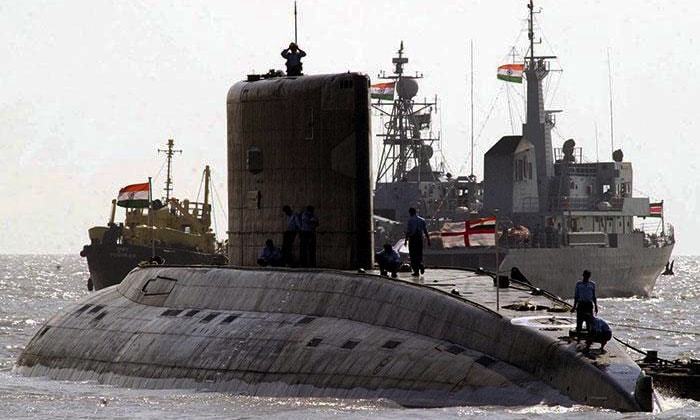
Dawn’s October 23 editorial rightly warned about India’s nuclear-armed submarine patrols.
asserted
editorial → warn → patrols
It is a sea-based nuclear force growing alongside precision-strike capabilities, missile defence and a false confidence in initiating military action.
asserted
It → base → action
Imagining that these developments confer a first-strike advantage or create a safe space for war is imprudent.
asserted
developments → imagine → war
Pakistan has the capability and resolve to preserve the strategic balance.
asserted
Pakistan → have → balance
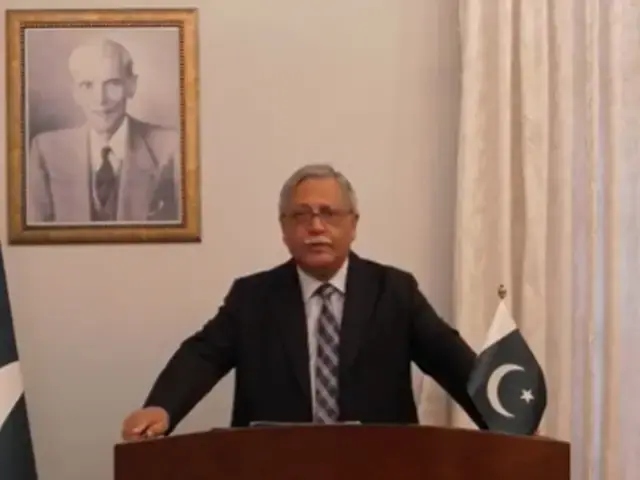
Retired Lt-Gen Mazhar Jamil, Adviser to the National Command Authority, warned at the International Institute for Strategic Studies on October 13 that continuous at-sea deterrence further weakens the credibility of India’s declared no-first-use policy and points towards an offensive strike posture.
asserted
deterrence → warn → posture
He added that unannounced submarine-launched ballistic-missile tests, with operationalised weapons aboard submarines, raise the risks of misperception and escalation.
asserted
tests → add → misperception
Pakistan reserves the right to take all appropriate measures to protect its security and the regional balance.
asserted
Pakistan → reserve → security
At the Islamabad Non-Proliferation Conference a week later, retired Lt-Gen Khalid Kidwai, also an adviser to the National Command Authority, reinforced the warning, saying Pakistan would review its options if India sought to impose a strategic imbalance.
asserted
India → retire → imbalance
In June 2026, the Stockholm International Peace Research Institute (Sipri) estimated that India had a stockpile of 190 nuclear warheads and 12 of these deployed on a nuclear-powered ballistic-missile submarine for occasional deterrence patrols.
asserted
12 → estimate → patrols
That estimate is too low and arrives seven years late.
asserted
estimate → arrive → ?
Minister Modi announced the INS Arihant’s first deterrence patrol in 2018 and the Indian Navy again patrolled it again during the 2019 crisis.
asserted
Navy → announce → crisis
India has three operational ballistic-missile submarines (SBBN), with a fourth expected in 2027.
asserted
fourth → have → 2027
Next year, the four SSBNs will have a combined capacity to launch missiles carrying up to 72 warheads from 24 tubes.
asserted
SSBNs → have → tubes
A larger fleet of 12 nuclear ballistic and attack submarines is envisaged in the 2030s.
asserted
fleet → envisage → 2030s
India’s professed no-first-use pledge cannot be judged without taking into account its capabilities and political conduct.
asserted
pledge → profess → capabilities
A ready, concealed launch platform gains a different meaning when combined with counterforce ambitions, missile defence and talk of pre-emption.
asserted
platform → conceal → emption
General Kidwai’s assessment about a possible strike at ‘zero notice’ should be read in that setting.
asserted
assessment → read → setting
Pakistan has never allowed its deterrence capability to be neutralised by India’s posture that is taken as routine modernisation.
asserted
that → allow → modernisation
Strategic stability rests on a credible balance and Pakistan will maintain it under all circumstances.
asserted
Pakistan → rest → circumstances
General Zubair Hayat, former Chairman of the Joint Chiefs of Staff Committee, argued at the Islamabad Non-proliferation Conference that the old international order is giving way without an equitable replacement.
asserted
order → argue → replacement
His strategic point applies here: strategic exemptions for a favoured state, followed by alarm at its neighbour’s balancing measures, do not produce equal security.
asserted
exemptions → apply → security
The nuclearisation of the Indian Ocean did not begin when Pakistan raised its concerns.
asserted
Pakistan → begin → concerns
It began with India’s risky choices, enabled and fuelled by an international tendency to treat its ambitions as benign.
asserted
It → begin → ambitions
May 2025 demonstrated the danger of that assumption on land and in the air.
uncertain
May → demonstrate → air
On the first anniversary of Marka-i-Haq, President Asif Ali Zardari reiterated that India used Pahalgam’s false flag as a guise for premeditated strikes.
asserted
India → reiterate → strikes
India ignored Pakistan’s offer of a neutral investigation and had to endure a defeat and loss of face.
asserted
India → ignore → face
Pakistan’s calibrated conventional response, under political authority, restored conventional deterrence, while Full Spectrum Deterrence preserved the strategic ceiling.
asserted
Deterrence → calibrate → ceiling
The Indian Air Force grounded itself, and the Indian Navy’s carrier strike group cut a hasty retreat to safety.
asserted
group → ground → safety
The ceasefire followed Islamabad’s response and New Delhi’s call for third-party mediation.
asserted
ceasefire → follow → mediation
A lesson for India
Retired Lt-Gen Sarfraz Sattar, who served as Director General of the Strategic Plans Division, has also warned that emerging technologies and great-power competition threaten nuclear stability.
asserted
technologies → serve → stability
The March 2022 BrahMos launch into Pakistan showed why.
asserted
launch → show → Pakistan
A supersonic nuclear-capable missile crossed the border in peacetime; India waited nearly two days before acknowledging it and did not accept Pakistan’s call for a joint inquiry and preserved the risk of escalation.
Three years on, India carried that risk into wartime by employing BrahMos against another nuclear power — the first such instance.
asserted
India → cross → instance
The sea-leg of India’s nuclear triad and dual-capable missiles are sinews of a Hindutva-inflected policy of hegemony and coercion.
asserted
leg → inflect → hegemony
Pakistan’s declared Full Spectrum Deterrence covers the range of threats it faces, and it clearly signals that aggression at any level or in any domain risks a response that will deny objectives and impose costs; an adversary cannot dictate the level at which a confrontation will remain.
asserted
confrontation → declare → which
Political authority, prepared forces and credible options give that warning its weight.
asserted
authority → give → weight
As India’s posture changes, Pakistan will take the measures necessary to safeguard its sovereignty and strategic balance.
asserted
Pakistan → take → sovereignty
Risk reduction has value, but it cannot substitute for deterrence or responsible political choices.
asserted
it → have → deterrence
Dialogue is worthwhile when it reduces the incentives and opportunities for unilateral force, not when it is offered as a substitute for Pakistan’s defence.
asserted
it → reduce → defence
Pakistan always stands ready to impose greater costs for on any misadventure that India may undertake, including the maritime domain.
uncertain
India → stand → domain
In May 2025, Islamabad demonstrated that its calibrated notch-up response should not be read to mean that every aggression will meet the same ceiling.
uncertain
aggression → demonstrate → ceiling
…and 9 more, not listed.
 The Aporia