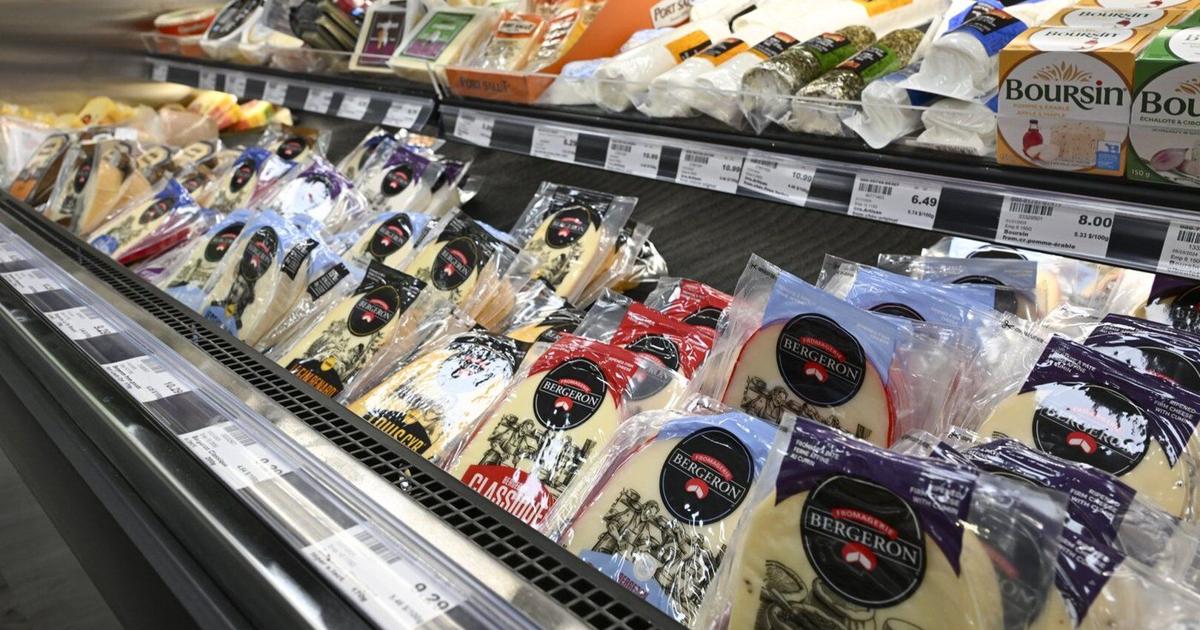
TORONTO - Narrow aisles, fewer shelves, and plenty of house-brand items: this Loblaw store feels cosier but still offers enough variety for a grocery run.
asserted
store → feel → run
Loblaw’s Danish chief executive, Per Bank, brought a little bit of Europe with him three years ago when he moved here to run the country’s largest grocery chain.
asserted
he → bring → chain
“Small discount stores ... I would probably say that’s some of the things I brought to Canada,” Bank said, sitting in the backroom of a small-scale Toronto No Frills on a brisk October morning.
asserted
Bank → say → morning
In its smaller 5,000-product stores, Loblaw has done away with the deli counters, live pizza stations and fresh bakeries typical of its conventional banners — and shoppers aren’t complaining.
asserted
shoppers → do → banners
While discount stores aren’t a new phenomenon, Loblaw’s transition into a quick in-and-out shopping experience at its discount banners, No Frills and Maxi, has taken it up a notch.
asserted
transition → take → notch
Now, many of its discount banners are downsized into something more like a corner store.
asserted
many → downsize → store
When he took the helm, Bank said the company had about 43 small-format stores under 20,000 sq. ft.
asserted
company → take → ft
“Now we have a plan to go for the small stores.
asserted
we → go → stores
And it’s both urban and it’s rural,” Bank said.
asserted
Bank → ’ → ?
That’s opened room for Loblaw to grow its discount footprint even in smaller communities with as few as 4,000 people, where a full-scale conventional grocer may not set up shop.
uncertain
grocer → open → shop
“Not many years ahead, I believe that discount will be more than half of our food business,” Bank said.
asserted
Bank → believe → business
“I don’t think that was something anyone had seen prior to my arrival.”
asserted
anyone → think → arrival
Discount banners make up about 40 per cent of the company’s grocery footprint and are on track to outnumber its conventional stores — Real Canadian Superstore, Loblaws and Fortinos — as consumers hunt for deals.
asserted
consumers → make → deals
The company’s continued move into discount comes as household budgets have been hammered in recent years by a string of economic shocks.
asserted
budgets → come → shocks
It began with soaring food inflation coming out of the pandemic, a tariff dispute between the U.S. and Canada that flared up after President Donald Trump’s return to the White House, topped with an energy crisis stemming from war in the Middle East.
asserted
that → begin → East
As headline inflation hovers around three per cent, grocers could once again be at the forefront of consumers’ anguish — déjà vu from recent years, when Loblaw became the poster child of food inflation.
uncertain
Loblaw → hover → inflation
“I don’t think inflation is in a great place now,” Bank said.
asserted
Bank → think → place
When asked if Loblaw could bear consumers’ wrath once again, Bank said: “If we will, all will.”
uncertain
all → ask → wrath
“We are hopefully in a better place than most because of all the other things we do for value.
asserted
we → do → value
So for us, it’s just important to stay really, really competitive.”
asserted
it → ’ → us
Bank believes Loblaw’s reputation is “in a good place.”
asserted
reputation → believe → place
“We were quite humble about the challenges,” Bank said of the boycott movement championed by the Reddit group dubbed LoblawIsOutofControl.
asserted
Bank → say → group
He recalled meeting the subreddit’s organizer even when he was advised not to.
asserted
he → recall → organizer
Still, Bank said grocers will always be under pressure for prices because consumers interact with stores and not suppliers — and there will always be some unhappy consumers.
asserted
consumers → say → stores
Consumer well-being researcher Monica LaBarge said Bank took the reins when the company wasn’t in a good place and still holds an “unenviable job” trying to improve Loblaw’s reputation from where it was with the bread price-fixing scandal and the boycott a few years ago.
asserted
it → say → scandal
“While its (brand image) may have recovered a little, Loblaw is still at the bottom of the list in terms of Canadian grocers,” said LaBarge, an assistant professor at Queen’s University studying food access and consumer well-being.
uncertain
LaBarge → recover → access
She pointed to a 2026 Great Canadian Brand Index consumer survey, which ranked Loblaw last among 130 brands in Canada and labelled it the “most scrutinized” among all grocers.
asserted
which → point → grocers
Loblaw may have become an easy target for consumers because of its past behaviour, while other grocers have flown under the radar, LaBarge said.
uncertain
LaBarge → become → radar
“It’s compounded and if you need a bad guy, they’re an easy bad guy.”
asserted
they → compound → guy
Winning back consumer trust depends on the interplay between shareholders’ desire for returns and consumer perception, she said.
asserted
she → win → returns
And it will take years to repair its reputation.
asserted
it → take → reputation
Meanwhile, Bank’s job isn’t getting easier with a slowing economy and rising geopolitical tensions, LaBarge said.
asserted
LaBarge → get → economy
Record-high diesel prices from the war in Iran have created a fresh set of challenges for the grocer: suppliers proposing price hikes.
asserted
prices → create → hikes
Bank said one of Loblaw’s biggest suppliers came in with a 15 per cent price increase request, which the retailer is pushing back on.
asserted
retailer → say → which
“This is just something that made me really angry,” he said.
asserted
he → make → ?
“Who’s going to get the blame?
asserted
Who → go → blame
Bank said it’s the grocers who face consumers’ anger over price increases, not multinational suppliers such as Nestlé, Unilever or P&G, who are behind these hikes.
asserted
who → say → hikes
A fight for consumer dollars comes as the U.S. and Canada stand far apart on a trade deal.
asserted
U.S. → come → deal
If he could, Bank said he’d like things to “go back where it was before the tariffs.”
uncertain
it → say → tariffs
“Let’s go back in time, and I don’t know whether that’s possible, but it’s not helpful that we are in the situation that we are.”
asserted
we → let → situation
…and 8 more, not listed.
 The Aporia