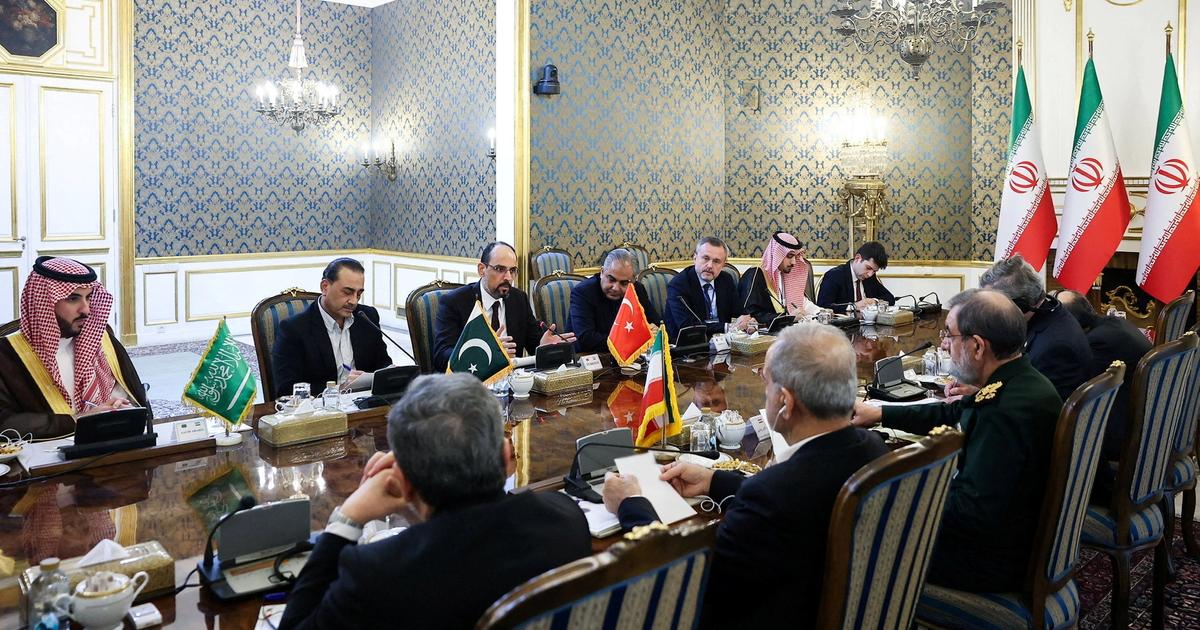
Photo via Semafor

Gulf corporate profits in second quarter show growing divide between economies

Read the original at Semafor ↗
Cite

Sergie, M. (2026, September 15). Gulf corporate profits in second quarter show growing divide between economies. Semafor. https://www.semafor.com/article/09/10/2026/gulf-corporate-profits-in-second-quarter-show-growing-divide-between-economies

Dated when The Aporia collected the article, usually within hours of publication. Check the original for its exact date and byline.

Semafor · collected 2026-09-15 · by Mohammed Sergie

Quick Summary

Second-quarter corporate profits in the Gulf region highlight a significant disparity between economies affected by the Iran conflict. Companies in Saudi Arabia and Abu Dhabi experienced rapid growth due to higher oil prices and stable energy exports, with Saudi Aramco reporting a net profit of $32.3 billion alone. In contrast, firms in Bahrain, Dubai, and Qatar faced challenges from trade disruptions and reduced gas exports but remained profitable. Kuwait showed sharp earnings growth despite being heavily impacted by Iranian strikes and lower oil exports, driven mainly by banking and telecom sectors.
Written by AI on 2026-09-15, from this article's own text only (the story summary below draws on all the coverage).

AI analysis

Story summary

Corporate profits in the second quarter revealed a growing divide between Gulf economies, with listed companies in Saudi Arabia and Abu Dhabi benefiting from higher oil prices and steady energy exports, achieving significant growth. By contrast, firms in Bahrain, Dubai, and Qatar remained profitable but faced challenges due to disruptions in trade, travel, and gas exports caused by the ongoing conflict with Iran. Aramco, the Saudi oil giant, alone reported a net profit of $32.3 billion, representing nearly 43% of the region’s total listed-company profits of $74.8 billion as per KAMCO Invest, a Kuwait-based asset manager. Notably, Kuwait experienced sharp earnings growth despite being heavily affected by Iranian strikes and reduced oil exports since March, primarily due to one-off gains in banking and telecom sectors rather than broad economic improvement.

Written for “Gulf Profits Divide Economies” on 2026-11-01, grounded in this article and the 0 other(s) covering the same event.

Story

📰 Gulf Profits Divide Economies
Economy/Business · 1 article(s) covering the same event.

Compared with similar articles

This article reads leans left and hedges 25% of its claims. Each row says how that neighbour differs.
Al Jazeera
Hedges 8 of 60 claims Outlet record 60/100
“Article A discusses corporate profits and economic divides in the Gulf region, while Article B reports on a recent drone attack that disrupted Saudi Arabia's East-West pipeline.”
South China Morning Post
Hedges 1 of 3 claims Outlet record 64/100
“Article A discusses corporate profits in Gulf economies, while Article B focuses on the closure of a Saudi oil pipeline and its impact on Asian economies.”
How this article was measured signals, leaning charts, publisher record, byline, topics and claims

Signals How these are calculated →

Claims extracted
4
sentences that state something as happening or true
Uncertain
25%
1 of 4 hedged ("reportedly", "may", "according to")
Leaning
Leans left
of the writing, not the subject · beta estimate
Publisher signals
60/100
Semafor's corrections and hedging, across everything collected from it. Not a measure of accuracy.
Outlets on this story
1
Economy/Business
Same framing elsewhere
1
articles that frame the event the way this one does
Analyzed 2026-09-15 · how these are computed

How this is being covered How these are calculated →

Article leaning vs. publisher reliability
Source leaning vs. consistency

Publisher

Semafor · 1393 article(s) · 1 correction(s) detected
Running correction rate · 1 correction(s)

Who wrote this

Mohammed Sergie
21 article(s) here · 0 carrying a prediction
🔮 Gulf economies as a whole are expected to shrink 4.8% this year, almost matching the COVID-19 shock, with non-oil output receding in four countries.
🔮 If selected, Nusseibeh would become the second Arab to lead the UN, after Egypt’s Boutros Boutros-Ghali, and its first woman.
🔮 Global demand for energy from all sources is forecast to rise over the next decade, driven by electrification and AI adoption.
🔮 But the IMF now predicts a deeper contraction than previously expected, with GDP trailing pre-war forecasts even after energy production and trade recover.
2026-10-16 · assertive framing · Houthi strikes expose Saudi Arabia's vulnerabilities
🔮 Since the US-Iran war began on Feb 28, Gulf governments have restricted media coverage and criminalized social media posts, even as everyone living here could see and hear explosions themselves.
2026-10-10 · assertive framing · Attacks on Riyadh threaten Saudi confidence
🔮 Michelin told her it was “fully aware that due to the current circumstances” some restaurants were closed, and said it would reassess when (if?) they reopen.
2026-10-08 · assertive framing · Mini scandal clouds Dubai's Michelin Guide
🔮 The narrative that philanthropic capital will just fill that up is not going to happen.
🔮 The sovereign wealth fund moved companies including AI-focused Qai, Qatar Airways, and Qatar National Bank into a new division, Doha Investment, which will hold more than 40 firms and plans to build new businesses in advanced manufacturing, healthcare, and supply chains.
🔮 Rejecting US Treasury Secretary Scott Bessent’s view that it could become a “worthless piece of water” as alternatives emerge, Saad Sherida Al-Kaabi noted the route carries far more than oil and that other goods can’t be moved as efficiently by land or air.
2026-09-21 · mixed framing · Al-Kaabi: Hormuz ‘cannot be obsolete’
🔮 Still, several Qatari LNG tankers are heading toward the Gulf, which suggests there are expectations that shipments could resume soon, Bloomberg reported.
2026-09-15 · assertive framing · Iran war blows hole in Qatar budget
Also by Mohammed Sergie
War dents Gulf’s protein boom
2026-10-22 · Semafor
Nothing else under this byline is closely related to this article, so these are simply their most recent.
All 21 articles by Mohammed Sergie →

Topics

Abu Dhabi Bahrain Iran Kuwait Saudi Arabia

Subjects

Kuwait GPE · 2× Abu Dhabi GPE · 1× Aramco ORG · 1× Bahrain GPE · 1× Dubai GPE · 1× Iran GPE · 1× Iranian NORP · 1× KAMCO Invest ORG · 1× Qatar GPE · 1× Saudi Arabia GPE · 1×

Narrative

Listed companies in Saudi Arabia and Abu Dhabi are growing quickly, benefiting from higher oil prices and their ability to keep energy exports flowing, while firms in Bahrain, Dubai, and Qatar were still profitable but are feeling the impact of disruption to trade, travel, and gas exports.
framing: mixed · carried by 1 article(s) · first seen 2026-09-15

Claims (4 extracted, 1 hedged)

Corporate profits in the second quarter revealed a widening divide between Gulf economies six months into the Iran war. asserted
profits → reveal → war
Listed companies in Saudi Arabia and Abu Dhabi are growing quickly, benefiting from higher oil prices and their ability to keep energy exports flowing, while firms in Bahrain, Dubai, and Qatar were still profitable but are feeling the impact of disruption to trade, travel, and gas exports. asserted
firms → list → trade
Aramco alone had $32.3 billion in net profit in the second quarter, around 43% of the region’s $74.8 billion in listed-company profits, according to KAMCO Invest, a Kuwait-based asset manager. uncertain
Aramco → have → Invest
The country has been hit hard by Iranian strikes and hasn’t exported much oil since March, but earnings growth rose sharply, reflecting a lower base and one-off gains in banking and telecoms rather than broader economic strength. asserted
growth → hit → banking
💬Give feedback
🕘History 🎫Support