Over its three terms, three premiers have ridden the crime-rate rollercoaster, flipping from progressive policies to blunt crackdowns amid escalating voter anxiety.
asserted
premiers → ride → anxiety
The state’s crime rate hit a record high in 2025, coinciding with erosion of the party’s primary vote.
asserted
rate → hit → vote
If the polls are to be believed, law and order will be a decisive factor when voters decide on November 28 whether to turf Labor out.
asserted
voters → believe → Labor
An analysis of crime statistics by The Age shows that in more than 60 per cent of Melbourne council areas and more than 40 per cent of regional municipalities, the rates of aggravated burglaries, car thefts and assaults have reached their highest levels in a decade over the past two years.
asserted
rates → show → years
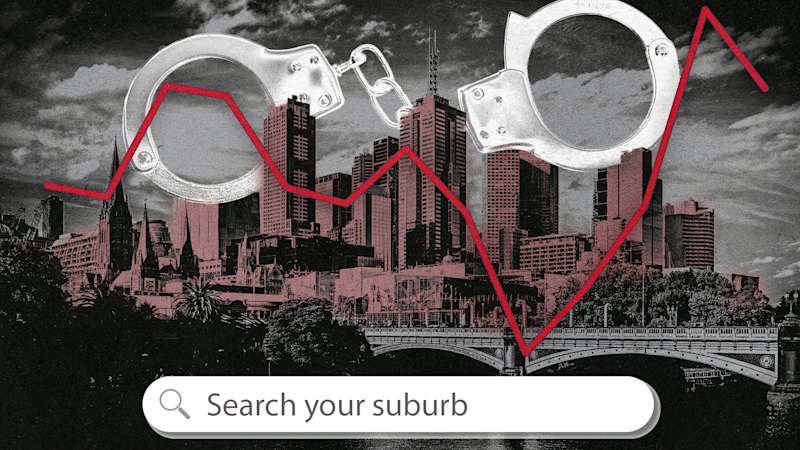
Enter your suburb in the interactive tool below to see how the overall crime rate in your area has changed over the past decade, how it stacks up against the rest of the state, and your area’s rates of aggravated burglaries, car thefts, assaults and more.
asserted
it → enter → burglaries
Premier Ben Carroll came to power recognising his party’s political weakness on crime, even after his predecessor Jacinta Allan changed course on key policies to appear tougher to voters.
asserted
predecessor → come → voters
This has caused some discomfort within the party, and sparked criticism from researchers who say Labor is locking itself in a “race to the bottom” with the Liberal Party and One Nation, rather than prioritising evidence-based best practice.
The perception – and indeed the reality – for many voters, however, is that the government has struggled to fulfil its key duty of keeping Victorians safe.
asserted
government → cause → Victorians
This is the story of how Labor ended up here.
asserted
Labor → end → ?
Bail laws: Labor’s persistent barnacle
On January 20, 2017, James Gargasoulas drove a stolen Holden Commodore through the heart of Melbourne’s CBD, mowing down 33 pedestrians and killing six people.
asserted
Gargasoulas → drive → people
Faced with public outrage, the state government under then-premier Daniel Andrews launched a review of bail laws that resulted in Labor introducing a “reverse onus test”, meaning that instead of police needing to prove why bail must be denied, suspected offenders needed to give a compelling reason why they should be released.
asserted
they → face → reason
Andrews boasted these were the toughest bail laws in the country.
asserted
these → boast → country
Immediately, more people were held in prison on remand, a policy that disproportionately affected women and Indigenous Victorians.
asserted
that → hold → women
Prison populations grew, as did the cost of housing inmates, and tensions about the large number of untried Victorians in jail.
asserted
cost → grow → jail
The percentage of prisoners on remand went from 30.9 per cent in 2017, to 44.4 per cent by 2022.
asserted
percentage → go → 2022
The unintended consequences were laid bare in 2020, when Gunditjmara woman Veronica Nelson died in custody suffering from an opioid withdrawal after being remanded for a minor shoplifting offence.
asserted
Nelson → lay → offence
During an inquest into her death in January 2023, Coroner Simon McGregor labelled the bail provisions a “complete, unmitigated disaster”.
asserted
McGregor → label → provisions
Later that year, the government unwound its strict laws, with then-attorney general Jaclyn Symes conceding the state “cast the net too wide”.
asserted
state → unwind → net
Come March 2025, the government reversed course again, when Allan unveiled changes that removed the requirement for judges to treat remand as a last resort for magistrates to use, and – as after the Bourke Street murders – made it a specific crime to commit an indictable offence on bail.
asserted
it → reverse → bail
At the time, Allan was under intense pressure to tackle youth crime after a spate of high-profile home invasions and car thefts in Melbourne.
asserted
Allan → tackle → Melbourne
The crime rate had begun to rapidly rise from fewer than 5000 criminal incidents per 100,000 people months before the 2022 election to more than 6700 by mid-2025.
asserted
rate → begin → mid-2025
Victims of crime and their families were demanding action.
asserted
Victims → demand → action
The sister of doctor Ashley Gordon – who was stabbed to death in 2024 after confronting teenagers who had broken into his home, including one who was on bail – said: “I don’t want anyone to feel what we are feeling.”
asserted
we → stab → what
In 20 of the 32 local government areas that make up Melbourne, residential aggravated burglaries reached their highest level in the past decade over the past two years.
asserted
burglaries → make → years
Allan’s crackdown was once again described as the strongest ever, with the government using the word “tough” or “toughest” 32 times in its media release.
asserted
government → describe → release
Once again, the rate of prisoners on remand – which had fallen following the 2023 changes – began to rise, hitting 40.8 per cent by the middle of this year.
asserted
which → fall → year
The number of children in detention has also rapidly increased.
asserted
number → increase → detention
“The government did the right thing and started to unwind those appalling laws, and then of course did a reverse,” said barrister and spokesman for the Australian Lawyers Alliance Greg Barns, SC.
asserted
barrister → do → Alliance
Monash University professor Natalia Antolak-Saper, author of The Role of the Media in Criminal Justice Policy: Prisons, Populism and the Press, said Labor’s 2025 laws were undoubtedly tougher than the 2018 changes.
asserted
laws → say → changes
“[It] is very disappointing because you now have quite a lot of evidence … that its operation is both discriminatory and problematic,” she said.
asserted
she → have → evidence
Labor has argued its current approach is carefully focused on high harm, violent offending, and avoids indirectly targeting vulnerable groups.
asserted
approach → argue → groups
“Victorians want to feel safe – only Labor will listen and act on what the community wants,” Police Minister Paul Edbrooke said in a statement.
asserted
Edbrooke → want → statement
Since coming to power in July, Carroll has made a point of saying more people than ever are going to jail.
“It is nonsense that incarceration brings people out worse,” he said this month.
asserted
he → come → people
“Incarceration gives them the opportunity to get a trade, get an education and break up their links [to crime].”
asserted
Incarceration → give → crime
However, neither Allan nor Carroll’s changes have slowed the Coalition’s attack.
asserted
changes → slow → attack
If elected, the opposition is promising a “one-strike” policy for bail that would automatically remand accused criminals who reoffend on bail.
asserted
who → elect → bail
“After 12 years of Labor, police numbers are down, crime is up and Victorians are living in fear,” said opposition police and corrections spokesman Brad Battin.
asserted
Battin → live → fear
“Being weak on crime is in Labor’s DNA, but our Liberal and Nationals team has a comprehensive plan to restore community safety.”
asserted
team → have → safety
‘I need answers’: Youth crime cuts through with voters
Two years after taking office, Labor faced its first major test on youth crime in 2016: the Moomba riot and the subsequent “African gangs crisis”.
Hundreds of boys – including members of the Apex and Islander 23 gangs – brawled in Melbourne’s CBD using samurai swords, knuckledusters, bats and knives.
asserted
Hundreds → need → swords
Although police described the offenders as a “United Nations”, it quickly became a racialised issue that ran to the 2018 state election.
asserted
that → describe → election
Matthew Guy, the Liberal leader at the time, said in 2017 that Labor had allowed Melbourne to become “the Johannesburg of the South Pacific”.
asserted
Melbourne → say → Pacific
…and 61 more, not listed.
 The Aporia