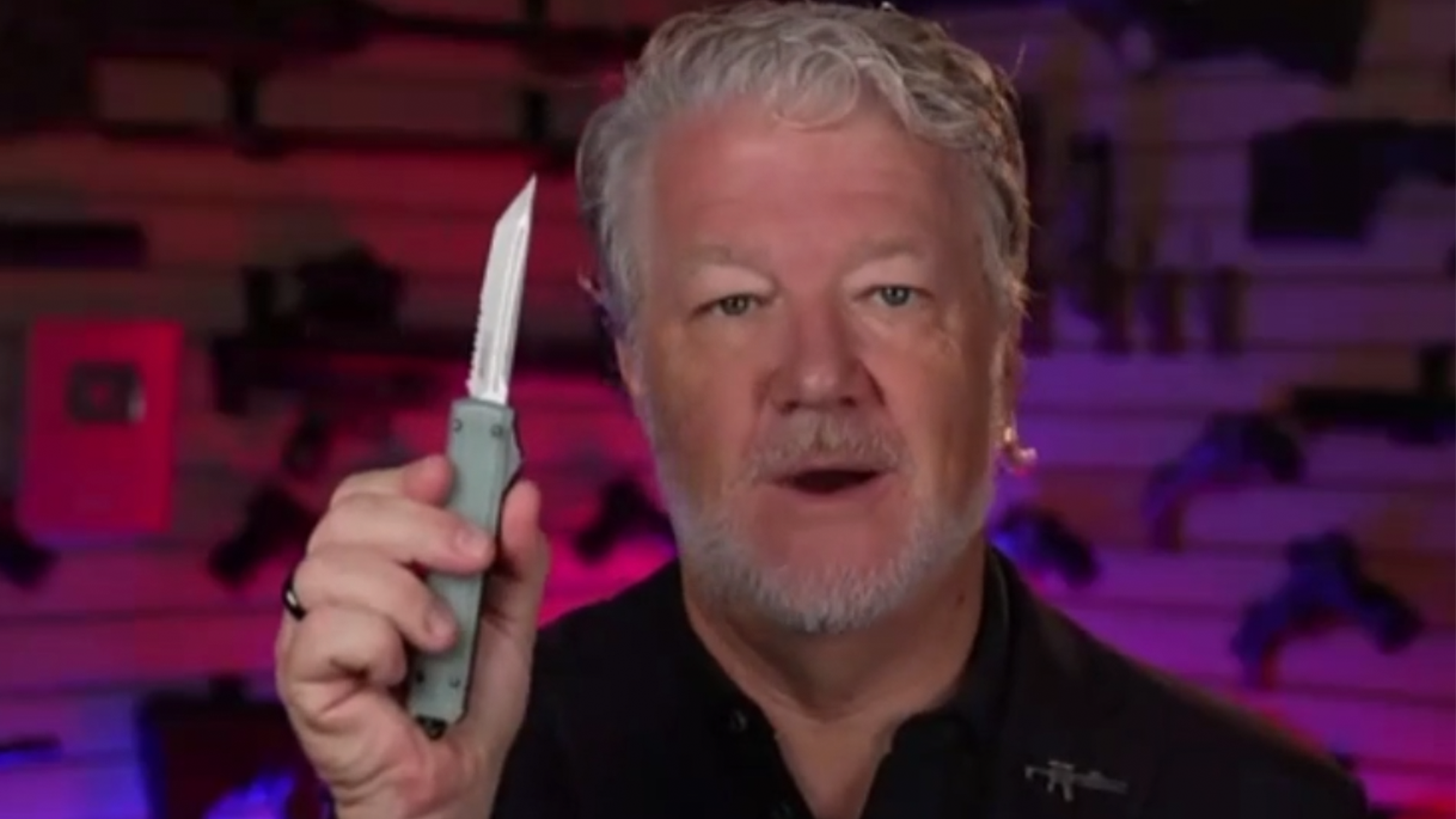
Two federal court rulings Wednesday extending Second Amendment protections to switchblade knives and body armor have fueled optimism among gun-rights advocates ahead of a major Supreme Court showdown over bans on AR-15-style rifles.
asserted
rulings → extend → rifles
The Fifth Circuit Court of Appeals ruled that a federal law restricting the interstate commerce of switchblade knives violated the Second Amendment, while a federal judge in the Western District of New York struck down New York’s restrictions on personal body armor.
asserted
judge → rule → armor
In both cases, the courts determined that switchblades and body armor qualify as constitutionally protected "arms."
asserted
switchblades → determine → arms
The twin rulings come as the Supreme Court prepares to hear oral arguments in Viramontes v. Cook County, a case that could determine whether AR-15-style rifles qualify as "arms" protected by the Second Amendment.
uncertain
rifles → come → Amendment
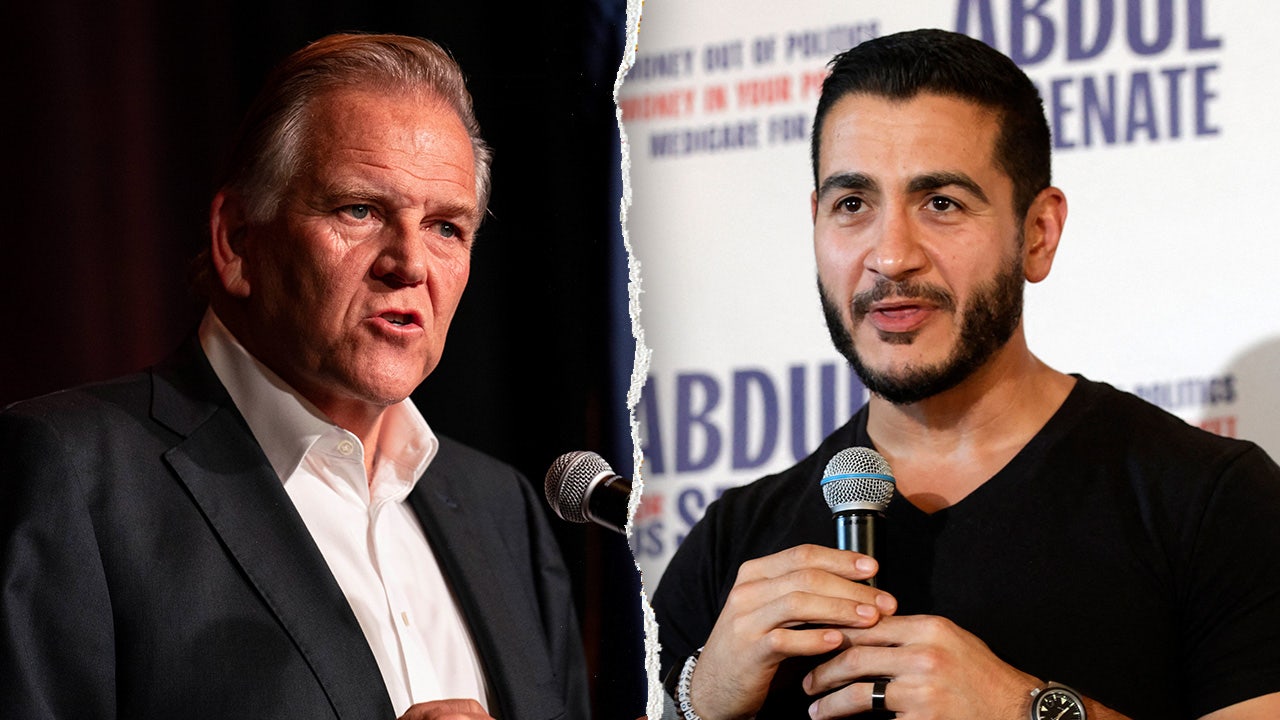
National Association for Gun Rights President Dudley Brown, whose organization filed an amicus brief in Viramontes, said a Supreme Court ruling against AR-15 bans could influence future legal challenges to restrictions on ammunition magazines, automatic knives, body armor and other defensive equipment.
uncertain
ruling → file → magazines
"The interesting thing about both of these cases is that they’re both going to be really decided by the U.S. Supreme Court in the Viramontes decision," Brown told Fox News Digital.
asserted
Brown → go → Digital
The recent rulings rely on two major Supreme Court decisions defining the scope of the Second Amendment: District of Columbia v. Heller and New York State Rifle & Pistol Association v. Bruen — both of which will play a key role in the Supreme Court’s review of AR-15-style rifle bans.
asserted
both → rely → bans
In its 2008 decision in Heller, the Supreme Court established that the Second Amendment protects an individual right to possess firearms for lawful purposes, including self-defense.
asserted
Amendment → establish → defense
The Court also ruled that the amendment protects weapons in lawful common use while acknowledging a longstanding tradition of restricting "dangerous and unusual" weapons.
asserted
amendment → rule → weapons
Heller recognized that the term "arms" encompasses both offensive weapons and defensive armor.
asserted
arms → recognize → weapons
The decision did not address switchblades or body armor directly but the recent rulings relied on its broader understanding of what may qualify as an arm.
uncertain
what → address → arm
The decisions also reveal how Bruen ’s text-and-history test could shape the Supreme Court’s review of bans on AR-15-style rifles.
uncertain
test → reveal → rifles
Under Bruen, courts first determine whether the Second Amendment’s text covers the weapon or conduct at issue.
asserted
text → determine → issue
Because both courts answered that question affirmatively, the burden shifted to the governments to show that the restrictions were consistent with the nation’s historical tradition of arms regulation.
asserted
restrictions → answer → regulation
George Lyon, a Second Amendment attorney, said the governments in both cases failed to identify sufficiently similar historical laws justifying the modern restrictions.
asserted
governments → say → restrictions
"Once what you want to do is shown to come within the text of the Second Amendment, the presumption is that the regulation is unconstitutional," Lyon said.
asserted
Lyon → want → Amendment
The Fifth Circuit found that switchblades are commonly used "arms" protected by the Second Amendment, citing their historical use for defense and everyday purposes.
asserted
switchblades → find → defense
It then ruled that the government had failed to identify a sufficient historical tradition for the Federal Switchblade Act’s specific restrictions on interstate commerce, which regulated switchblades in a way that differed from historical laws.
asserted
that → rule → laws
In the New York ruling, the state argued that body armor was a tactical accessory to a firearm rather than an "arm" protected by the Second Amendment.
asserted
armor → argue → Amendment
The judge rejected that argument, finding that body armor falls within the historical definition of arms recognized in Heller.
asserted
armor → reject → Heller
The court then concluded that New York had not shown a sufficient historical tradition supporting its civilian purchase ban.
asserted
York → conclude → ban
That reasoning could become important in Viramontes, where the Supreme Court is being asked to decide whether AR-15-style rifles fall within the definition of protected arms recognized in Heller.
uncertain
rifles → become → Heller
The case arises from a challenge to Cook County’s assault-weapons ban.
asserted
case → arise → ban
The Seventh Circuit concluded that AR-15-style rifles were comparable to machine guns and therefore fell outside the category of arms protected by the Second Amendment.
asserted
rifles → conclude → Amendment
The Supreme Court’s decision could resolve whether that reasoning is consistent with Heller and Bruen.
uncertain
reasoning → resolve → Heller
Lyon said the Seventh Circuit improperly treated AR-15-style rifles as comparable to machine guns.
asserted
Circuit → say → guns
"The current case at the Supreme Court, Viramontes, will address that because the Seventh Circuit had taken the position that because AR-15s are ‘like machine guns,’ they don’t constitute an arm as defined under Heller," Lyon said.
asserted
Lyon → address → Heller
Justin Davis, director of public affairs for the National Rifle Association, said the dispute over AR-15-style rifles is part of a broader legal fight over what qualifies as an "arm" under the Second Amendment.
asserted
what → say → Amendment
"There’s a major discussion going on in the courts about what is and what aren’t arms," Davis said.
asserted
Davis → ’ → courts
Davis pointed to litigation involving suppressors, ammunition magazines, stun guns, pepper spray and other equipment used for self-defense.
asserted
Davis → point → defense
"They talk about how the Second Amendment only applied to muskets because that’s what existed at the time of the Founders, but we don’t apply the First Amendment only to newspapers, books or speech in public forums," Davis said.
asserted
Davis → talk → forums
"Social media, texting and phones didn’t exist at that time, either.
asserted
media → exist → time
"
"The world evolves, but the core fundamental rights never change," Davis continued.
asserted
Davis → evolve → ?
 The Aporia