Even as automated vehicles such as robotaxis grow more prevalent in the U.S., almost every mass transit system still requires a driver or operator on board.
asserted
system → automate → board
Two major cities are seeking to change that.
asserted
cities → seek → that
Officials in Washington, D.C., recently advanced a plan that could let computers fully control one of its subways, and Los Angeles is seeking to build a new, completely automated line.
uncertain
Angeles → advance → line
Honolulu already has one.
asserted
Honolulu → have → one
The Washington and LA projects, which would take years to implement and still face financial and technical hurdles, come amid an already fierce debate over the safety risks and benefits of automated trains and whether the substantial upfront expense is worth the long-term savings in labor costs.
asserted
expense → take → costs
Supporters call the push long overdue, pointing out that American cities lag far behind numerous places across the world that run unattended subways, metros or buses, including several cities in Europe and Asia, as well as major systems in Canada, Australia, South America and the Middle East.
asserted
that → call → Canada
“It should be much harder to automate something that’s on-road, that has all of these various obstacles coming at it, compared to a fixed-rail system,” said Baruch Feigenbaum, senior managing director of transportation policy at the Reason Foundation, a libertarian think tank that has advocated for transit automation.
asserted
that → automate → automation
“I don’t know a nice way to say this, but basically the transit world is where innovation goes to die.”
asserted
innovation → know → this
Wide-scale transit automation has been slow to develop in the US
Only in recent years have on-road vehicles from such companies as Waymo, Tesla and Zoox taken the automation lead in the U.S. ahead of transit systems using a track.
asserted
vehicles → develop → track
In fact, although operators have always been part of the Metro subway system in Washington, D.C., trains ran with some automated features when it opened 50 years ago.
asserted
it → run → features
After a 2009 fatal crash, those were turned off, then restored over the past two years.
asserted
those → turn → years
Now, officials in the nation’s capital have renewed their push for automation on Metro’s Red Line.
asserted
officials → renew → Line
And an environmental review is underway in Los Angeles for an automated track for a new underground line of its heavy-rail system that would cut through the rough terrain of the Santa Monica Mountains.
asserted
that → automate → Mountains
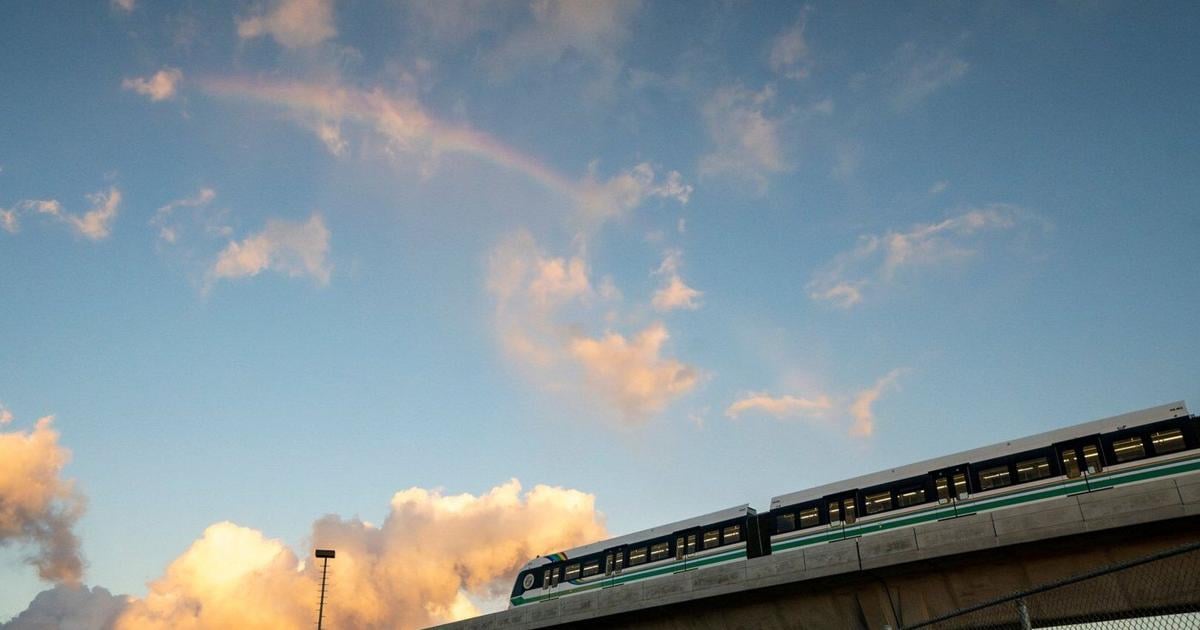
Honolulu is already running an elevated driverless line — the most expansive automated transit system in the U.S.
asserted
Honolulu → run → U.S.
It’ll stretch 19 miles when completed, surpassing the elevated driverless trains Detroit and Miami opened as pilot projects in the 1980s, a monorail connecting hotels on the Las Vegas Strip, and smaller systems that carry passengers between airport terminals.
asserted
that → stretch → terminals
An automated monorail that once ran in Memphis, Tennessee, closed down years ago.
asserted
that → run → Memphis
And the driverless Jacksonville Skyway will indefinitely halt operations soon due to budget cuts, despite initial plans for an even larger automated system.
asserted
Skyway → halt → system
Crash slams the brakes on automation efforts
After nine people were killed and many others injured in the 2009 train collision near the Fort Totten station on the D.C. Red Line
asserted
others → slam → Line
, the National Transportation Safety Board blamed the crash on a maintenance problem in the automated signaling system that separates trains from one another.
asserted
that → blame → one
Randy Clarke, CEO of the Washington Metropolitan Area Transit Authority, pointed out in an interview with The Associated Press that the issue in Fort Totten had nothing to do with the cruise control-like system that was restored on the Red Line in 2024 and the other Metro lines last year.
asserted
that → point → 2024
Still, he acknowledged that for many years the crash “paralyzed” Metro’s plans for further automation.
asserted
crash → acknowledge → automation
“That was a big failure, there’s no question.
asserted
That → ’ → ?
We do not do anything like that now,” said Clarke, who called the current system “highly regulated, highly documented, very proficient.”
asserted
who → do → system
Trains could conceivably run without a human worker inside the cab as early as 2033 under the nearly $1 billion plan Metro’s Board of Directors backed in April to upgrade the Red Line with safety features including protective barriers that prevent passengers from getting onto the tracks.
uncertain
that → run → tracks
Clarke said that even if workers aren’t needed to physically run the trains, they will be needed to maintain the tracks and respond to emergencies.
asserted
they → say → emergencies
John Samuelsen, a former worker in the New York subway system who now serves as international president of the Transport Workers Union, said unions have fought off automation efforts in New York and elsewhere, calling them “a catastrophe waiting to happen.”
asserted
unions → serve → them
“Passengers will be left dealing with a self-evacuation, which is a disaster in a system which runs on a third rail,” Samuelsen said.
asserted
Samuelsen → leave → rail
Honolulu touts unblemished record with its automated Skyline
To alleviate massive traffic bottlenecks for commuters, Honolulu opened its Skyline automated light metro transit system three years ago and expanded it last year.
asserted
Honolulu → tout → it
Vance Tsuda, the system’s project director, said there hasn’t been a single crash or injury associated with automation.
asserted
Tsuda → say → automation
Even hybrid systems are less safe than a completely automated one, he said, arguing that a human is far more likely to overlook something like an open door and prematurely clear a train for departure.
asserted
human → automate → departure
“If you have somebody making that decision, they could make a wrong decision,” Tsuda said.
uncertain
Tsuda → have → decision
But David King, an associate professor of urban planning at Arizona State University who has researched automated transportation, said the success rate has to remain perfect to keep the public trust.
asserted
rate → research → trust
That’s why the Fort Totten crash and others involving automation put the technology so far behind, he said.
asserted
he → ’ → technology
“We allow a certain amount of failure with private industry that we don’t tolerate when the state does it,” said King, citing the several rockets blown up by Elon Musk’s SpaceX — a record he argues would cripple NASA’s budget if it happened in the public sector.
asserted
it → allow → sector
LA rolls out safety plans for a subway beneath the mountains
Perhaps the most ambitious transit automation effort being pursued in the U.S. is the subway line Los Angeles officials voted to recommend beneath the Santa Monica Mountains.
asserted
officials → roll → Mountains
The area is one of the most notorious traffic headaches in the country, with the mountains dividing the bustling Westside employment hub from the San Fernando Valley.
asserted
mountains → divide → Valley
There’s already a subway system under the same mountain range near Hollywood, but that one has a driver onboard.
asserted
one → ’ → driver
The new proposal, which is undergoing an environmental review, would use shorter, more frequent trains, said Cecily Way, who oversees planning for the Sepulveda Project for LA Metro.
asserted
who → undergo → Metro
Like the project in Washington, the new line in Los Angeles would feature station doors to protect passengers on the platform from oncoming trains.
asserted
line → feature → trains
Feigenbaum with the Reason Foundation said that automation of a major transit line such as in Los Angeles or Washington could open the floodgates for other cities to follow.
uncertain
cities → say → floodgates
…and 1 more, not listed.
 The Aporia