When he was a little boy, Travis Knight was transfixed by the pioneering films of the stop-motion animator Ray Harryhausen, whose signature works – including Jason and the Argonauts (1963) and Clash of the Titans (1981) – transformed special-effects cinema.
asserted
works → transfix → cinema
Then, on television, he encountered the work of Arthur Rankin Jr. and Jules Bass, whose production company, Rankin Bass, created a slate of definitive stop-motion animated Christmas and holiday TV specials that remain a staple of pop culture to this day, including Rudolph the Red-Nosed Reindeer (1968) and The Year Without a Santa Claus (1974).
asserted
that → encounter → Claus
“Stop-motion, it was a rarity even then, and for whatever reason I was drawn to it,” Knight says.
asserted
Knight → stop → it
“I loved other animation, I loved hand-drawn animation and this was before CG animation even existed.
asserted
animation → love → animation
But there was something about stop-motion that was special, and I felt was very precious.”
asserted
I → be → motion
The spark ignited by those moments would eventually lead to Knight becoming one of the most significant filmmakers of his generation.
asserted
Knight → ignite → generation
In 2009, he was the lead animator on the critically acclaimed Coraline.
asserted
he → acclaim → Coraline
He would go on to found the stop-motion animation studio Laika, whose most recent film, Wildwood, arrives in cinemas this week.
asserted
film → go → cinemas
“If Ray Harryhausen had not existed, Wildwood would not exist.
asserted
Wildwood → exist → ?
The Odyssey would not exist,” Knight says.
asserted
Knight → exist → ?
“On some level, you can say that there’s something crude about it looking at it through today’s lens.
asserted
you → say → lens
But to me, I would say there’s something extraordinary and beautiful and human about [those films], and I think that’s why they endure.
asserted
they → say → films
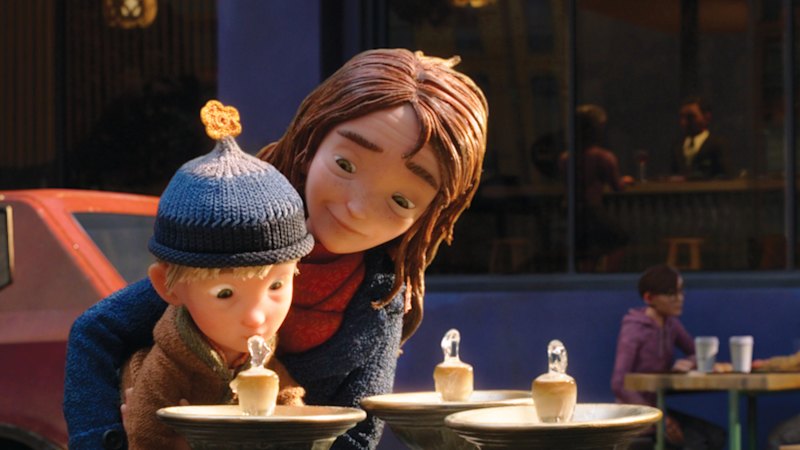
Based on Colin Meloy and Carson Ellis’s 2011 novel, Wildwood is the story of a teenage girl named Prue (Peyton Elizabeth Lee) and her classmate Curtis (Jacob Tremblay), who travel into an enchanted forest searching for Prue’s infant brother after he is abducted.
asserted
he → base → brother
Once there, they encounter Alexandra (Carey Mulligan), a mysterious woman whose incalculable grief has been transformed into something far darker.
asserted
grief → encounter → something
Wildwood explores fear, grief, loss and powerlessness in a way that is almost contrary to modern storytelling, where children are a key part of the audience.
asserted
children → explore → audience
While older audiences may recall a childhood when bolder content was commonplace, contemporary family films are often simplified and sanitised.
uncertain
films → recall → childhood
“It felt like it was different growing up in the ’80s, that there was a lot of free-range parenting back then,” Knight says.
asserted
Knight → feel → parenting
“But I also think the filmmaking was different, there were many films that were targeted towards families, targeted towards children, that had degrees of sophistication, that actually treated children with a great deal more respect than I think a lot of the films that are targeted towards families these days [do].
asserted
that → think → families
“It’s certainly never been the way that we’ve operated at Laika; we always look at our audience with tremendous respect and never want to talk down to our audience, whether it’s an audience of grown-ups or an audience of children,” Knight adds.
asserted
Knight → operate → children
“Young people have way more emotional complexity than people often give them credit for, and I feel like we forget,” he says.
asserted
he → have → credit
“As grown-ups, we think that we have the monopoly on pain and struggling and suffering, but we do not.
asserted
we → think → pain
Children know what it’s like to feel alone.
asserted
it → know → what
They know what it’s like to feel afraid and to feel powerless and to have things taken away from them, to have people taken away from them.
asserted
people → know → them
They know what darkness is.”
asserted
darkness → know → ?
Understanding that reality is the reason fairy tales are evergreen stories, Knight adds.
asserted
Knight → understand → ?
“Darkness does exist, but what fairytales often gave us was a lantern, they gave us a path through the darkness, a path through the forest, and that’s one of the things that we’re trying to do with Wildwood.
asserted
we → exist → Wildwood
It’s about loss, grief, love and empathy.
asserted
It → ’ → loss
There is darkness in the movie, and I do think that there’s great light in the movie, but we earn the light honestly.
asserted
we → be → light
Fantasy, as a step removed from our own reality, can give shape to really complex and difficult ideas and emotions.”
asserted
Fantasy → remove → ideas
As a director, stop-motion animation – in which the film is shot frame by frame while making microscopic adjustments to puppets and settings – is a challenging form, Knight says.
asserted
Knight → stop → puppets
“I’ve said many times, and I absolutely believe it, that making a film in stop-motion is the absolute hardest and worst way there is to make a movie,” Knight says.
asserted
Knight → say → movie
“It’s painful, it’s awful, and yet I do think that there’s more joy in the process.
asserted
I → ’ → process
It’s certainly not the easiest way there is to make a film.”
asserted
It → ’ → film
“Darkness does exist, but what fairytales often gave us was a lantern, they gave us a path through the darkness, a path through the forest, and that’s one of the things that we’re trying to do with Wildwood.
asserted
we → exist → Wildwood
And yet, in a film industry in the process of being overtaken by AI-based technology, Knight’s studio, Laika, stands like a bulwark against the rapidly changing times.
asserted
studio → overtake → times
“I think [stop-motion] is the most human way there is to make a film because essentially, what you’re looking at when you’re seeing a stop-motion film, is every single thing has been designed, built, and manipulated by an artist’s hand, and every single shot has been brought to life by the imagination, the spirit, and the hands of an animator.”
asserted
shot → think → animator
“It’s imperfect, it’s maddening, it’s painful, it’s slow, but it’s also beautiful because it is the accumulation of all these extraordinary acts of devotion, on the part of people who really love something and want to bring it to life,” Knight says.
asserted
Knight → ’ → life
Knight likens the glacial pace of shooting in stop-motion to “filmmaking at the speed of continental drift; it takes forever to do these things.”
asserted
it → liken → things
And while it has been said that stop-motion requires almost infinite patience, Knight believes stop-motion filmmakers are better defined by concentration.
asserted
filmmakers → say → concentration
“[Patience] is certainly an element of it, but I really think one of the key attributes an animator has to have to work in stop-motion is intense focus for long periods of time, the ability to concentrate on really, really small details and put all these different things together in their mind,” he says.
“It’s a very technical exercise, but it can never feel like a technical exercise,” Knight adds.
asserted
Knight → think → exercise
…and 10 more, not listed.
 The Aporia