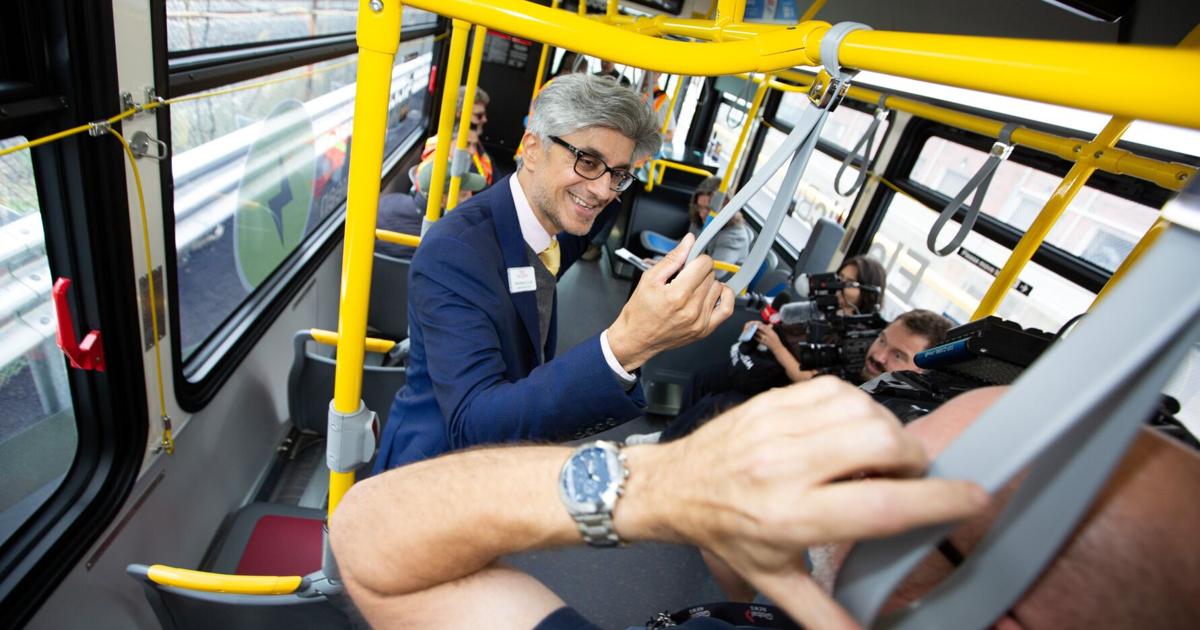
I’m studying the bus maps at Kennedy station with a diligence that I haven’t felt since I nearly failed Economics 101 in university.
asserted
I → study → university
A kindly TTC worker stops and asks if I need help.
asserted
I → stop → help
“You need to be over there,” he says, and I dutifully sidestep several buses to find my platform, feeling a bit like John Wick dodging traffic at the Arc de Triomphe (minus the mindless violence).
asserted
I → need → violence
This is the mouth of the recently opened Scarborough Busway, which will sail me directly to Scarborough Centre — essentially a fast-flowing river of buses in a part of the city that is still a comparative transit desert.
asserted
that → open → city
Scarborough is one of the transit battlegrounds of the current mayoral election, pitting the incumbent, Mayor Olivia Chow, against her leading challenger, Brad Bradford.
asserted
Scarborough → pit → challenger
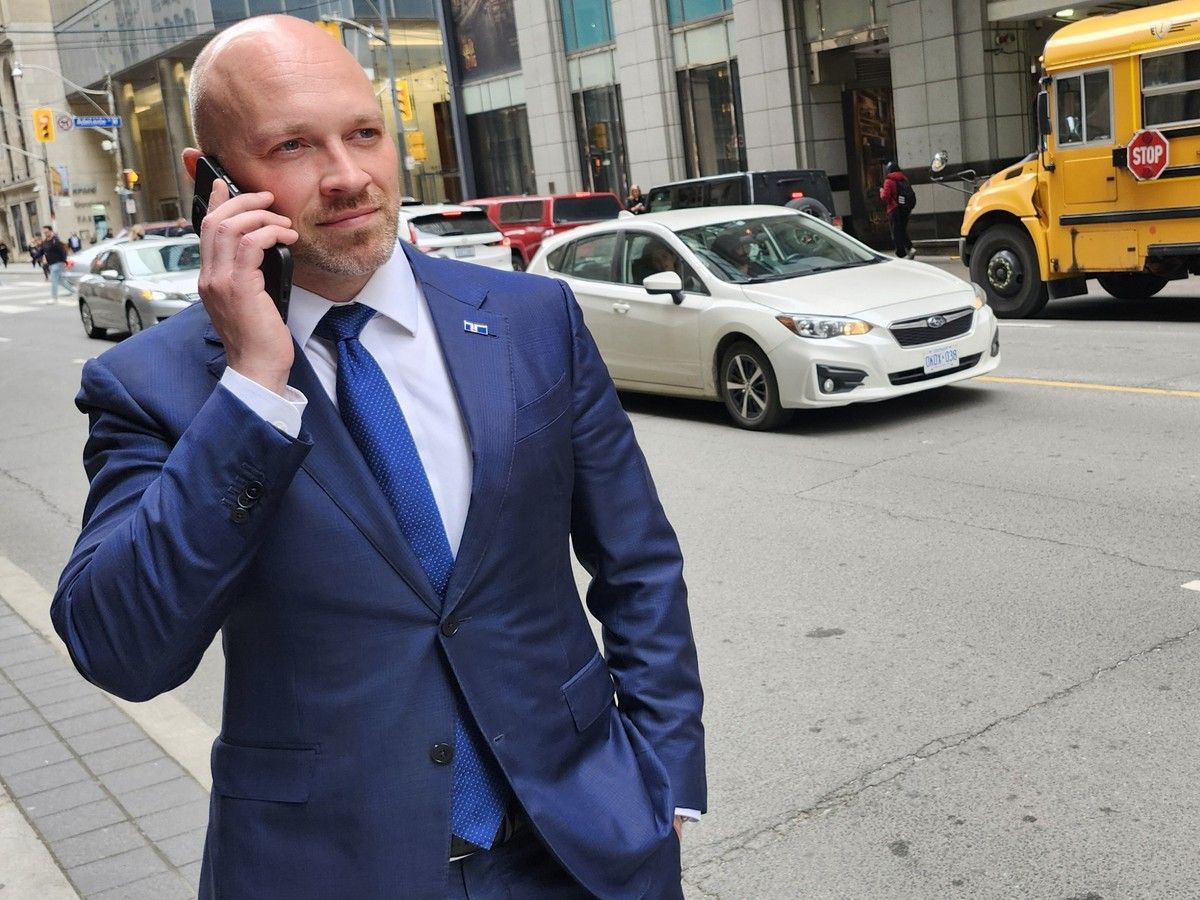
Bradford wants to tear up some of the priority red bus lanes in Scarborough and push for the planned Scarborough East Rapid Transit light rail network instead, with “shovels in the ground” by 2030.
asserted
Bradford → want → 2030
Chow’s vision is more hybrid: Bus lanes will co-exist alongside her commitment to making SERT “the city’s top transit priority.”
asserted
SERT → co → commitment
She says that under her watch the city has amassed a $400 million “downpayment” for the billion-dollar project, which will require money coaxed from the federal and provincial governments as well.
asserted
which → say → governments
Taking the Busway (a 15-minute journey from Kennedy to Scarborough Centre) is like a time-travel ride through the city’s past, present and future.
asserted
Taking → take → past
We hurtle past the rickety ghost of the old Line 3, closed after a derailment in 2023, its stations shrouded like mummies.
asserted
stations → hurtle → mummies
We can see the cranes building its replacement, the three-station Scarborough Subway Extension, which will carry passengers who are not even born yet.
asserted
who → see → passengers
This election takes place at a fascinating time, when the city’s transit arteries are both decaying and being renewed.
asserted
arteries → take → time
The question is, who’s got the best treatment plan for this organ that’s so critical to Toronto’s health?
asserted
that → get → health
Over the past few months, and through a series of tetchy debates, Chow and Bradford have sniped at each about the TTC’s woes.
asserted
Chow → snip → woes
The mayor, pointing to Bradford’s time on the TTC board, has accused him of cuts to transit investment and raising fares.
asserted
mayor → point → fares
In return, Bradford accused Chow of not using the TTC (she cycles and, as mayor, has a personal driver) and presiding over a transit system where ridership is falling and reliability is, to put it gently, not at Swiss levels.
asserted
reliability → accuse → levels
Three issues important to passengers
Safety, reliability, affordability: These are the issues that passengers care about.
asserted
passengers → care → that
I’ve been a regular TTC user for decades, and this week I rode to far corners of the city I rarely visit, chatting to people on buses and subways.
asserted
I → ride → buses
I can tell you that passengers hate slow zones on subways, and are irritated by buses and street cars that inexplicably short turn and toss them out onto the street.
asserted
that → tell → street
They are anxious about what feels like an increase in bad behaviour, whether it’s people giving backpacks their own seats, or the more alarming incidents of mental-health breakdowns and drug use on trains and platforms.
asserted
people → feel → trains
They like the reliability of the new Finch West and Eglinton LRTs, and have largely forgotten the protracted labour pains that preceded their births.
asserted
that → like → births
Still: TTC ridership is down, at 80 per cent of 2019 levels, while the cost of maintenance continues to climb (there’s an estimated $6.5-billion repair backlog over the next eight years.)
asserted
cost → continue → years
The third largest transit system in North America faces a multi-headed beast of societal challenges — remote working, housing and mental-health crises — that cannot be solved by the mayor alone.
asserted
that → face → mayor
And yet the mayor will be judged on how nimbly and creatively she (or he) can improve passengers’ daily experience.
asserted
she → judge → experience
On the issue of affordability, Chow points to her record of increasing investment in the TTC and freezing transit fares.
asserted
Chow → point → fares
She’s promising a new cap at ten rides per week, after which rides will be free.
asserted
rides → promise → which
Bradford has not committed to a fare freeze, but has pledged a money-back guarantee for late rides: “If your bus, streetcar, or train doesn’t arrive within 15 minutes, you get your money back.”
asserted
you → commit → money
How exactly that would be implemented is a bit mind-bending, given that there are 2.5 million rides on the TTC per weekday and streetcar reliability hovered at around 60 per cent at certain points this year.
asserted
reliability → implement → points
As I zoomed around the city for $3.30 for a two-hour period, the TTC actually seemed like a bargain.
asserted
TTC → zoom → bargain
I’ve just returned from two cities where I used to live, Berlin and London, and single fares were eye-gouging by comparison, around $6.75 Canadian for a single journey in the downtown core of each city, and more for trips to the suburbs.
asserted
fares → return → suburbs
However, for that you get huge, clean, reliable transit networks that each boasts a sparkling new subway expansion: the Elizabeth Line in London, and the U5 extension in central Berlin.
asserted
that → get → Berlin
If you invest, you can have nice things.
asserted
you → invest → things
The Elizabeth Line features platform edge safety doors at each station, which cost the equivalent of $160 million, according to Transport for London.
uncertain
which → feature → London
Subway platform barriers have become a contentious issue in this mayoral election.
asserted
barriers → become → election
In May, Chow announced the installation of safety barriers that partially cover the platform edge at TMU station, which Bradford denounced as “a fence with holes in it.”
uncertain
Bradford → announce → it
He wants a feasibility study for installing full-height safety doors for the subway system.
asserted
He → want → system
Bradford has been accused of running a vibes campaign that’s strong on fear-mongering, describing an Escape from Toronto scenario that many people don’t recognize.
asserted
people → accuse → that
But Bradford says, “Safety isn’t defined by statistics in a spreadsheet — it’s about how people feel.”
asserted
people → say → spreadsheet
He’s not wrong.
asserted
He → ’ → ?
The city’s own strategic plan for the TTC describes the same effect: “Perceptions of safety are as influential as actual incident rates in travel decisions.”
asserted
Perceptions → describe → decisions
…and 14 more, not listed.
 The Aporia