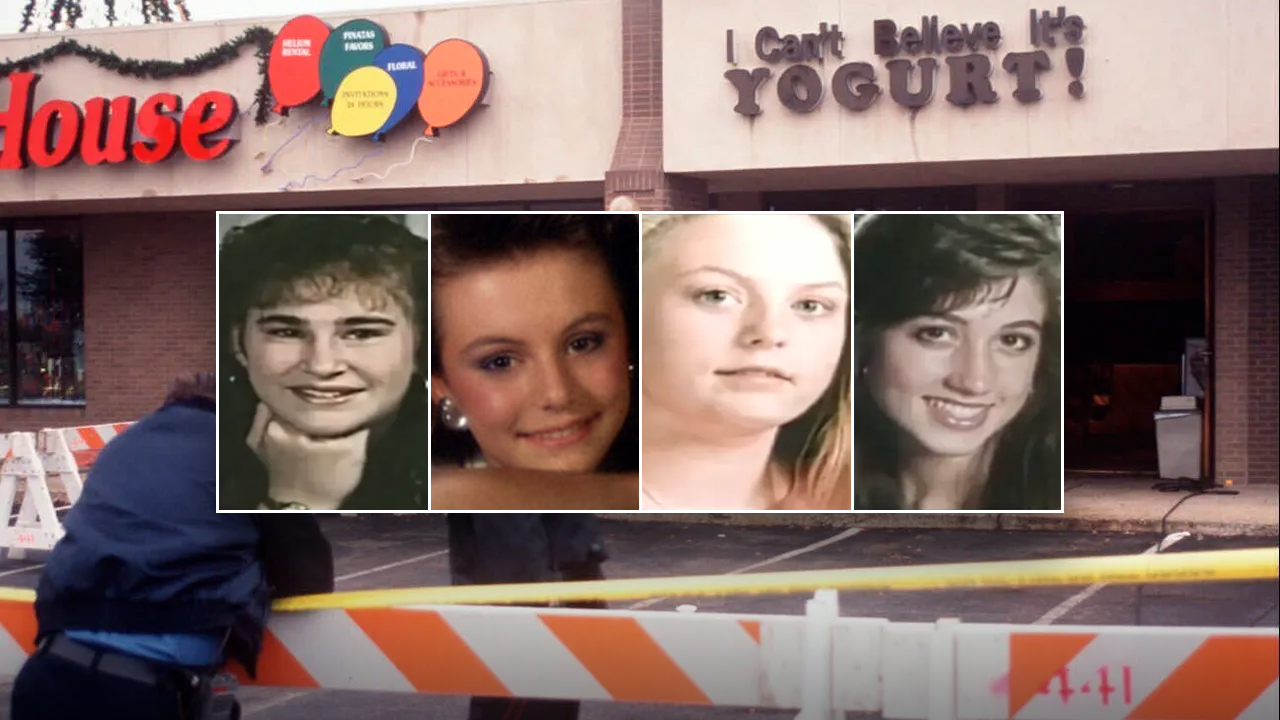
Nearly 34 years after his 13-year-old sister died during the 1991 Austin, Texas, yogurt shop massacre, Shawn Ayers and his wife, Angie, have launched a national cold case effort while still seeking answers about the attack and whether an accomplice is out there.
asserted
accomplice → die → attack
Angie, along with Shawn, whose sister Amy was among four girls killed in the attack, have joined former prosecutors Mindy Montford and Anne Marie Schubert to establish the National Cold Case Center.
asserted
sister → kill → Center
The decades-long search for answers in Amy’s case inspired the couple to help establish the nonprofit, which helps to fund unsolved homicide investigations, train investigators and support victims’ families.
asserted
which → inspire → families
"Due to what we've gone through and seen, not only from our own experience, but from listening to other families struggle throughout this process," Angie told Fox News Digital.
asserted
Angie → go → Digital
"Years ago, we had wanted to start a nonprofit."
asserted
we → want → nonprofit
The Austin yogurt shop murders
Amy, Jennifer Harbison and Eliza Thomas, both 17, and Jennifer’s sister, Sarah Harbison, 15, died in the attack at the I Can’t Believe It’s Yogurt! shop on West Anderson Lane on Dec. 6, 1991.
asserted
It → die → Dec.
On the night of the killings, Jennifer and Eliza were working the closing shift, while Sarah and Amy waited for them to finish so the four could head to a sleepover.
uncertain
four → work → sleepover
Shortly before midnight, authorities received a report of a fire at the shop.
asserted
authorities → receive → shop
The blaze and water from the sprinklers altered the crime scene and diluted evidence, according to FBI files.
uncertain
blaze → alter → files
Inside, police discovered Sarah, Eliza and Jennifer stacked together in the shop’s storage room.
asserted
Sarah → discover → room
They were stripped, gagged and bound with their own undergarments, and then shot in the back of the head with .22-caliber bullets.
asserted
They → strip → bullets
Investigators found Amy in a separate area with a ligature around her neck and burns covering up to 30% of her body, according to court documents.
uncertain
Investigators → find → documents
FBI records described two gunshot wounds: an initial .22-caliber shot that missed Amy’s brain and a second shot from a .380-caliber pistol through her cheek and jawline.
asserted
that → describe → cheek
Investigators recovered a .380 cartridge casing in a floor drain.
asserted
Investigators → recover → drain
During the autopsy, officials recovered four .22-caliber bullets from the bodies.
asserted
officials → recover → bodies
Killer identified
asserted
Killer → identify → ?
The search for answers stretched across decades, combined with false confessions, arrests, convictions and appeals before DNA and ballistics evidence identified serial killer Robert Eugene Brashers in September 2025.
asserted
evidence → stretch → September
Brashers fatally shot himself during a January 1999 police standoff in Missouri, leaving the families no chance to confront him at a murder trial.
asserted
Brashers → shoot → trial
Authorities had previously connected him to other violent crimes, including killings in South Carolina and Missouri.
asserted
Authorities → connect → Carolina
According to Austin police, Brashers used the same .380-caliber handgun in the yogurt shop murders to kill himself during the Missouri standoff.
uncertain
Brashers → accord → standoff
For the Ayers family, identifying Brashers didn’t answer whether someone else participated in the yogurt shop killings.
asserted
someone → identify → killings
Angie questioned whether another perpetrator may have been involved, since two weapons were used during the attacks.
uncertain
weapons → question → attacks
"I may be incorrect, but I don't think that I am," Angie told Fox News Digital.
uncertain
Angie → think → Digital
"There's never been an instance where he [Brashers] used both of those guns in his other cases."
asserted
he → be → cases
"There has been absolutely no definite answer on whether or not he was by himself, or had an accomplice.
asserted
he → have → accomplice
So, to us, we still don't have all the answers, and knowing that this case is still ongoing, I don't think anyone can say that they know exactly what happened because we can't ask."
asserted
we → have → answers
Years before identifying Brashers, Austin investigators focused on four local teens: Robert Springsteen, Michael Scott, Maurice Pierce and Forrest Welborn.
asserted
investigators → identify → teens
Austin police arrested all four in 1999.
asserted
police → arrest → 1999
Springsteen and Scott confessed during police questioning but recanted before trial, saying investigators pressured them into giving false statements.
asserted
investigators → confess → statements
Travis County juries convicted Springsteen of capital murder in 2001 and Scott in 2002.
asserted
juries → convict → 2002
Springsteen received a death sentence, while Scott received life in prison.
asserted
Scott → receive → prison
The Texas Court of Criminal Appeals overturned Springsteen’s conviction in 2006 and Scott’s in 2007.
asserted
Court → overturn → 2007
DNA testing failed to match any of the men to the crime scene.
asserted
testing → fail → scene
A judge released Springsteen and Scott in June 2009, and prosecutors moved to dismiss the charges that October.
asserted
prosecutors → release → charges
Pierce proclaimed innocence but implicated Welborn.
asserted
Pierce → proclaim → Welborn
In 1991, he wore a police wire and tried to coax Welborn into confessing.
asserted
he → wear → Welborn
An Austin police officer reported that Welborn denied any involvement.
asserted
Welborn → report → involvement
Welborn later passed a polygraph test.
asserted
Welborn → pass → test
Welborn never went to trial.
asserted
Welborn → go → trial
When two grand juries failed to indict him, authorities dropped the case against him in 2000.
asserted
authorities → fail → 2000
…and 33 more, not listed.
 The Aporia