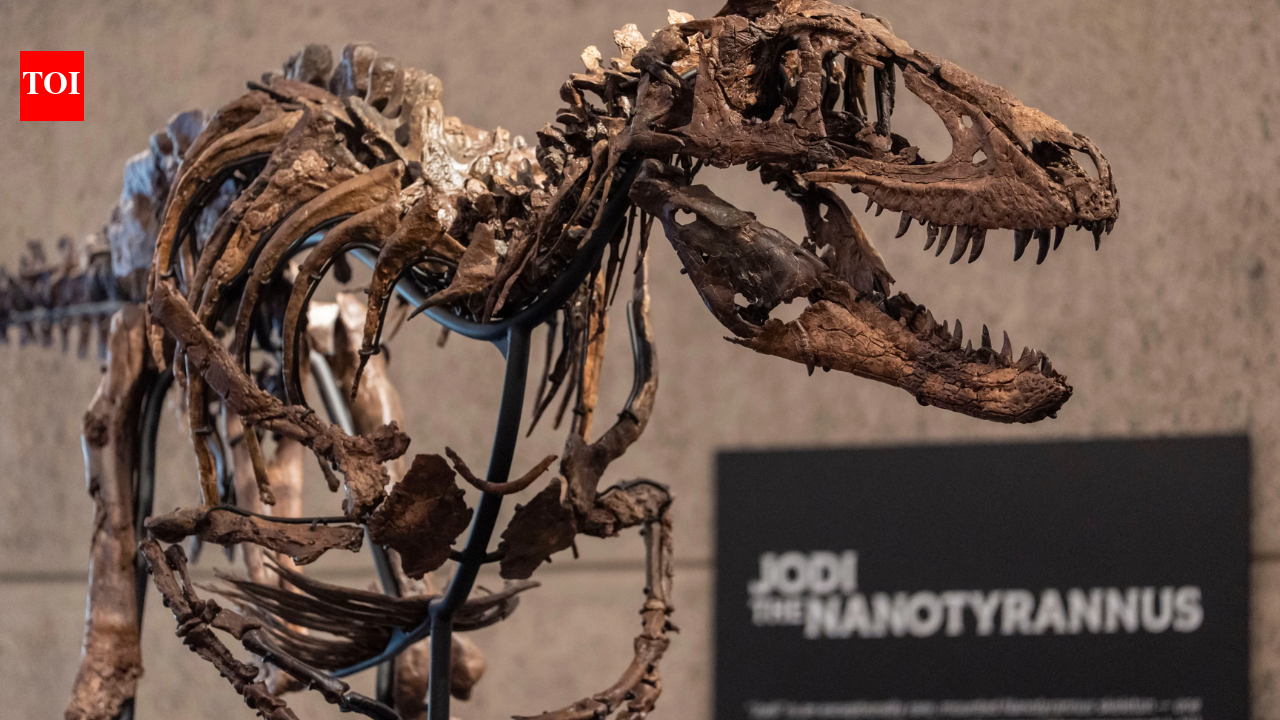
A skeleton that looks like a small Tyrannosaurus rex is now standing in a Manhattan lobby, waiting for bidders.
asserted
that → look → bidders
It was unearthed in 2019 by a Montana rancher, and scientists have since confirmed it belongs to a different predator altogether, the Nanotyrannus.
asserted
it → unearth → predator
That confirmation ended a debate that had lasted for decades, and it has turned an unusual find into a headline lot.
asserted
it → end → lot
Its sale touches on a wider question, who should be able to dig up dinosaurs?
asserted
who → touch → dinosaurs
Learn how it was found, how it differs from its famous cousin, and why scientists disagree about selling it.
asserted
scientists → learn → it
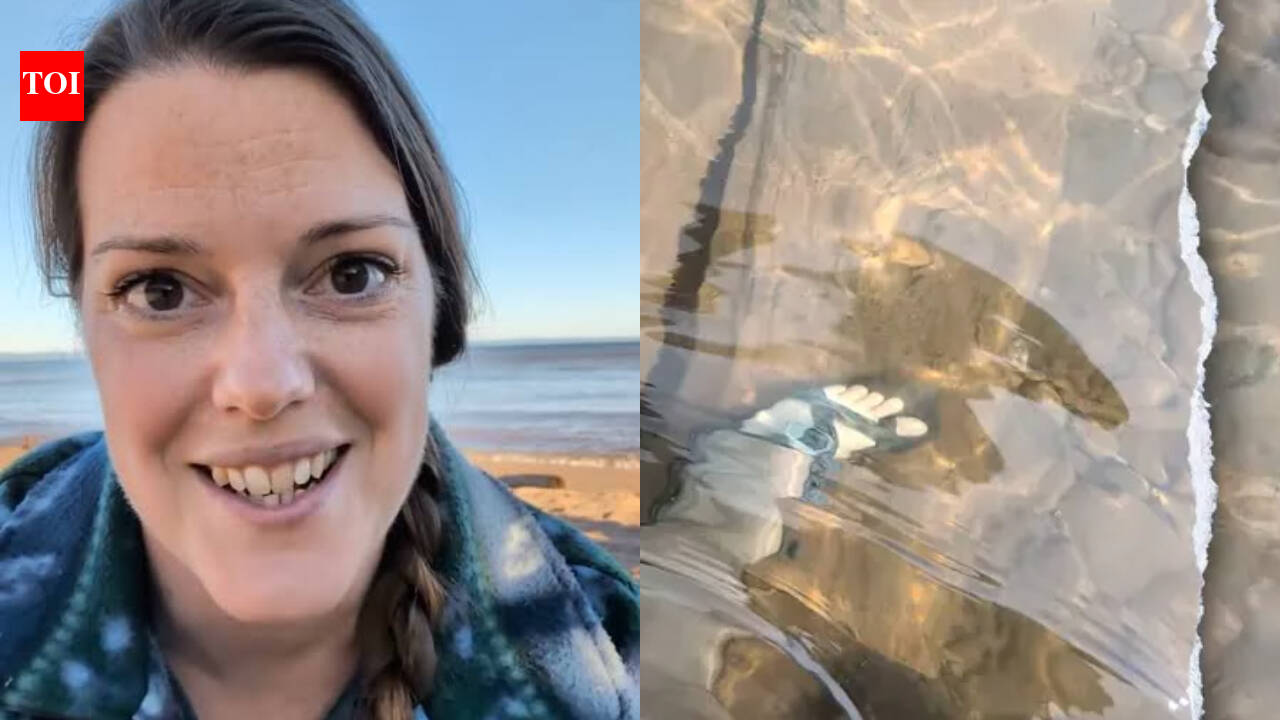
How Montana rancher Jodi Pierson discovered the Nanotyrannus skeleton on her land near a famous earlier find
The skeleton is nicknamed Jodi after Jodi Pierson, the rancher who found it on her land.
asserted
who → discover → land
The location is notable; the fossil lay some 8 miles (13 kilometres) from the site where the so-called Dueling Dinosaurs fossil was unearthed in 2006.
asserted
fossil → lie → 2006
That earlier find depicts a Nanotyrannus and a Triceratops together, which means one small stretch of Montana has produced two of the very few known skeletons of this predator.
asserted
stretch → depict → predator
Why scientists doubted Nanotyrannus was a separate dinosaur until growth rings in its bones settled the debate
The argument dates back to 1942, when what is now considered the first Nanotyrannus head, known as the Cleveland Skull, was discovered.
asserted
considered → doubt → Skull
It is housed at the Cleveland Museum of Natural History.
asserted
It → house → History
For decades, researchers wondered whether such fossils belonged to young Tyrannosaurus rex.
asserted
fossils → wonder → rex
In October 2025, new research concluded otherwise.
asserted
research → conclude → October
Scientists examining growth rings inside preserved bones found fully formed adults, not juveniles, which established Nanotyrannus as a distinct genus.
asserted
which → examine → genus
Cassandra Hatton, head of science and natural history at Sotheby's, told The Associated Press that, until the genus was proved, Tyrannosaurus rex was assumed to be the only apex predator of the Cretaceous period, some 67 million years ago.
asserted
rex → tell → period
"We now know that they coexisted," she said, each occupying its own niche in the ecosystem.
asserted
each → know → ecosystem
How Nanotyrannus differed from Tyrannosaurus rex in size, arm length, claws and teeth, and the prey it hunted
More than 150 key differences separate the two animals, and size is the most obvious.
asserted
size → differ → animals
An adult Nanotyrannus reached about 18 feet (5.5 metres), roughly half the length of an adult Tyrannosaurus rex.
asserted
Nanotyrannus → reach → rex
The teeth also differed, Nanotyrannus had more of them, slender and almost bladelike, whereas those of Tyrannosaurus rex were thick and almost banana-shaped.
asserted
those → differ → rex
Hatton likened the pair to a lion and a cheetah, telling the agency that the slender teeth slashed meat from faster prey, while the big, lumbering Tyrannosaurus rex went after slower animals and ate them whole.
asserted
rex → liken → them
It is even possible, she said, that Tyrannosaurus rex ate Nanotyrannus.
asserted
rex → say → Nanotyrannus
Jodi at Sotheby's, a skeleton almost 70 per cent complete, estimated at $6 million to $9 million, goes to auction
Jodi was unveiled on Tuesday 13 October in the lobby of Sotheby's headquarters in Manhattan, ahead of an auction on 27 October with an estimate of $6 million to $9 million.
asserted
Jodi → estimate → million
The mounted skeleton stands 6.5 feet (2 metres) tall and stretches nearly 20 feet (6 metres) long.
asserted
skeleton → mount → feet
Hatton said it is almost 70 per cent complete, with a virtually complete skull and a jaw holding roughly 50 teeth.
asserted
it → say → teeth
Sotheby's bills it as the "finest and most complete" Nanotyrannus skeleton currently available, a phrase that carries weight because only three skeletons are known.
asserted
skeletons → bill → weight
The Dueling Dinosaurs specimen, nicknamed Bloody Mary, is considered nearly 100 per cent complete but sits in the North Carolina Museum of Natural Sciences and is not for sale.
asserted
specimen → nickname → sale
The auction follows Sotheby's record $50.1 million sale of a Tyrannosaurus rex fossil this summer.
asserted
auction → follow → fossil
Why the Society of Vertebrate Palaeontology opposes private sales of fossils like Jodi and how Sotheby's defends them
asserted
Sotheby → oppose → them
The Society of Vertebrate Palaeontology, an advocacy group of scientists, scholars and students, wants significant fossils like Jodi displayed in museums and other research institutions rather than sold privately.
asserted
fossils → want → museums
Hatton counters that the world might never have learned of Nanotyrannus without professional dinosaur hunters.
uncertain
world → counter → hunters
"We absolutely need private diggers who invest their own money," she told the agency, pointing out that there are not enough universities and museums running field programmes.
asserted
she → need → programmes
Stuart Sumida, the society's president and a biology professor at California State University San Bernardino, rejected that argument as a "blatant lie".
asserted
Sumida → reject → lie
He told The Associated Press that no peer-reviewed study can be published on specimens that are not held in the public trust, once such a fossil is in private hands, he said, it can never be studied, and generations will never see it again.
asserted
generations → tell → it
 The Aporia