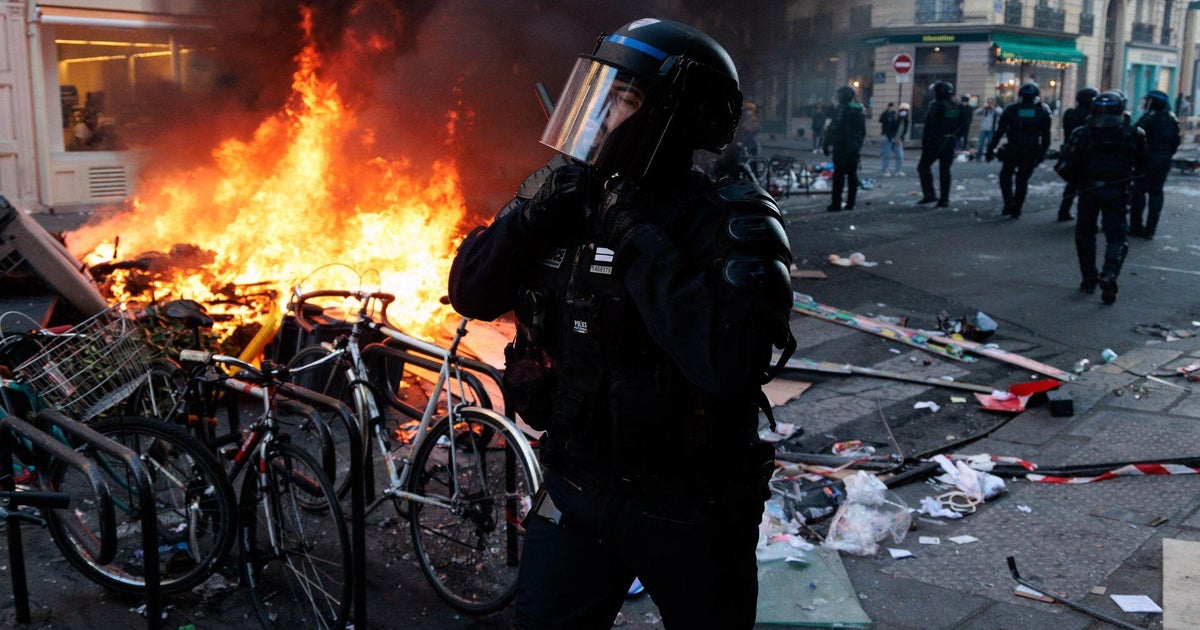
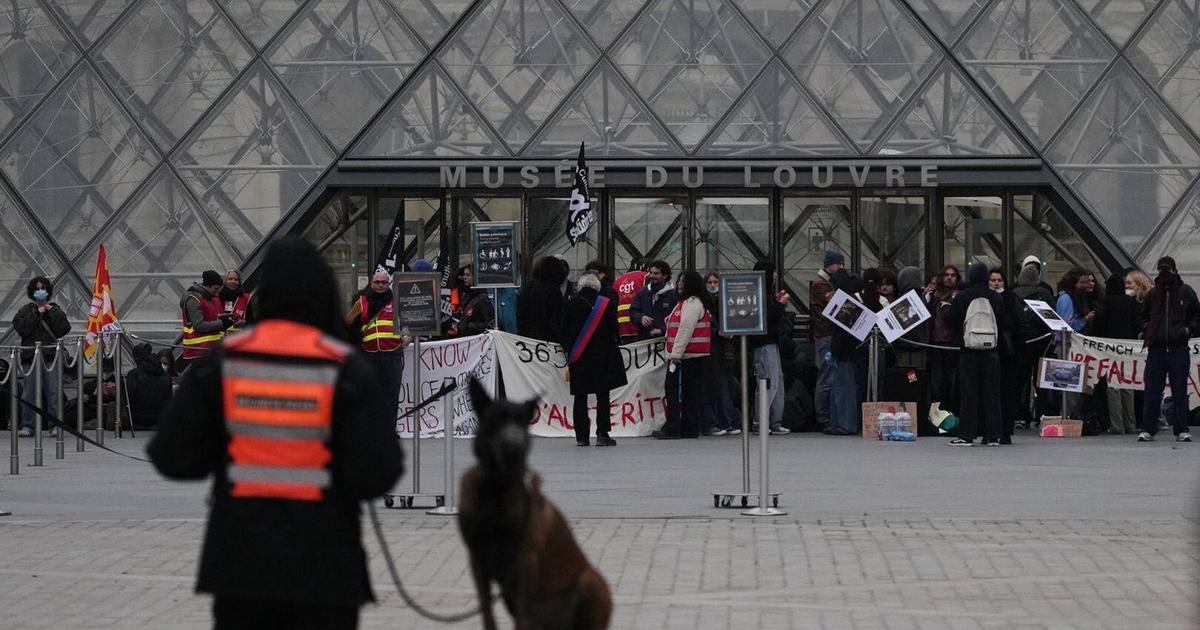
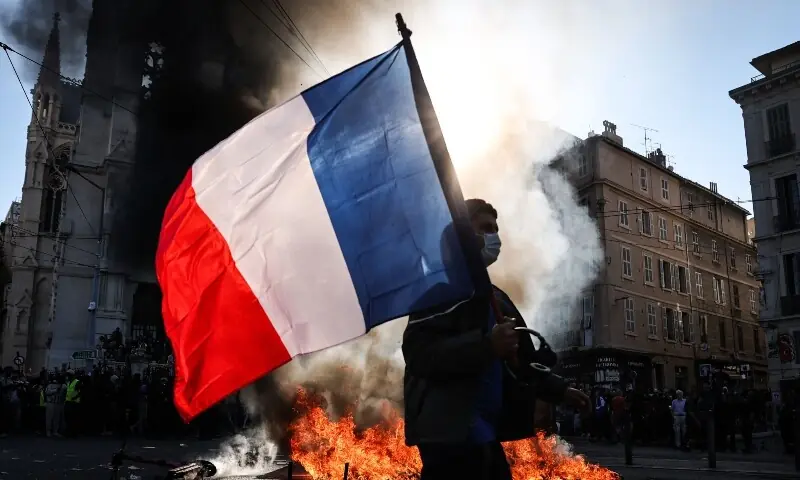
France is bracing for further chaos today ahead of a day of protests which will see shopkeepers prepare for violence and 70,000 riot police take to the nation's streets.
asserted
police → brace → streets
Officers across France are under pressure to maintain security after accusations of losing control in some cities last weekend, while facing scrutiny over their riot-control tactics that have left some teenagers seriously injured.
asserted
that → maintain → teenagers
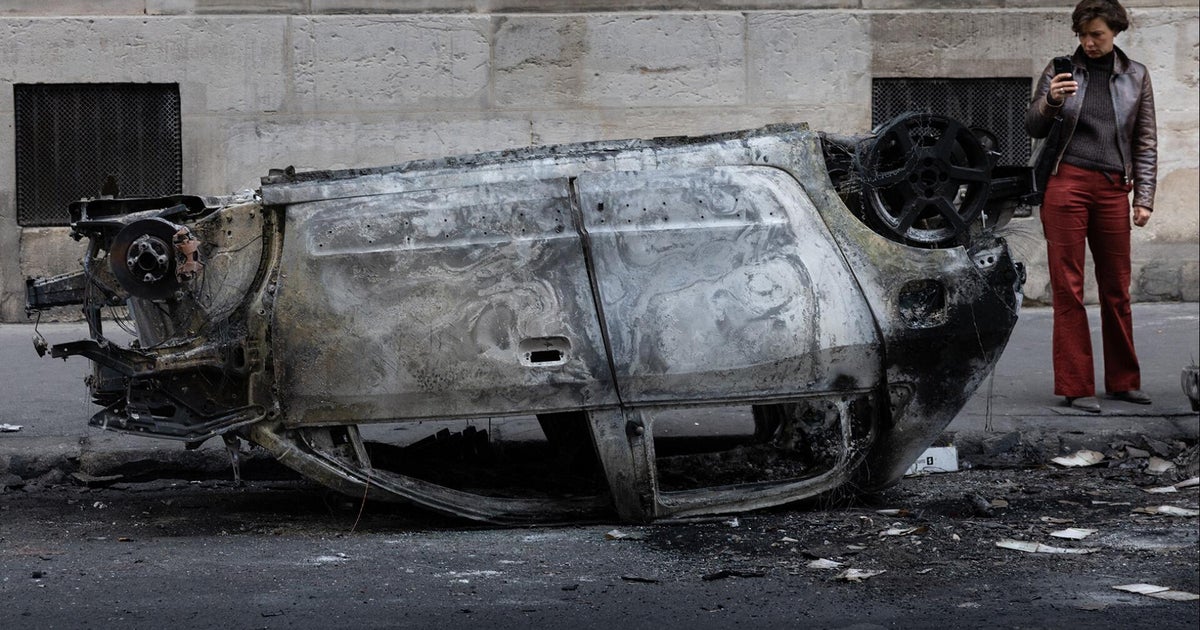
Last weekend, protests turned violent in cities across the country with town halls raided, shops looted and the iconic tourist information building in Lyon and town hall in Limoges burned to the ground.
asserted
building → turn → ground
Officers have appeared outnumbered and overwhelmed after the demonstrations widened from dissatisfaction around school conditions to encompass rising living costs and general malaise with the government.
asserted
demonstrations → appear → government
Members of the gilets jaunes joined students and trade unionists as they took to the streets, but President Emmanuel Macron this week announced a crackdown on permitted protest.
asserted
Macron → join → protest
He said only demonstrations organised by recognised trade unions will be allowed to go ahead today, and cities including Lyon, Nice and Montpellier have banned protests from taking place today completely.
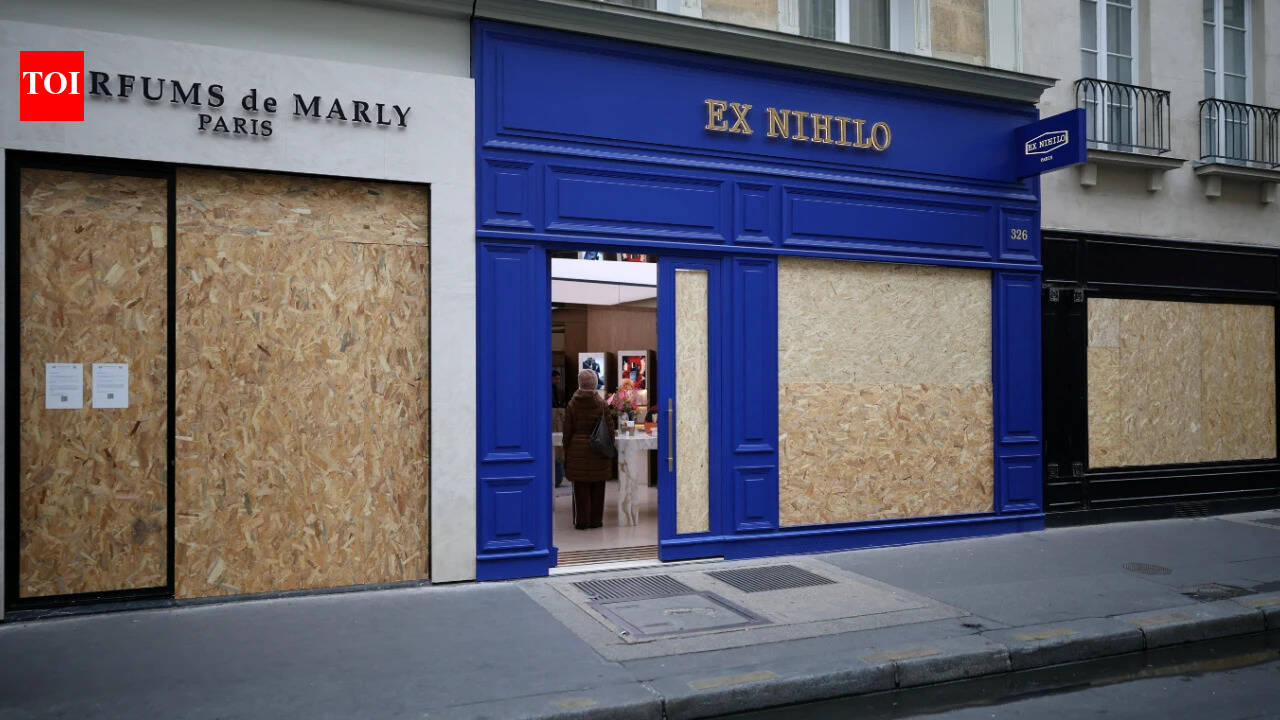
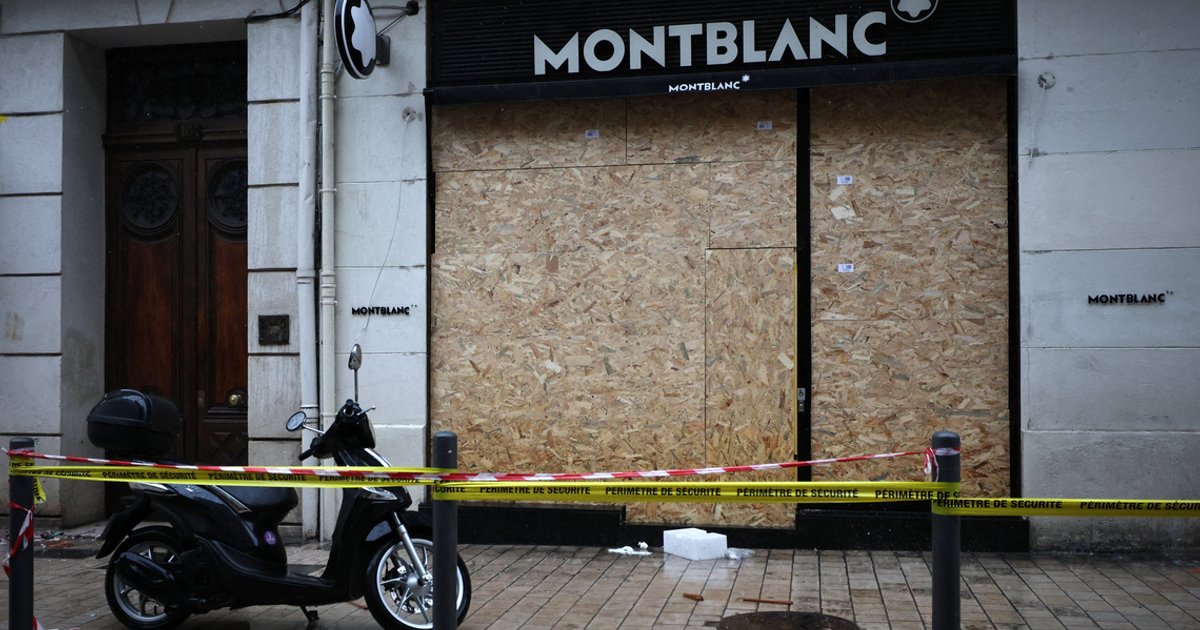
Shopkeepers have boarded up their premises in Paris and other cities, while some areas have been in partial curfews.
Major tourist attractions including the Louvre, Orsay and Picasso museums are all closed, while a home game for PSG has been moved until Monday.
Shops were boarded up on Saturday morning ahead of another day of protest in Paris
French soldiers are seen on patrol near the Arc de Triomphe in central Paris on Saturday
View of a bike store with display windows protected by wooden panels in Paris ahead of nationwide protests expected later
Regardless of the crackdown by Mr Macron, hundreds of demonstrations are still expected today, with a website associated with the gilets jaunes listing 500 protests and 200 other actions.
asserted
website → say → protests
Police said more than 100 protesters and residents were injured in Paris on Saturday.
asserted
protesters → say → Saturday
Authorities have not released a nationwide injury tally.
asserted
Authorities → release → tally
About 2,400 people were arrested across France that day.
asserted
people → arrest → France
Officers have also faced criticism after a 17-year-old girl lost an eye while participating in a protest in Mulhouse last Saturday, while a 17-year-old boy lost a hand in Saint-Etienne.
asserted
boy → face → Etienne
Other teenagers have suffered disabling injuries during weeks of high school blockades and street demonstrations.
asserted
teenagers → suffer → blockades
French police forces are equipped with batons, tear gas, sound grenades and foam-round launchers, as well as riot shields equipped with powerful strobe lights designed to disorient protesters.
asserted
forces → equip → protesters
'Intermediate-force weapons are defensive response tools that allow law enforcement officers to respond to a threat in a graduated and proportionate manner,' French National Police said in a statement.
asserted
Police → allow → statement
But critics, including families of injured teenagers, say the police have been too heavy-handed.
asserted
police → include → teenagers
Some have called for bans on foam-round launchers, tear gas and stun grenades, echoing demands made by human rights groups since the violent 2018 gilets jaunes – 'yellow vest' – protests.
asserted
Some → call → protests
Earlier this month, Amnesty International called for a permanent ban on all stun grenades, saying they are designed to shock, disorient and sow panic, and that some can cause permanent hearing loss and life-changing injuries from blasts and shrapnel.
asserted
some → call → blasts
The use of such weapons reflects a broader shift in French policing toward keeping officers at a distance from protesters, said Jean-Marie Godard, an author specializing in France's internal security.
asserted
Godard → reflect → security
French President Emmanuel Macron said this week only demonstrations organised by recognised trade unions will be allowed to go ahead today
asserted
demonstrations → say → unions
In the early 2000s, France's conservative government moved away from community policing, which emphasized foot patrols and engagement with residents, toward specialized riot-control units.
asserted
which → move → units
People across France's political spectrum regret abandoning the community policing model, Mr Godard said.
asserted
Godard → regret → model
French policing today differs from that in many other European countries, according to Laura Keesmann, a sociologist at the University of Antwerp who led a wide-ranging comparative study of policing methods in France, the UK, the Netherlands and Sweden.
uncertain
who → differ → France
In the other countries studied, police often engage directly with demonstrators, sometimes mingling with crowds to defuse tensions, she said.
asserted
she → study → tensions
'That is just really, really not the case in France,' she said.
asserted
she → say → France
Ms Keesmann stressed, however, that French police face unusually militant and sometimes violent protesters.
asserted
police → stress → protesters
On the eve of last Saturday's protests, Interior Minister Laurent Nuñez said his instructions were 'very clear: the police and gendarmes should be able to use the entirety of the intermediate weapons at their disposal'.
asserted
police → say → disposal
France has more than 250,000 national police officers and gendarmes.
asserted
France → have → officers
Police generally operate in cities, while gendarmes usually cover rural areas and smaller towns.
asserted
gendarmes → operate → areas
Both forces fall under the Interior Ministry, which said 997 officers and gendarmes were injured during Saturday's unrest, seven of them seriously.
asserted
seven → fall → them
Mr Godard said protest movements have become increasingly decentralised as labor unions have lost influence over demonstrations, drawing a wider range of participants, including radical groups.
asserted
unions → say → groups
French authorities have blamed much of the recent violence on far-Left radicals, accusing them of orchestrating clashes with police and targeting public buildings.
asserted
authorities → blame → buildings
Others took advantage of the unrest to loot businesses, authorities said.
asserted
authorities → take → businesses
 The Aporia