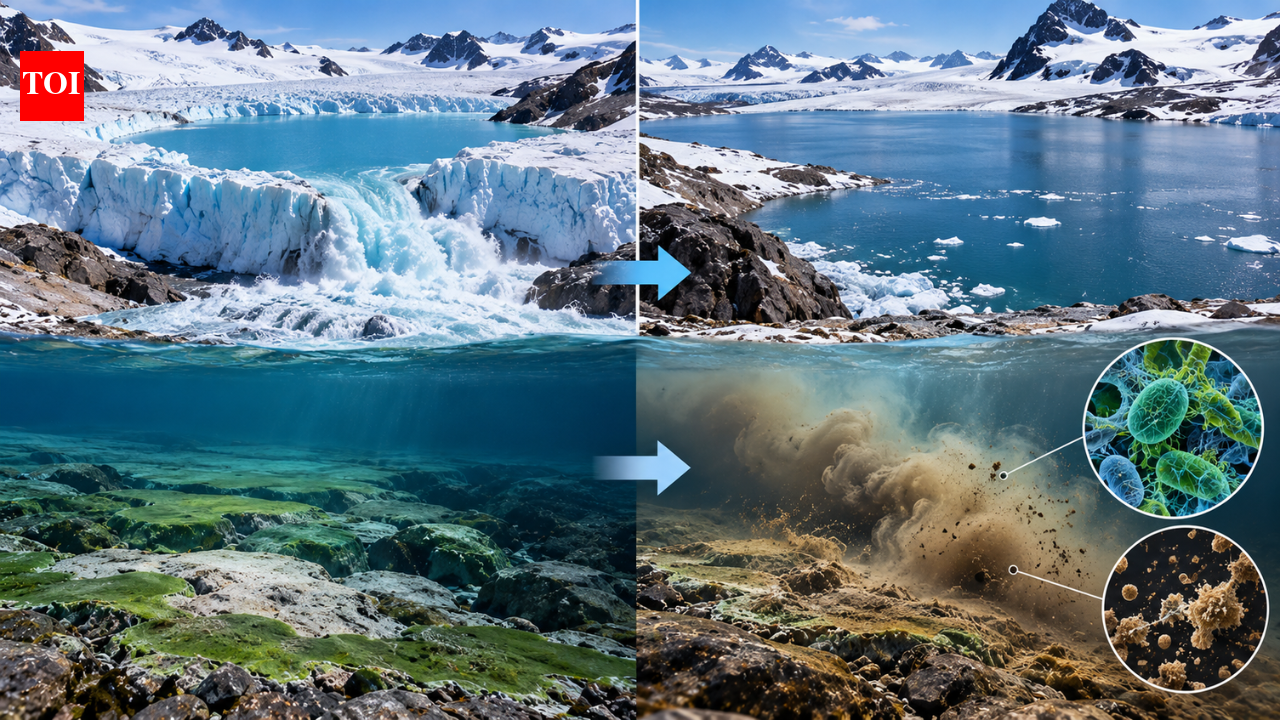
In January 2019, a rare glacial flood caused an Antarctic lake to rise by two metres after a neighbouring lake released 17.5 million cubic metres of water.
asserted
lake → cause → water
The event transformed Lake Untersee’s water chemistry and prompted scientists to investigate its effects on an unusual microbial ecosystem living beneath its permanent ice cover.
asserted
event → transform → cover
The study, published in ResearchGate and titled
‘Glacial lake outburst floods enhance benthic microbial productivity in perennially ice-covered Lake Untersee (East Antarctica)', found that the flood altered carbon concentrations and other chemical properties, potentially supporting photosynthetic microbial activity.
asserted
flood → publish → activity
Researchers also analysed microbial mats for evidence of earlier flooding, finding indications that similar events may have periodically influenced the lake’s carbon cycling over thousands of years.
uncertain
events → analyse → years
How the 2019 Antarctic Lake flood changed microbial life
asserted
flood → change → life
The flood began on 14–15 January 2019, when water was suddenly released through the ice cover of Lake Obersee.
asserted
water → begin → Obersee
The researchers reported that the water travelled approximately 8.3 kilometres through a narrow channel along the eastern lateral moraine before entering the north-eastern corner of Lake Untersee.
asserted
water → report → Untersee
The event followed a decrease of 11.3 metres in Lake Obersee’s water level.
asserted
event → follow → level
According to the researchers, the flood added 17.5 million cubic metres of water to Lake Untersee, increasing its volume by three per cent.
uncertain
flood → accord → cent
Lake Obersee experienced a volume decrease of 22.9 million cubic metres, suggesting that some of the released water may have drained towards the coast rather than entering Lake Untersee.
uncertain
some → experience → Untersee
The study estimated the flood’s average discharge at approximately nine to ten cubic metres per second over 21 days.
asserted
study → estimate → days
The researchers also documented thermal erosion of the Anuchin Glacier and the adjacent moraine, along with the formation of a melt pool approximately 50 metres wide where the incoming water entered Lake Untersee.
asserted
water → document → Untersee
Lake Untersee’s unique microbial ecosystem before the 2019 flood
Lake Untersee is one of the large, permanently ice-covered lakes in the Untersee Oasis of Dronning Maud Land, East Antarctica.
asserted
Untersee → cover → Land
Its water chemistry is unusual, with a high pH of around 10.6 and extremely low concentrations of dissolved inorganic and organic carbon.
asserted
chemistry → dissolve → carbon
Before the 2019 flood, the lake had remained in a state of hydrological stability for several hundred years, according to the study.
uncertain
lake → remain → study
Despite the low availability of nutrients and the limited light penetrating its thick ice cover, Lake Untersee supports a benthic microbial ecosystem.
asserted
Untersee → penetrate → ecosystem
The researchers described photosynthetic microbial mats, small pinnacles and large conical structures resembling stromatolites on the lake bed.
asserted
researchers → describe → bed
Cyanobacteria, including Tychonema, Phormidium, Leptolyngbya and Pseudanabaena, dominate the upper layer of the mats, where photosynthesis fixes carbon.
asserted
photosynthesis → include → carbon
The underlying layers contain heterotrophic microorganisms, including members of the Actinobacteria, Verrucomicrobia, Proteobacteria and Bacteroidetes groups.
asserted
layers → underlie → groups
How the 2019 flood changed Lake Untersee’s water chemistry
asserted
flood → change → chemistry
The researchers found that the flood altered the chemical composition of Lake Untersee’s oxygenated water column.
asserted
flood → find → column
The lake’s pH decreased from 10.5 to 9.5, while specific conductivity fell from between 505 and 520 microsiemens per centimetre to 485 microsiemens per centimetre.
asserted
conductivity → decrease → centimetre
Dissolved oxygen also decreased, from 150 per cent to 128 per cent saturation.
asserted
oxygen → dissolve → saturation
The concentration of total inorganic carbon increased from 0.35 milligrams of carbon per litre to 0.5 milligrams per litre.
asserted
concentration → increase → litre
The researchers also recorded changes in carbon isotope measurements, which helped them investigate the origin of the additional carbon.
asserted
them → record → carbon
When the team returned to the lake in November 2019, a small stream was still flowing through the flood channel into its north-eastern corner.
asserted
stream → return → corner
The stream had a pH of 7.7 and a total inorganic carbon concentration of 1.8 milligrams per litre, considerably different from the lake’s usual high-pH, low-carbon conditions.
asserted
stream → have → conditions
How the 2019 flood affected carbon availability in Lake Untersee
asserted
flood → affect → Untersee
The researchers explained that the lake’s photosynthetic microbial mats operate under conditions of extremely limited carbon availability.
asserted
mats → explain → availability
Before the flood, the uppermost layer of the mats was understood to be carbon dioxide-depleted, restricting photosynthesis and the sequestration of organic carbon.
asserted
layer → understand → carbon
The flood may have supplied additional carbon to the lake, helping to support phototrophic activity.
uncertain
flood → supply → activity
The researchers attributed the higher concentrations of total inorganic carbon and modern carbon recorded after the event partly to the uptake of atmospheric carbon dioxide through the melt pool that formed near the flood’s entry point.
asserted
that → attribute → point
They estimated that an additional uptake of 0.11 milligrams of carbon per litre, equivalent to 21 per cent of the measured total inorganic carbon, would be required to account for both the post-flood carbon concentration and radiocarbon measurements.
asserted
uptake → estimate → concentration
How ancient floods shaped Lake Untersee’s carbon storage
The researchers also investigated whether similar floods had occurred before 2019.
asserted
floods → shape → 2019
They analysed the grain sizes and carbon isotopes of microbial mats, finding evidence consistent with periodic glacial lake outburst floods during the Holocene.
asserted
They → analyse → Holocene
These findings offered a possible explanation for some of the complex patterns of carbon cycling and sequestration observed in Lake Untersee.
asserted
findings → offer → Untersee
Lake Untersee stores between 5.42 billion and 6.71 billion grams of carbon, with more than 95 per cent of that carbon held in its microbial mats.
asserted
cent → store → mats
The researchers concluded that periodic flooding could replenish carbon in lakes where carbon dioxide availability is limited, potentially supporting microbial productivity over long periods.
uncertain
availability → conclude → periods
They suggested that similar processes might be relevant to other carbon dioxide-depleted Antarctic ecosystems, while also discussing their possible relevance to icy lakes on early Mars.
uncertain
processes → suggest → Mars
The 2019 event demonstrated that a lake that had remained stable for centuries could undergo a substantial hydrological and chemical change following the partial drainage of a neighbouring lake.
uncertain
that → demonstrate → lake
…and 1 more, not listed.
 The Aporia