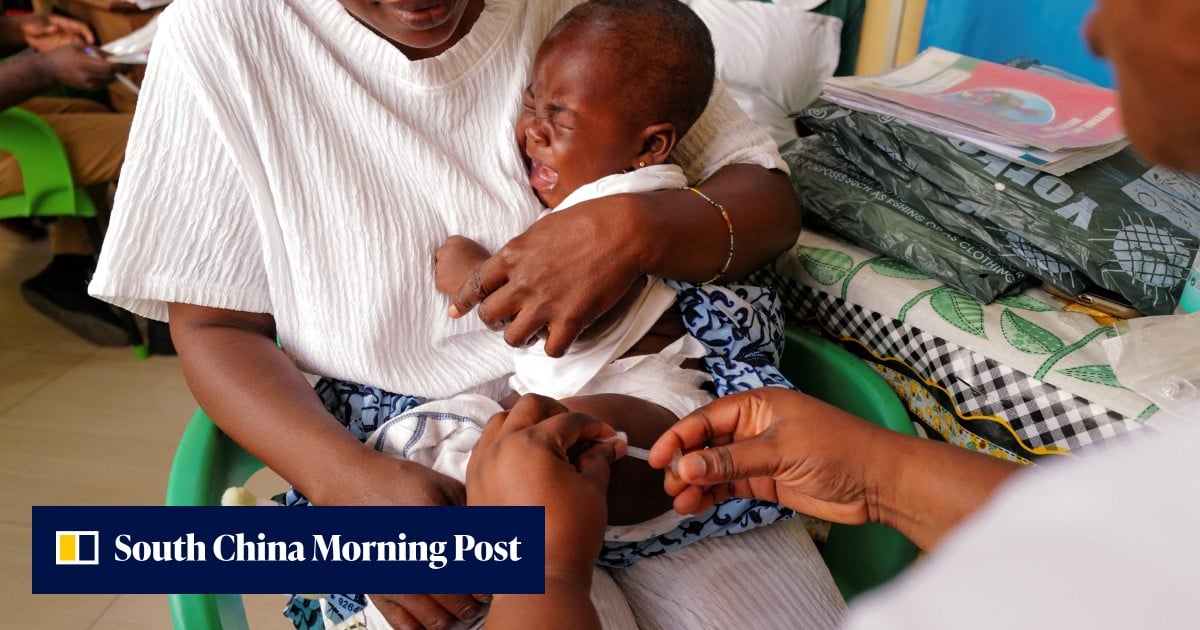
How competition between Chinese and Indian firms could reshape Africa’s drug markets

Read the original at South China Morning Post ↗
Cite

Nyabiage, J. (2026, October 24). How competition between Chinese and Indian firms could reshape Africa’s drug markets. South China Morning Post. https://www.scmp.com/news/china/diplomacy/article/3371997/how-competition-between-chinese-and-indian-firms-could-reshape-africas-drug-markets

Dated from the outlet's own feed. Check the original for its byline.

South China Morning Post · collected 2026-10-24 · by Jevans Nyabiage

Quick Summary

Chinese pharmaceutical companies are increasingly competing with Indian firms for dominance in Africa's antimalarial drug market. According to a recent study, Chinese exports of antimalarials reached $89.3 million last year, nearly equaling India’s $89.6 million. This marks a significant shift from 2021 when China exported $62.6 million compared to India's $121 million. The study also analyzed Global Fund purchases for the same period in 12 of Africa's most affected countries plus Kenya.
Written locally by qwen2.5:14b on 2026-10-24, using this article's own text rather than the other coverage of the same event (that is the story summary below).

AI analysis runs on qwen2.5:14b, locally

Story summary

As of October 24, 2026, Chinese pharmaceutical firms are increasingly challenging India's dominance in Africa's antimalarial drug market. According to a new study by Indian market research company Sol Gravitas, Chinese exports of antimalarials reached US$89.3 million last year, nearly matching India’s US$89.6 million, compared to US$121 million for India and US$62.6 million for China in 2021. This shift highlights the growing competitiveness of China's pharmaceutical industry in Africa, particularly in the hardest-hit countries battling malaria. The study also analyzed Global Fund purchases for these countries between 2021 and 2025, indicating a significant narrowing gap in market share between Chinese and Indian firms over this period.

Written for “Competition Between Chinese And Indian Firms In Africa” on 2026-10-24, grounded in this article and the 0 other(s) covering the same event.
Why this leaning score
This article does not take a side on a contested political question, so it has no leaning score. That is an answer rather than a gap: a match report or a rescue can be warmly or critically written without being left or right, and scoring it anyway is how approval of a subject gets recorded as a political position.
No political leaning scored for article 103606 · logged 2026-10-24

Story

📰 Competition Between Chinese And Indian Firms In Africa
Economy/Business · 1 article(s) covering the same event.

Compared with similar articles

Nothing to compare against. No article is close enough to this one for the pipeline to have linked or judged the pair.
How this article was measured signals, leaning charts, publisher record, byline, topics and claims

Signals How these are calculated →

Claims extracted
5
sentences that state something as happening or true
Uncertain
60%
3 of 5 hedged ("reportedly", "may", "according to")
Leaning
not political
takes no side on a contested political question
Publisher signals
64/100
South China Morning Post's corrections and hedging, across everything collected from it. Not a measure of accuracy.
Outlets on this story
1
Economy/Business
Same framing elsewhere
1
articles that frame the event the way this one does
Analyzed 2026-10-24 · how these are computed

How this is being covered How these are calculated →

Article leaning vs. publisher reliability
Source leaning vs. consistency

Publisher

South China Morning Post · 2975 article(s) · 6 correction(s) detected
Running correction rate · 6 correction(s)

Who wrote this

Jevans Nyabiage
9 article(s) here · 1 carrying a prediction
🔮 How competition between Chinese and Indian firms could reshape Africa’s drug markets
🔮 Performances are about marketing China as a technology partner, analysts say, but it is not clear if they will translate into factory deals In Luanda, Angola, dancing robots amused guests and ambassador Zhang Bin called the industry “a small snapshot of the Chinese economy’s move towards innovation and higher-quality development”.
🔮 US Secretary of State Marco Rubio met Kenyan President William Ruto on the sidelines of the UN General Assembly in New York last week.
🔮 Xi Jinping’s Cairo trip marks ‘best ties in history’ as Egypt seeks to balance West Chinese president’s visit comes amid expanding Suez investment and joint air force exercises China’s foreign ministry last week described relations with Egypt as being “at their best in history” and said Xi’s visit would build on past cooperation while setting the direction for future ties.
Also by Jevans Nyabiage
Nothing else under this byline is closely related to this article, so these are simply their most recent.
All 9 articles by Jevans Nyabiage →

Topics

African China Chinese India Indian

Subjects

Chinese NORP · 3× Indian NORP · 3× China GPE · 2× India GPE · 2× African NORP · 1× Global Fund ORG · 1× Kenya GPE · 1× Sol Gravitas ORG · 1×

Narrative

The gap has closed significantly since 2021, when Indian exports stood at US$121 million compared with US$62.6 million for China.
framing: speculative · carried by 1 article(s) · first seen 2026-10-24
🔮 How competition between Chinese and Indian firms could reshape Africa’s drug markets
2026-10-24 · South China Morning Post
How competition between Chinese and Indian firms could reshape Africa’s drug markets · speculative framing

Claims (5 extracted, 3 hedged)

How competition between Chinese and Indian firms could reshape Africa’s drug markets uncertain
competition → reshape → markets
Chinese firms’ growing share of the antimalarial market highlights how the country’s pharma industry is becoming increasingly competitive China is challenging India’s long-held dominance of the African market for antimalarial drugs in 12 of the continent’s hardest-hit countries, according to a new study. uncertain
China → grow → study
Last year, Chinese exports of antimalarial drugs reached US$89.3 million, nearly matching India’s US$89.6 million, according to Indian market research company Sol Gravitas. uncertain
exports → reach → Gravitas
The gap has closed significantly since 2021, when Indian exports stood at US$121 million compared with US$62.6 million for China. asserted
exports → close → China
Separately, the study examined Global Fund purchases for the same 12 countries plus Kenya between 2021 and 2025. asserted
study → examine → 2021
💬Give feedback
🕘History 🎫Support