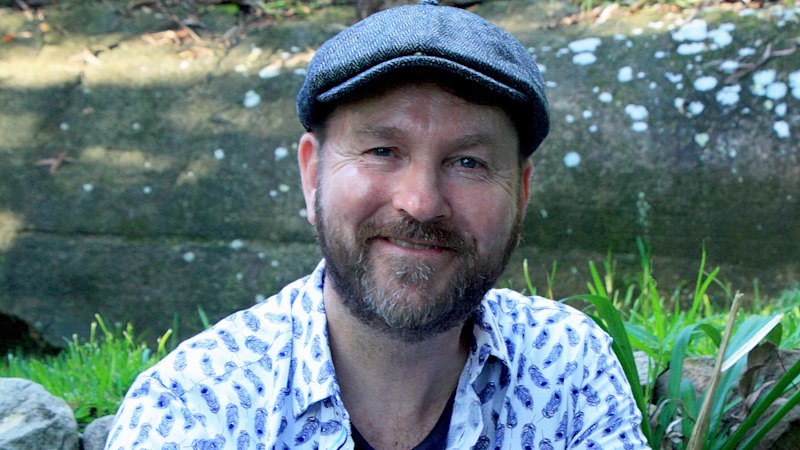
Roaming between Sydney and Hydra, Hill End and Barcelona, London and Paris, Geoffrey Gates’ third novel, The Phantom Surrealist, is a playful search for an elusive Australian artist, Robert J Wake, who grows up on the gritty streets of Surry Hills and ends up on surrealist shores with Miro and Picasso.
asserted
who → roam → Miro
Soon after, he disappears in Spain.
asserted
he → disappear → Spain
Playing detective is Christopher Tiffen, a PhD student writing an art history thesis and scrambling for clues on what happened to Wake: Did he go to prison during the Spanish Civil War?
asserted
he → play → War
Where have his artworks gone?
asserted
artworks → go → ?
Any PhD student in writing and literature or art history researcher will get a kick out of Gates’ blurring of genres and Tiffen’s hapless and fantasist attempts to fit his findings into academic parameters when he really wants to explode the narrative.
asserted
he → get → narrative
Art lovers will see pointers everywhere to artworks and painters, as Tiffen recognises the brushstrokes of places he visits.
asserted
he → see → places
Gates’ fiction is often hilarious and tongue-in-cheek, especially when he relays his unreliable narrator’s penchant for mansplaining thesis ideas to anyone who will (or won’t) listen, including bartenders and sunbaking Dutch tourists.
asserted
who → relay → bartenders
The reader can occasionally feel like someone trapped on an aeroplane next to a passenger who won’t stop talking.
asserted
who → feel → passenger
Gates is well aware of this, though, and introduces a wonderful parallel narrative where Tiffen falls in love with Agnés, who he meets staring at a painting in a Sydney art gallery.
asserted
he → introduce → gallery
From Barcelona, she works at the Berowra Waters Inn, and Tiffen encircles her in a bid to win her affections; he desperately needs a muse.
asserted
he → work → muse
This contemporary narrative cleverly echoes Wake’s journey: Wake sailed to pre-World War II London while Tiffen flies into Heathrow; Tiffen works alone in a Kombi Van in Hill End, where Wake painted in an abandoned cottage.
asserted
Wake → echo → cottage
Eventually, the narratives have to intersect, and they do in a deus ex machina that seems too insanely neat, but perhaps not for the imaginings of Tiffen; he is searching for “the uncomfortable depths where the fluid truth lies”, after all.
asserted
truth → have → depths
Gates’ central exploration is of fantasy and escape, fakery and the false motivations we project onto others – who we know and who we imagine we know – the stories we make to fill in the gaps when there are no answers.
asserted
we → project → gaps
Tiffen is like a phantom in his own life, too, curiously lacking self-awareness.
asserted
Tiffen → lack → awareness
At times the interplay between the parallel narratives seems too delineated.
asserted
interplay → seem → narratives
Perhaps more blurring of lines between character, time and space would have kept it aptly surreal and uncertain.
asserted
blurring → keep → it
Ultimately, the book is an examination of what tends to fall through the cracks.
asserted
what → tend → cracks
The painters’ women-lovers who meld into the muse landscape rather than being recognised for their own work and activism.
asserted
who → meld → work
The pre/postwar Australian artists who leave our shores to become key figures in international art scenes but don’t exist in the galleries, catalogues and archives.
asserted
who → leave → galleries
It’s no surprise that Wake works in the propaganda unit in Spain and the camouflage unit in Australia – where his work is transitory and has no signature.
asserted
work → ’ → signature
Even Hill End, once thriving but now abandoned, has become the “land of disappearance”.
asserted
End → thrive → disappearance
The Phantom Surrealist is an enticing novel that dissects the narrative of what it means to be an Australian artist like Robert J Wake in the world, and what it takes to find a sense of home.
asserted
it → dissect → home
Caught in the tension between knowing everything about art, and not able to express himself as an artist, Tiffen has to make do with losing himself in the imagined lives of others.
asserted
Tiffen → catch → others
Gates threads these two characters’ worlds together skilfully, shaping a mysterious ficto-biography of artistic grandeur, that also manages to have a lot of fun along the way.
asserted
that → thread → way
What else is happening in the book world?
asserted
What → happen → world
- Magda Szubanski’s memoir is full of tender truths
- Pulitzer Prizewinner Barbara Kingsolver on her new novel and Appalachian pride
- He lasted 11 days in Trump’s White House.
asserted
He → last → House
Now the Mooch has a warning
- How BookTok and Korean snack wrappers have made reading radical
The Booklist is a weekly newsletter for book lovers from Jason Steger.
asserted
Booklist → have → Steger
Get it delivered every Friday.
asserted
it → get → ?
 The Aporia