Why is it hard to disagree well?
asserted
it → disagree → ?
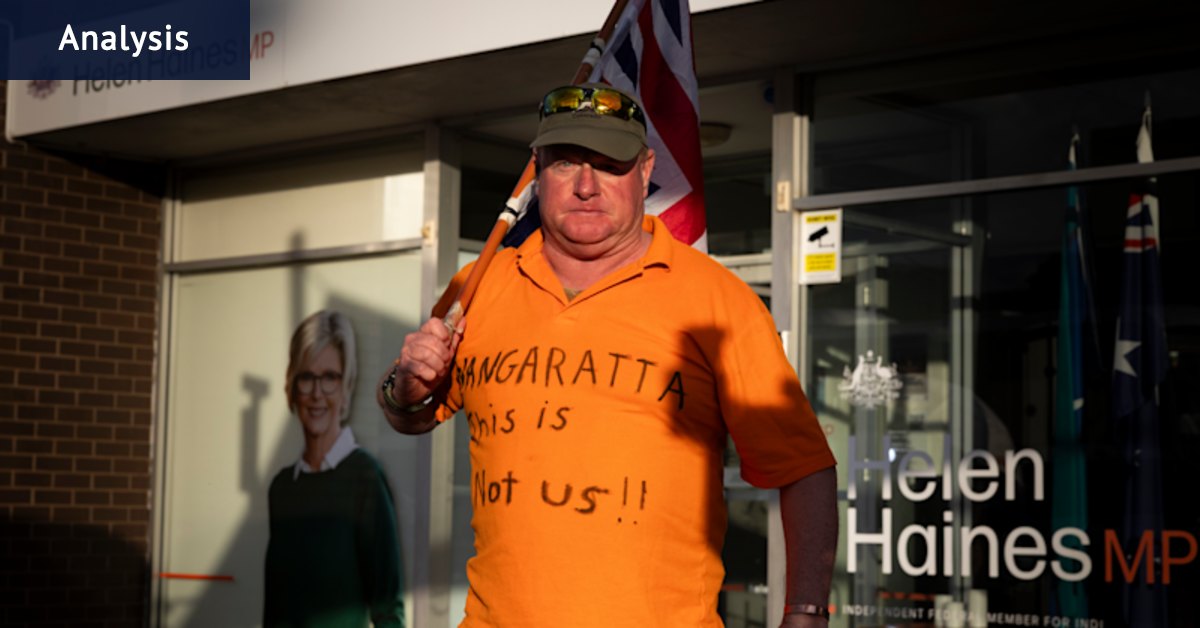
It's a question many Australians, from the governor-general and prime minister down, have been deeply considering since Monday's shocking attack on MP Helen Haines and the subsequent national conversation about civility, respect and social cohesion.
And it's a question academics Daniel Heller and Farid Zaid have spent years discussing with thousands of Australians.
asserted
Heller → consider → Australians
Dr Heller and Dr Zaid co
asserted
Heller → co → ?
-direct the Brave Conversations Project,a Monash University initiative that combines psychology, neuroscience, education and philosophy to help people talk across their differences
asserted
people → - → differences
They've just clocked up their 100th workshop teaching people from every imaginable walk of life how to disagree better on the topics that keep them up at night: geopolitics, climate, reproductive ethics, AI, social media and gender, to name a smattering.
asserted
that → clock → smattering
"In our age of polarisation, it can often be very, very challenging to distinguish between someone who says, 'I dispute your view', and someone who is saying, 'I am attacking you, I dispute your very right to exist'," says Dr Heller.
asserted
Heller → distinguish → right
Emotion, he says, plays "a huge, huge, huge role" and understanding that means "learning to become aware of what's happening, even physiologically sometimes … to accept that the emotions are a normal part of conflict … but then to remember that we have the agency between that first initial flush of emotion and what we do next.
asserted
we → say → what
"
"There is always that space between to reflect, to pause and to act in ways that are wise and that really come from a place of heart and values,"he said.
asserted
that → be → heart
Mostyn: 'Words matter, spoken or written'
asserted
Words → matter → ?
Governor-General Sam Mostyn, a close friend of Ms Haines, this week revealed that just a fortnight ago, she and Ms Haines had a deep conversation about the woeful state of public and political discourse.
asserted
she → reveal → discourse
"We talked about the need for greater civility and engagement across our civic and public life," she said during a press conference at The Alfred hospital, where Ms Haines was in a critical condition after losing both her legs.
"
asserted
Haines → talk → legs
It's important to remember: words matter.
asserted
words → remember → ?
She implored Australians to "learn or re-learn to exercise our muscle of decency".
asserted
She → implore → decency
"Australians are yearning for kindness and care, and they're asking us why we've lost the great skill of disagreeing well and with decency to each other."
asserted
we → yearn → other
Next month, the Scanlon Foundation Research Institute will release the findings from its annual study into social cohesion in Australia, a fascinating snapshot of how we work together, our public attitudes and our behaviour.
asserted
we → release → Australia
Institute CEO Anthea Hancocks says the research shows there are reasons for optimism.
asserted
research → say → optimism
"Generally, the majority of the population believe in respect, believe in a fair go, believe in people being able to have a voice in government, but being respectful if they disagree with them," she says.
asserted
she → believe → them
"But I think for some people disagreeing well is really hard work.
asserted
disagreeing → think → people
"And if you get entrenched in the sense that your view is the right view, rather than simply a view, then you do tend to end up with people who will not listen on the other side.
asserted
who → entrench → side
I think the vast majority think they are on the right side of any argument, simply because they've done the thinking and that's where they've landed and so it must be right.
asserted
it → think → thinking
And then of course, if you go onto social media or to your friends and they're all agreeing with you, then it's simply reinforcing the fact that, yes, you're right.
asserted
you → go → fact
So it is very difficult to break into that."
asserted
it → break → that
So how can we disagree better?
asserted
we → disagree → ?
Dr Zaid and Dr Heller believe it's possible to learn the key skills of listening, testing people's ideas and challenging them in ways that kick conversations along, rather than shut them down.
asserted
that → believe → them
They recommend asking thoughtful questions in an effort to understand other people's points of view.
asserted
They → recommend → view
For example:
"What I'm hearing is … did I get that right?"
"What led you to feel that way?"
"Can you help me understand why you feel strongly about this?"
"What experiences shaped your perspective on this?"
"How confident are you, on a scale of 0–100?".
asserted
you → hear → 0–100
If they say "90 per cent", answer: "Tell me about that other 10 per cent"
"Where do you feel torn?"
"What do you think are the advantages and disadvantages of this approach?"
How do you know if you've done it well?
Dr Zaid believes the mark of a successful disagreement is that you'd both be happy to return to the conversation.
asserted
you → say → conversation
"For us, a successful disagreement is one in which both people leave feeling that they've been taken seriously, even if neither has shifted an inch," says Dr Zaid.
asserted
Zaid → leave → feeling
"Sometimes we need to be comfortable leaving a question open, resisting that very human desire to have the final word.
asserted
we → need → word
"When you discover that you can disagree profoundly with someone and still enjoy their company, you become a little less frightened of encountering difference in the world.
asserted
you → discover → world
"
And like any muscle, skills around disagreeing well get stronger the more effort you put in.
asserted
you → disagree → muscle
"Disagreement, when it's done well, can be a pathway to not just learning, not just innovation, not just personal growth, but also authentic human connection," Dr Heller says.
asserted
Heller → do → learning
"What can happen when we don't service the disagreements, when we don't share what we're thinking, is that we also don't get to share our authentic selves and that can be an extraordinarily lonely and alienating experience."
asserted
that → happen → selves
 The Aporia