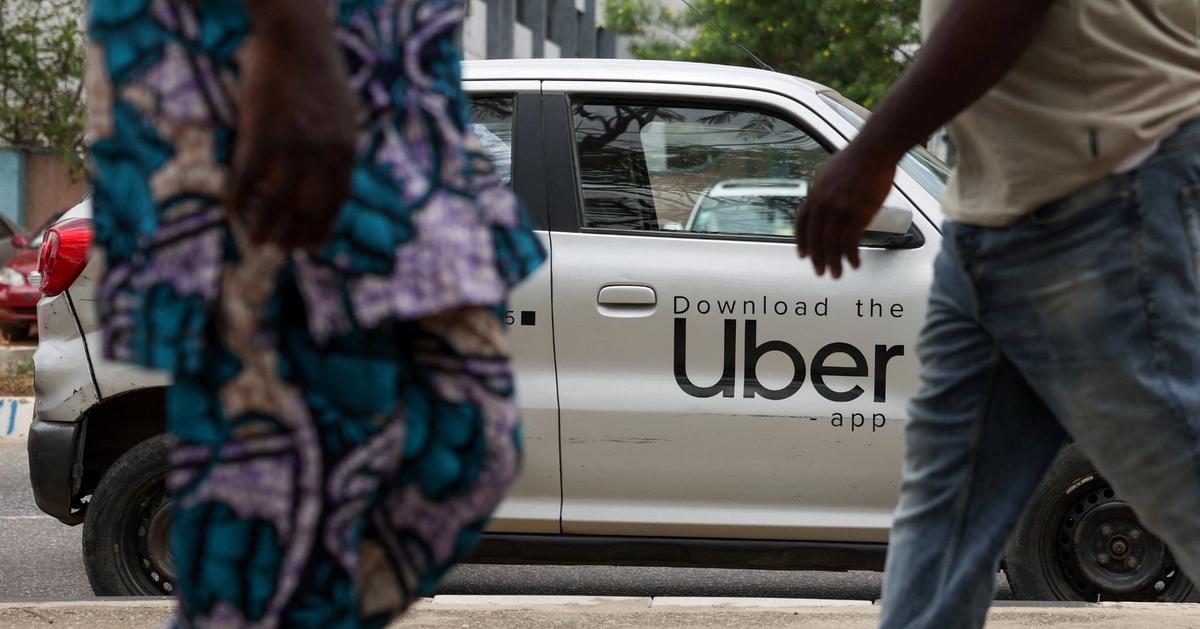
Uber was paying Nigerian drivers more than it charged passengers for some short trips, contributing to its recent exit from the country. According to a report by Obi, a California-based price and trip data aggregator, Uber paid drivers up to 23% more than passenger charges for rides under 12 miles. This unsustainable subsidy, combined with low demand and economic instability, forced Uber’s withdrawal on September 2nd alongside a global restructuring that cut 10% of its workforce. The report is based on analysis of over 20,000 rides in Nigeria completed between January and July 2026 by more than 300 drivers.
Written by the local model on 2026-09-15,
using this article's own text rather than the other coverage of the
same event (that is the story summary below).
The News
Uber was paying Nigerian drivers more than it charged passengers for some short trips, an unsustainable subsidy that played a leading role in the US ride-hailing giant’s abrupt exit this month, according to a new report based on thousands of Uber trips.
uncertain
that → pay → trips
The company quit Nigeria and Uganda on Sept. 2, the same day it announced a global restructuring decision that cut 10% of its staff globally.
asserted
that → quit → staff
It still operates in four African countries including South Africa and Kenya.
asserted
It → operate → Africa
Even after 12 years of operating in Nigeria, Uber did not have a large enough number of active passengers there and high inflation and currency depreciation made passengers increasingly price sensitive, according to a report by Obi, a California-based price and trip data aggregator that tracks more than half-dozen ride hailing platforms.
uncertain
that → operate → platforms
“It’s obvious that demand [in Nigeria] was low and that the political and economic climate wasn’t helping,” Ashwini Anburajan, CEO of Obi, told Semafor.
asserted
Anburajan → ’ → Semafor
“Pay had to be subsidized to make drivers willing to take rides.
asserted
drivers → have → rides
There was just no way for Uber to dig itself out of this pattern,” Anburajan said.
asserted
Anburajan → be → pattern
Her firm’s data suggests that Uber paid Nigerian drivers more than it charged passengers on trips shorter than 12 miles (20 km).
uncertain
it → suggest → miles
In some cases, the company paid drivers 23% more than the passenger was actually charged.
asserted
passenger → pay → more
Though the company adjusted this pattern above the 12-mile threshold, it amounted to an “over-generous” subsidy scheme for short rides that drivers would not have otherwise accepted, an approach that Uber’s in-country rivals like InDrive did not resort to, Obi said.
asserted
Obi → adjust → InDrive
A typical Uber driver in Nigeria averaged 130 rides over the first seven months of 2026, but that was just over a tenth of the volume of rides the company’s drivers in South Africa fulfilled over the same period, the report first shared with Semafor showed.
asserted
report → average → Semafor
Yet, Nigerian drivers kept a larger share of the fare paid by passengers compared to their counterparts in South Africa, the firm said.
asserted
firm → keep → Africa
Its report is based on data from more than 20,000 rides completed by more than 300 drivers within the period on Uber and InDrive, a Russian-founded US company that also operates in Nigeria.
asserted
that → base → Nigeria
Uber’s arrival in Nigeria in 2014 heralded a taxi revolution after a couple handful of startups attempted ride-hailing services in Lagos with little success.
asserted
handful → herald → success
The company rode in aggressively with more than a billion dollars in investor capital to upstage the city’s often rickety yellow cabs, promising technology-aided transport efficiency to passengers and dependable income to drivers.
asserted
company → ride → drivers
This month’s decision to pull out came after several attempts to stay relevant, from floating courier services and boat taxis, to multiple fare rises implemented to reflect higher costs of doing business following economic policy changes that have been rolled out since 2023.
asserted
that → pull → 2023
Fuel prices have risen more than five-fold in Nigeria since the end of a government fuel subsidy scheme, and the naira currency has depreciated by more than 70% in that period, a combination that depresses net incomes both for drivers and transport companies.
asserted
that → rise → drivers
Some Nigeria analysts have cited a “challenging macroeconomic environment” as the root cause of Uber’s exit as more expensive taxis became less preferred to relatively cheaper alternatives like buses, tricycles and motorcycles.
asserted
taxis → cite → buses
Their ability to tweak parts of their operations to local sensibilities — like InDrive’s bargaining feature, and Bolt’s flexibility with trip cancellation, car models and payment options — diminished the advantages Uber had gained from a two-year headstart, some analysts have argued.
asserted
analysts → tweak → headstart
Bolt, which pushed into offering three-wheeled taxis outside of Lagos, had won 60% of Nigeria market share by the time of Uber’s exit, Obi said.
asserted
Obi → push → exit
Active Nigerian users reached 3.3 million last December, more than six times that of Uber, according to Sensor Tower, a California-based app usage tracker.
uncertain
users → reach → Tower
Anburajan agrees with the view that localization may have helped Uber.
uncertain
localization → agree → Uber
“Keeping your business model and experience for users and drivers relatively uniform across markets can work if your target riders are international travelers who will place value on an experience that’s the same from one country to the next,” she said.
asserted
she → keep → next
Ride-hailing will remain compelling and competitive in Africa for companies with “an approach that works for locals,” she said.
asserted
she → remain → locals
Ultimately, though, size does not equal a large opportunity.
asserted
size → equal → opportunity
The upshot of Obi’s report is that there is simply no scale for Uber to absorb losses that must inevitably result from “a bad combination” of low per-driver volume and a per-ride subsidy.
asserted
that → be → ride
“A platform that has to raise prices by 71% and still needs to subsidize a large share of its rides is in a structural hole it can’t price its way out of.”
asserted
it → have → way
Some analysis of Uber’s exit blames the company for undercutting Nigerian drivers through unilateral fare cuts, prompting the drivers to revolt and port to rivals like Bolt.
asserted
analysis → blame → Bolt
CEO Dara Khosrowshahi said the 10% cut to the company’s global staff was about “focusing our people and investments against the biggest opportunities ahead of us.”
asserted
cut → say → us
That has been widely interpreted as reflecting Uber’s increasing shift towards self-driving taxis, evidenced by the company’s rollout of 15 robotaxis in London after the headcount cut.
asserted
That → interpret → cut
It is a line of business that is not yet viable in most African cities due to under-developed road networks and other factors.
asserted
that → develop → networks
Notable
- Uber’s Nigeria exit and overall experience in Africa “undercuts the assumption that U.S. technology companies will inevitably dominate every market they enter,” Onyeka Aralu, a competition fellow at the International Center for Law & Economics in Oregon, argues.
asserted
Aralu → undercut → Oregon
 The Aporia