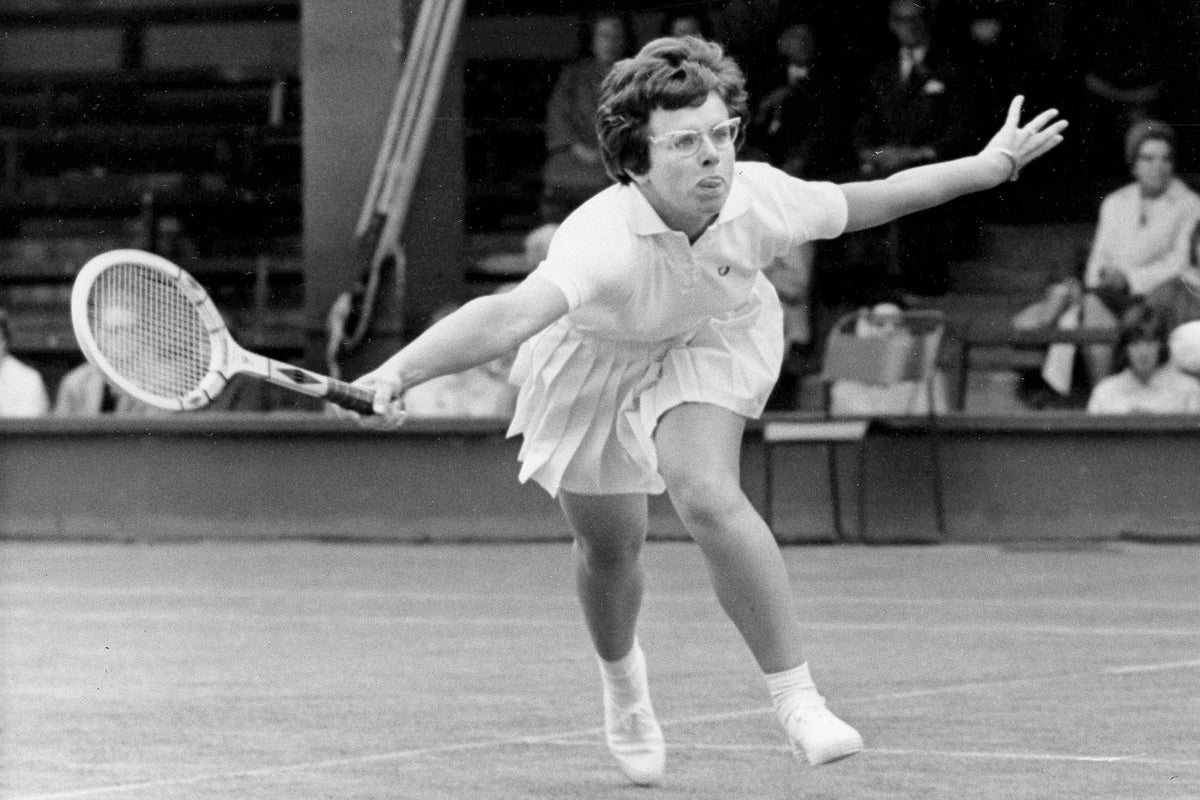
Athletes and fans of women’s sports across the United States have found no shortage of reasons to celebrate: historic TV ratings, changing attitudes toward female players, high-profile wins for equal opportunities and pay.
asserted
Athletes → find → opportunities
After decades of disparity and sometimes outright scorn from schoolyards to stadiums, women’s sports these days are having — you guessed it — a moment.
asserted
you → have → moment
As fans finish watching the WNBA finals and prepare for the NCAA season to start, women’s basketball is notably one of the biggest lightning rods of the recent surge of interest.
asserted
basketball → finish → interest
Las Vegas Aces star A’ja Wilson, who recently won the WNBA MVP for a record fifth time, predicts it's “just the tip of the iceberg.”
asserted
it → win → iceberg
The current moment stands in stark contrast to much of the country’s history, which saw widespread conceptions about feminine ideals, concerns that physical activity would jeopardize female fertility and a lack of interest in or respect for women’s sports.
asserted
activity → stand → sports
While athletes have broken through to become household names — Billie Jean King, Serena Williams, Florence Griffith-Joyner, Mia Hamm, Simone Biles, Caitlin Clark — they have been few and far between.
asserted
they → break → ?
Today, girls’ sports participation has reached record highs.
asserted
participation → reach → highs
Amid unprecedented interest at the college and professional levels, investors are rushing to build stadiums and make long overdue facility upgrades.
asserted
investors → rush → upgrades
But attacks on Title IX have also intensified.
asserted
attacks → intensify → IX
“I do think at some point the curve is going to work in the right direction.
asserted
curve → think → direction
But as of now, I think it’s still a lot more negative than positives that young teams are seeing,” says New York Liberty guard Sabrina Ionescu.
asserted
Ionescu → think → that
As concerns linger about whether current interest reflects a short-term trend or a real sea change, many athletes say there’s more work to do.
asserted
athletes → linger → trend
American sports were designed for boys
asserted
sports → design → boys
America’s captivation with organized sports — for boys — is longstanding.
asserted
captivation → organize → boys
By the late 19th century, sports had gained traction across the U.S., thanks in part to a perceived post-Civil War masculinity crisis and a burgeoning military.
asserted
sports → gain → crisis
Girls were discouraged from participating.
asserted
Girls → discourage → ?
Concerns that athletic competition would make them overly aggressive were common, not to mention pervasive fears that strenuous physical activity would make women infertile.
asserted
women → make → ?
That changed as doctors realized some exercise could improve the concerning rate at which women were dying during childbirth, said Bonnie Morris, a historian at the University of California Berkeley.
uncertain
Morris → change → California
“But they should always be understood to be different from what men are doing," Morris said.
asserted
Morris → understand → what
Despite standouts like Olympic gold medalist Babe Didrikson Zaharias and Wimbledon champion Althea Gibson — both multisport pioneers — opportunities remained limited for much of the 20th century.
asserted
opportunities → remain → century
Despite detractors, women pushed to play
“No matter how good they are, they can never be good enough quite to matter,” Paul Gallico wrote of female athletes in his 1938 memoir.
asserted
Gallico → push → memoir
The New York Daily News columnist was notoriously unkind, often wondering what to call professional female athletes: “Miss, Mrs., Mr., or It.”
asserted
columnist → wonder → what
But Gallico’s words reflect a sentiment toward women in sports that was widely held.
asserted
that → reflect → sports
“We really have to be grateful to those athletes back in 1971 who fought,” said Lisa Fernandez, a former Olympic softball player and current coach at the University of California Los Angeles.
asserted
Fernandez → have → California
“They endured some things that weren’t great.
asserted
that → endure → things
They pushed for us.”
In 1972, Title IX passed and the playing field changed dramatically.
asserted
field → push → 1972
Compared with about 3.7 million boys, less than 300,000 girls played high school sports in the 1971-72 school year, according to the National Federation of State High School Associations.
uncertain
girls → compare → Associations
Six years later, more than 2 million girls were playing.
asserted
girls → play → ?
With Title IX came concrete opportunities, though it hardly brought parity overnight.
asserted
it → come → parity
Interest is growing and so are attacks
Even so, women’s sports has exploded over the past 20-plus years, and more recently found millions of fans willing to watch or attend games.
asserted
exploded → grow → games
They're projected to generate at least $3 billion in global revenue this year, according to the consulting firm Deloitte.
uncertain
They → project → firm
While other factors contributed, Iowa basketball star Caitlin Clark helped drive record television ratings for women’s college basketball.
asserted
Clark → contribute → basketball
Now on the Indiana Fever, the 24-year-old has carried that popularity to the WNBA.
asserted
old → carry → WNBA
But that attention has also brought attacks, with some complaining sports go against girls’ deferential nature.
asserted
sports → bring → nature
“Expanding competitive sports for women was never merely about fairness or ‘opportunity,’” Scott Yenor, a senior research fellow at The Heritage Foundation, wrote in a critique of Title IX in July.
asserted
Yenor → expand → July
“Promoting assertive athletics formed a core element of a broader project to remake female character itself.
asserted
Promoting → promote → character
Producing a new woman who would be more aggressive, assertive, dominant, and less deferential, less graceful and less oriented toward motherhood and traditional feminine graces.
asserted
who → produce → motherhood
There’s also been increased debate, much of which has been hypothetical, surrounding transgender athletes.
asserted
much → increase → athletes
“The war on women’s sports is over,” President Donald Trump said last year as he signed an executive order intended to ban transgender athletes from participating in girls’ and women’s sports.
asserted
he → say → sports
Athletes press ahead amid unprecedented opportunities
Female athletes also face cultural expectations about what women’s bodies should look like, especially since young athletes often develop muscles before making a conscious choice that they want them.
asserted
they → press → them
…and 10 more, not listed.
 The Aporia