Saudi missile plant expansion may produce more powerful missiles, study says
uncertain
study → produce → missiles
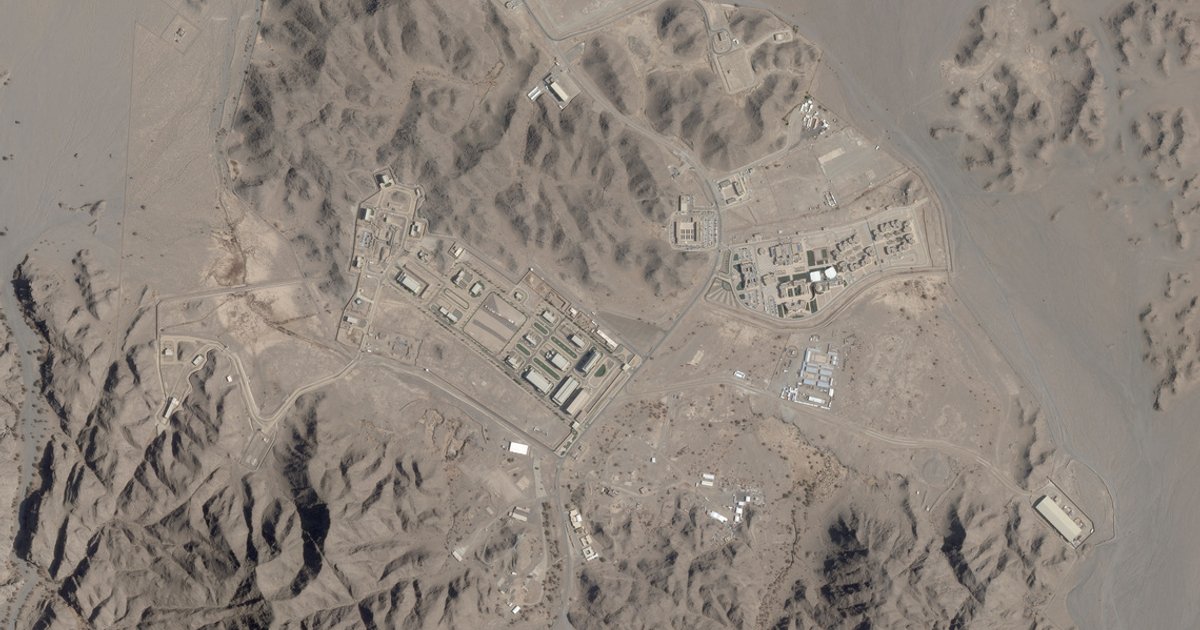
WASHINGTON, Oct 23 - Saudi Arabia appears to be expanding its ballistic missile factory to build larger solid-fuel missiles that could fly farther or carry heavier payloads, according to two US researchers who analyzed more than a year of commercial satellite images.
uncertain
who → appear → images
More capable missiles could help Saudi Arabia to deter attacks by Iran and make its military more self-reliant, while possibly strengthening its position in a deadly conflict with Yemen's Tehran-backed Houthi fighters.
But they risk fueling a regional missile race and could deepen opposition in the US Congress to a US-Saudi civilian nuclear agreement that has already raised concerns about proliferation.
uncertain
that → help → proliferation
Satellite company Planet Labs, based in the US, took images of the al-Duwadimi complex about 125 miles (200 km) west of Riyadh between April 2025 and September 2026.
asserted
Labs → base → April
The two researchers, Sam Lair and Michael Duitsman of the Foreign Policy Research Institute, assessed that those images show a new building that houses casting pits — wells in which a mixture of fuel ingredients is poured into missile motor casings and allowed to harden.
asserted
mixture → assess → casings
The Saudi embassy and Information Ministry did not respond to requests for comment.
asserted
embassy → respond → comment
The building, flanked by what appear to be walls to protect nearby structures from accidental explosions, is at least twice as large as the one believed to house the plant’s existing casting pits, Lair and Duitsman said in their assessment.
asserted
Lair → flank → assessment
A second new building could be used to store fuel ingredients or finished missile components, they said.
uncertain
they → use → ingredients
The imagery "suggests that Saudi Arabia is expanding the infrastructure at the missile production complex, likely to produce larger missiles which could deliver larger payloads or reach longer ranges," they wrote.
uncertain
they → suggest → ranges
Militaries favor solid-fuel missiles because they can be stored for long periods and launched more quickly than liquid-fuel systems.
asserted
they → favor → systems
Lair and Duitsman and experts from the London-based International Institute for Strategic Studies (IISS) and the CNA research and analysis organization told Reuters that the makeup of Saudi Arabia's missile force suggests that the al-Duwadimi complex relies on Chinese technology.
uncertain
complex → base → technology
Lair and Duitsman said that its characteristics also are similar to Chinese missile plants.
asserted
characteristics → say → plants
Saudi Arabia secretly acquired about 40 liquid-fuel DF-3 ballistic missiles from China in 1987, according to a 1991 declassified CIA estimate.
uncertain
Arabia → acquire → estimate
It displayed two of them for the first time in an April 2014 military parade, according to a Youtube video and photographs of the event.
uncertain
It → display → event
The FPRI team also recently identified from social media videos and photos what they assessed was the wreckage in Yemen of a Saudi-fired Chinese-designed DF-15 missile.
asserted
they → identify → missile
Lair said the kingdom may now be producing the solid-fuel DF-15, and that the expansion of a1-Dumadimi is likely for the production of the longer-range DF-21 or a similar missile.
uncertain
expansion → say → DF-21
Riyadh is believed to have turned to Beijing because Washington has long restricted exports of longer-range missile systems.
asserted
Washington → believe → systems
The Chinese embassy and defense ministry did not respond to requests for comment.
asserted
embassy → respond → comment
The CIA declined to comment.
asserted
CIA → decline → ?
The White House did not respond to a request for comment.
asserted
House → respond → comment
MISSILES WOULD ALTER THE BALANCE OF POWER
asserted
MISSILES → alter → POWER
Sascha Bruchmann, a research fellow at IISS, said longer-range missiles would allow Saudi Arabia to strike Iran without risking its US-supplied F-15 jet fighters against Iranian air defenses.
asserted
Arabia → say → defenses
“You’d want a system to threaten whatever is holy to Tehran ... if you don’t have the political will to send an F-15 with JDAMs over Tehran,” said Bruchmann, referring to US-made satellite-guided bombs.
asserted
Bruchmann → want → bombs
“Iran has a lead because its missiles and drones can strike Saudi wherever it wants.
asserted
it → have → Saudi
The Saudis could close that capability gap a bit.”
uncertain
Saudis → close → gap
Bruchmann, who reviewed the FPRI analysis at Reuters request, concurred that the expansion of al-Duwadimi could be for producing more powerful solid-fuel missiles.
uncertain
expansion → review → missiles
Janes, the defense intelligence company, also reviewed it and said the buildings “may suggest an effort to expand production capability or support the development of longer-range missiles.”
uncertain
buildings → review → missiles
Saudi Arabia's apparent pursuit of more powerful missiles comes as other Gulf powers are also seeking to expand their offensive and defensive arsenals, said Decker Eveleth, a CNA analyst who has been tracking the al-Duwadimi construction with commercial satellite imagery and concurred with the FPRI assessment.
asserted
who → come → assessment
“This is being replicated across the Middle East,” he said.
asserted
he → replicate → East
“You see exactly the same thing happening in the UAE.
asserted
thing → see → UAE
You see the exact same thing happening in Turkey.
asserted
thing → see → Turkey
Everybody is doing this now.”
asserted
Everybody → do → this
The expansion of al-Duwadimi could have political consequences in the US by stiffening bipartisan congressional opposition to a US-Saudi agreement under which the US would help Riyadh establish uranium enrichment for power generation.
uncertain
Riyadh → have → generation
Opponents say that the deal lacks sufficient safeguards to prevent Riyadh from secretly building a nuclear weapon.
asserted
deal → say → weapon
The kingdom has denied any such plan.
asserted
kingdom → deny → plan
The FPRI assessment said the Planet Labs imagery showed that the expansion at al-Duwadimi began in April 2025 with ground-clearing and digging for the suspected storage building.
asserted
expansion → say → building
Work on the suspected casting-pit building began later that month or in early May, it said.
uncertain
it → suspect → May
A December 12, 2025, photo showed what researchers assessed were two deep pits inside the building that had no roof yet.
asserted
that → show → roof
A September 18, 2026, photo shows the roof still partly missing and "heavy duty blast diverting walls" on either side to prevent accidental explosions from damaging adjacent structures.
asserted
blast → show → structures
The walls, the researchers said, are somewhat similar to those depicted in imagery of US and Iranian missile plants and "further evidence the building is for casting solid propellant motors.
asserted
building → say → motors
…and 2 more, not listed.
 The Aporia