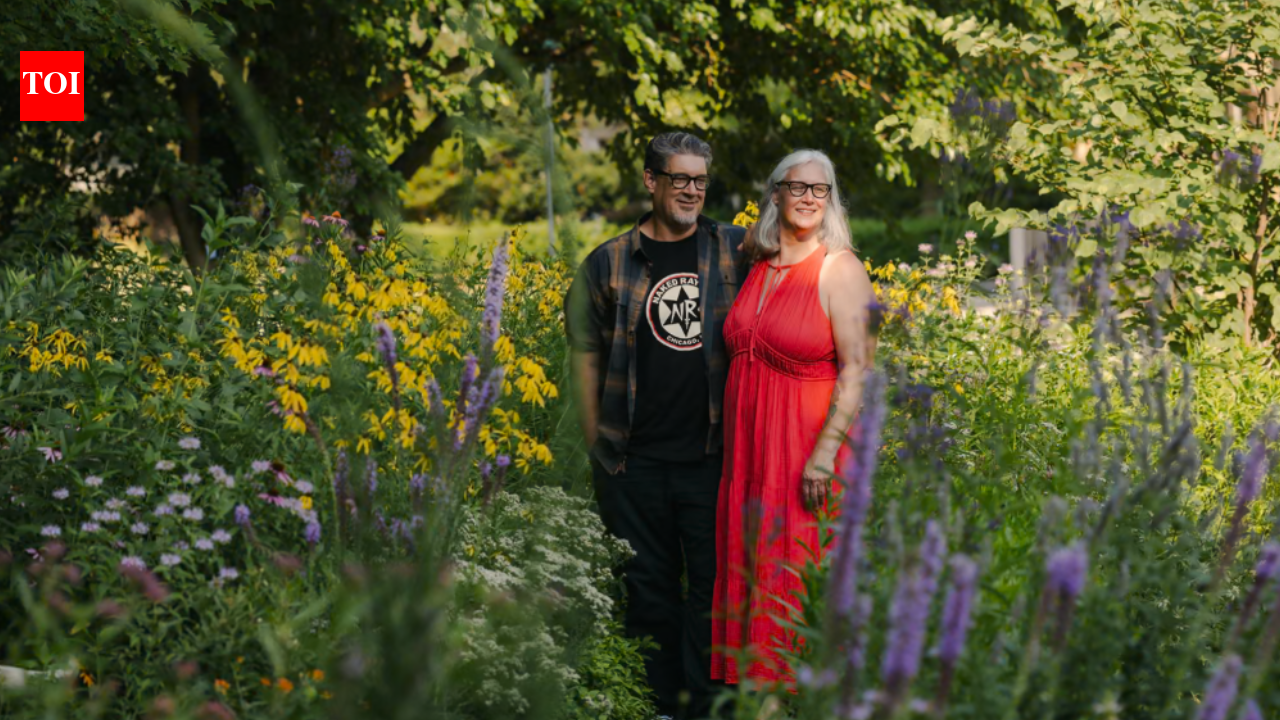
When Crystal Fritz and James Reed McGuire moved from a Chicago condominium to Highland Park, Illinois, in late 2020, they had little experience with outdoor gardening.
asserted
they → move → gardening
Rather than maintain a conventional suburban lawn, the couple decided to create a native garden that could provide food and shelter for birds, bees and other wildlife.
uncertain
that → maintain → birds
Over the next five years, they gradually replaced most of the grass across their quarter-acre property, learning through trial and error which plants belonged in the region.
asserted
plants → replace → region
Their garden now contains more than 130 species native to northern Illinois and attracts an array of wildlife, including foxes, bats, butterflies, birds and fireflies.
asserted
garden → contain → foxes
What began as a personal effort to make their yard more wildlife-friendly has also encouraged neighbours to reconsider their own gardens.
asserted
yard → begin → gardens
How the couple began transforming their lawn
McGuire, an avid birdwatcher, wanted their new home to offer more than a conventional stretch of grass.
asserted
home → begin → grass
The couple had previously grown herbs and flowers in containers on their Chicago balcony, but neither had much experience managing a garden on a larger property.
asserted
neither → grow → property
They began researching native plants and how to create a habitat suited to local wildlife.
asserted
They → begin → wildlife
They initially struggled to remove the existing grass by hand and used a packet of wildflower seeds that included plants unsuitable for their region.
asserted
that → struggle → region
The setbacks encouraged them to learn more about local species and how to establish a garden that would provide resources for wildlife throughout the growing season.
asserted
that → encourage → season
The technique that helped them replace the grass
One method that helped the couple expand their garden was sheet mulching, a technique used to suppress existing grass before planting.
asserted
couple → help → grass
They cut the grass short, covered it with cardboard and added mulch over the top.
asserted
They → cut → top
As the underlying grass died, the area could be prepared for new planting.
uncertain
area → underlie → planting
Instead of converting the entire yard at once, Fritz and McGuire worked in stages, gradually extending the native garden across their property.
asserted
Fritz → convert → property
After five years, the remaining grass was largely limited to paths through the garden.
asserted
grass → remain → garden
Their experience also taught them the importance of choosing plants native to northern Illinois rather than relying on generic wildflower mixes.
asserted
experience → teach → mixes
More than 130 native plant species now grow in the garden
The garden includes more than 130 plant species native to northern Illinois, combining flowering plants, grasses, sedges, shrubs and trees.
asserted
garden → grow → plants
Among the species McGuire has documented are prairie smoke, wild columbine, blue flag iris, purple coneflower, butterfly milkweed, foxglove beardtongue, bottle gentian and black-eyed Susan.
asserted
smoke → document → species
Little bluestem, Pennsylvania sedge and prairie dropseed add variety, while shrubs such as serviceberry, winterberry and red osier dogwood provide further structure.
asserted
shrubs → add → structure
Trees including eastern redbud, American sycamore and pagoda dogwood form part of the planting.
asserted
Trees → include → planting
This variety creates different sources of food and shelter for wildlife, while flowers blooming at different times of the year help sustain pollinators across the growing season.
asserted
flowers → create → season
Foxes, bats, butterflies and more than 100 bird species visit
The change is reflected in the wildlife the couple have observed.
asserted
couple → visit → wildlife
McGuire reported recording more than 100 bird species visiting the garden, including migratory birds that use it as a stopover.
asserted
that → report → stopover
Bees and butterflies are frequent visitors to its flowering plants.
asserted
Bees → flower → plants
Other animals recorded around the property include red foxes, rabbits, raccoons, skunks, opossums, bats, squirrels and field mice.
asserted
animals → record → foxes
The couple have also reported occasional visits from deer and coyotes.
asserted
couple → report → deer
Fireflies have become another attraction.
asserted
Fireflies → become → ?
Families sometimes walk past the property so children can see them, while the dense vegetation offers wildlife a more varied habitat than a conventional grass lawn.
asserted
vegetation → walk → lawn
The garden has earned wildlife habitat recognition
The couple's work has received formal recognition from conservation organisations.
asserted
work → earn → organisations
In 2023, their garden was designated a Certified Wildlife Habitat by the National Wildlife Federation.
asserted
garden → designate → Federation
Openlands, a Chicago-area conservation organisation, has also certified the property as a sustainable native habitat and ecosystem.
asserted
Openlands → certify → habitat
The National Wildlife Federation's certification programme recognises gardens designed to provide wildlife with essential resources, including food, water, cover and places to raise young.
asserted
programme → recognise → young
The designation recognises the habitat features of the garden rather than representing a scientific measurement of how much local biodiversity has increased.
asserted
biodiversity → recognise → measurement
The property has also featured on local sustainable garden tours, allowing visitors to see how native landscaping can work in a residential setting.
asserted
landscaping → feature → setting
Neighbours have begun rethinking their own gardens
The transformation has extended beyond the couple's property.
asserted
transformation → begin → property
Their garden initially stood out in a neighbourhood where conventional lawns were more common, and some neighbours were sceptical about the appearance of the new planting.
asserted
neighbours → stand → planting
Over time, however, people began stopping to ask questions, photograph the garden and learn about native species.
asserted
people → begin → species
In an October 2026 interview with People, Fritz described how a neighbour who had initially objected to what he considered weeds eventually grew to appreciate the garden.
asserted
he → describe → garden
Younger families have also shown interest, with some asking how they could introduce native plants into their own yards.
uncertain
they → show → yards
The couple's experience illustrates how a small residential garden can become a starting point for conversations about wildlife-friendly landscaping.
asserted
garden → illustrate → landscaping
…and 2 more, not listed.
 The Aporia