When the A-League launched in 2005, Matthew Galea tried to embrace Melbourne Victory.
asserted
Galea → launch → Victory
But for whatever reason, it never really felt right to him.
asserted
it → feel → him
It wasn’t until five years later, when rivals Melbourne Heart were introduced to the competition, that he found a team that did.
asserted
that → introduce → team
Melbourne Heart was specifically conceived for people like him, as if they were presenting a slightly more cerebral, European-flavoured alternative to Victory, whose early identity was pinned to star players such as Archie Thompson and Kevin Muscat.
Heart were a bit of a work in progress, and that is what appealed to Galea, who nailed his colours to their mast.
asserted
who → conceive → mast
He went to games with mates, joined pre-match marches to AAMI Park and found something of a community within the Heart’s fledgling fanbase.
asserted
He → go → fanbase
Then, without warning, everything changed.
asserted
everything → change → warning
On January 23, 2014, it was announced that Heart had been purchased by the City Football Group, becoming the third club in CFG’s sprawling international multi-club network, alongside Manchester City and New York City FC.
asserted
Heart → announce → City
Nobody in the game had any inkling this was coming.
asserted
this → have → inkling
Galea remembers the day well; he was working as a journalist for the Shepparton News and looked at one of his colleagues, who was also a Heart supporter, with confusion.
asserted
who → remember → confusion
At first, even as a long-time Manchester United fan, he thought he could live with it, if it meant stable ownership for the club he had grown to love.
uncertain
he → think → club
Then, a few months later, the club’s name was changed to Melbourne City, and their colours from red and white to Manchester City’s light blue – the same shade he had spent many years hating.
asserted
he → change → years
That severed the connection for Galea.
asserted
That → sever → Galea
“Once the colours changed, I’m like, ‘Well, this isn’t what I started supporting,’” he said.
asserted
he → change → what
“The fact that it’s now a club that I loathe just made it that little bit easier, I guess – but they could have changed it to yellow and given it another name, and I would have felt the same way.”
uncertain
I → ’ → way
City became a more stable club, and much more successful on the field.
asserted
City → become → field
They had not won anything as Heart, but as Melbourne City, with CFG’s resources and worldwide connections behind them, they swiftly became an A-League powerhouse, with facilities and systems envied by the rest of the competition.
asserted
they → win → competition
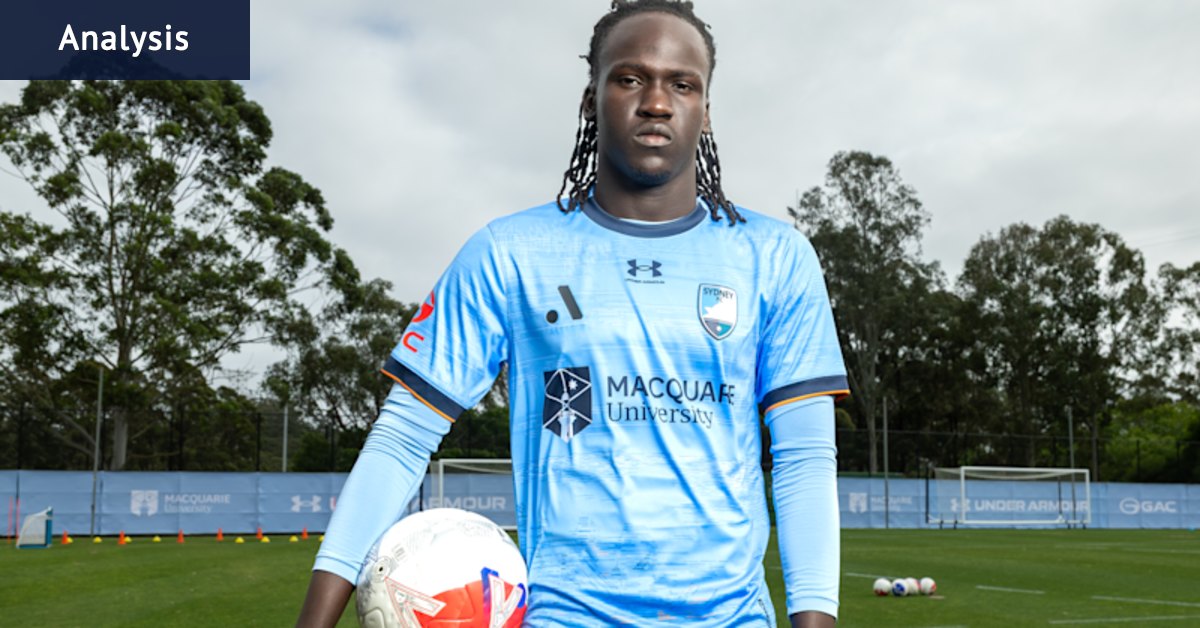
Their involvement within the Australian game has had enormous benefits for players like Socceroo Patrick Beach, who now plays for Troyes, CFG’s club in France, and coaches like Ange Postecoglou, who relaunched his career after leaving the Socceroos at Yokohama F. Marinos, a CFG partner club.
asserted
who → have → Marinos
But Melbourne City’s average crowd numbers have declined since the Heart days, despite the trophy-laden years that followed, suggesting that success in and of itself is not enough to foster a connection between a club and its support base.
asserted
success → decline → club
People like Galea, who still follow the A-League, but no longer support a club - were collateral damage; the unfortunate price of Melbourne City’s transformation.
asserted
who → follow → transformation
Alienating supporters is just one of the risks when a football club becomes part of something much bigger than itself.
asserted
club → alienate → itself
Multi-club ownership has exploded over the past decade.
asserted
ownership → explode → decade
Football Benchmark estimates there were 152 MCO groups involving 380 clubs worldwide in 2024, up from just 18 groups and 40 clubs in 2012.
asserted
Benchmark → estimate → 2012
More than half of the A-League’s 12 men’s clubs are either part of a formal MCO group, are owned by parties who also hold stakes in clubs in other countries, or have some kind of ongoing cooperation agreement with a foreign club.
asserted
who → own → club
Australian soccer is chronically short on capital, and locally based ownership groups are increasingly difficult to find.
asserted
groups → base → capital
The A-League needs reliable club owners who are prepared to lose money, but who also have deep and sophisticated knowledge of how the game operates, here and abroad, to assist with development, recruiting and player sales to leverage the global transfer market.
asserted
game → need → market
MCOs tick all of these boxes, and the A-League is ripe for this model.
asserted
League → tick → model
Licences to play in the competition are cheap by global standards, operating costs are modest, and the salary cap enforces a degree of certainty upon one of a club’s biggest expense lines.
asserted
cap → play → lines
Australia’s growing reputation as a producer of talented young players and status as a safe, English-speaking country make it an appealing place for international ownership groups to do business.
asserted
groups → grow → business
“We have numerous international owners and multi-club owners in our competition, and we think that’s a really good thing,” said A-League chief executive Steve Rosich.
asserted
Rosich → have → competition
“I think on balance, it’s only positive, because there’s always risk with investment.
asserted
it → think → investment
Pound for pound, there’s probably less risk with a well-resourced international owner that understands sport, and understands football in particular.
asserted
that → ’ → football
In the best-case scenario, everybody wins.
asserted
everybody → win → scenario
But in reality, the interests of an MCO network and a club within it are not always aligned.
asserted
interests → align → it
When a single club becomes a cog within a larger system, tensions can emerge.
asserted
tensions → become → system
Is the club’s primary ambition to achieve success, or to advance the aims of the bigger, more valuable clubs within it?
asserted
ambition → achieve → it
If a talented player emerges, is the priority to secure the best possible outcome for the club that developed them, or the best outcome for the group as a whole?
asserted
that → emerge → whole
And if trouble erupts elsewhere in the network, can the damage really be contained to where it happened?
asserted
it → erupt → network
Ripples from Manchester to Melbourne
The crisis engulfing Manchester City is still unfolding, but has the potential to cause ripple effects for the other nine clubs it owns who form part of the City Football Group.
asserted
who → engulf → Group
Manchester City were found guilty of 114 of the 115 charges levelled against them by the Premier League, with an independent commission concluding that the club used “sham” commercial arrangements and other schemes to artificially inflate revenues and reduce costs by more than £900 million (1.718 billion) over nine seasons, circumventing rules against such levels of spending.
asserted
club → find → spending
The club was also found guilty of failing to cooperate with the investigation and masking payments to some players and coaches.
asserted
club → find → players
…and 64 more, not listed.
 The Aporia