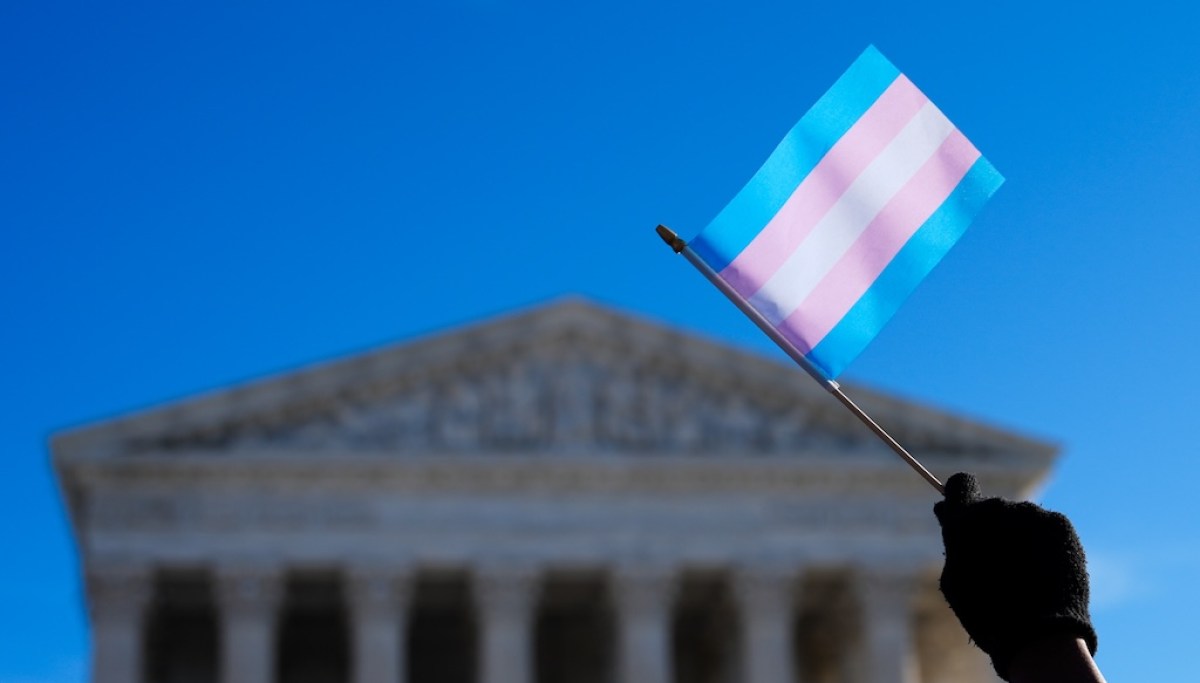
Employers cannot exclude transgender women from recruitment drives aimed at addressing the under-representation of women in the workforce, a human rights expert has warned.
asserted
expert → exclude → workforce
The warning follows the High Court's refusal to hear an appeal in a landmark 'what is a woman' discrimination case involving a transgender woman who was banned from a women-only social media app.
asserted
who → follow → app
In 2021, Sall Grover, chief executive of Giggle for Girls, excluded transgender woman Roxanne Tickle from the women-only app after reviewing her photograph and deciding she was male.
asserted
she → exclude → photograph
However, on May 15, 2026, the Full Federal Court ruled in Ms Tickle's favour, finding that she had been discriminated against and treated less favourably than a cisgender woman.
uncertain
she → rule → woman
The court also ruled that measures intended to promote equality for cisgender women could not come at the expense of transgender women, who are also protected under discrimination laws.
uncertain
who → rule → laws
Ms Grover challenged the verdict in the High Court of Australia, which rejected her bid for special leave to appeal and awarded costs to Ms Tickle.
asserted
which → challenge → Tickle
Professor Paula Gerber, from Monash University's Law Faculty, told Workplace Express Australia that the ruling had significant implications for employers seeking to address the under-representation of women in male-dominated industries.
asserted
ruling → tell → industries
She said the decision made it 'crystal clear' that employers could not exclude transgender women from initiatives aimed at improving women's representation in the workforce.
uncertain
employers → say → workforce
Roxanne Tickle won a landmark discrimination case against women-only app Giggle for Girls after being excluded because of her gender-related appearance
The Federal Court found Giggle for Girls chief executive Sall Grover discriminated against Roxanne Tickle by excluding her from app
The app 'Giggle for girls' is a women-only social media app
asserted
app → win → girls
The Full Federal Court's ruling marked a significant victory for Ms Tickle, overturning an earlier finding of indirect discrimination and replacing it with a finding of direct discrimination.
asserted
ruling → mark → discrimination
In 2024, Federal Court Justice Robert Bromwich found that Giggle for Girls had indirectly discriminated against Ms Tickle and awarded her $10,000 in damages.
asserted
Giggle → find → damages
However, the full court went further, finding that Ms Tickle had been directly discriminated against because of her gender-related appearance, regardless of whether the company knew she was transgender.
asserted
she → go → appearance
The judges also found that Ms Grover's personal beliefs about Ms Tickle's gender did not justify her conduct during the legal proceedings.
asserted
beliefs → find → proceedings
They criticised her for repeatedly misgendering Ms Tickle and referring to her using male pronouns, describing aspects of her behaviour as 'gratuitous, disrespectful and unnecessary'.
asserted
They → criticise → behaviour
The court also found that Ms Grover's public comments and conduct had caused Ms Tickle further distress, including statements portraying her as a 'predatory male'.
asserted
comments → find → male
As a result, the judges doubled Ms Tickle's compensation to $20,000, including $8,000 in aggravated damages.
asserted
judges → double → damages
Giggle for Girls and Ms Grover were also ordered to pay Ms Tickle's legal costs for the appeal and cross-appeal, capped at a combined $100,000.
asserted
Giggle → order → 100,000
During the drawn-out case, lawyers for the Giggle for Girls app argued that it was exempt from discrimination law because it sought to achieve substantial equality between men and women.
asserted
it → draw → men
Its intention was to create a 'safe space' for women, Ms Grover's lawyers said.
asserted
lawyers → create → women
'This case is the 'what is a woman?' case, and one must be able to speak about it fearlessly and frankly,' Ms Grover's legal team said.
asserted
team → speak → it
Grover, argued that the women-only app qualified as a special measure under the Sex Discrimination Act because it was designed to promote equality between men and women.
asserted
it → argue → men
However, lawyers for the Sex Discrimination Commissioner challenged the company's argument, warning that laws designed to promote equality for women could not be used as an excuse to discriminate against other groups.
uncertain
laws → challenge → groups
The Full Federal Court agreed, finding that measures intended to promote equality for one group could not automatically justify discrimination against another group protected under the Sex Discrimination Act.
uncertain
measures → agree → Act
 The Aporia