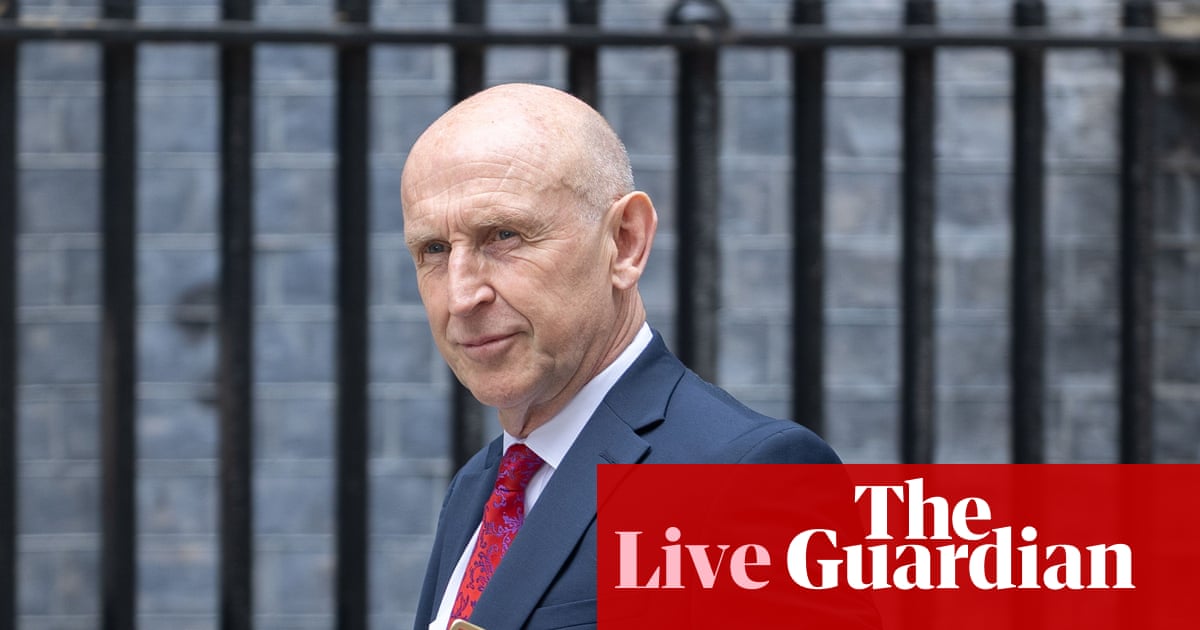
John Healey is under pressure to meet the military spending target that sparked his resignation as Defence Secretary, amid reports that only a 'down-payment' will be given at the Budget.
asserted
payment → meet → Budget
The Chancellor helped bring down Keir Starmer when he quit in June, accusing the Treasury of being unwilling to find the money needed to keep the UK safe.
asserted
he → help → UK
His resignation letter stated that the Government must reach three per cent spending of GDP on defence by 2030 – far more than the 2.68 per cent planned by Sir Keir.
asserted
Government → state → Keir
But it is expected that the Chancellor will not set out a timetable to reach this until a spending review next autumn, with only a 'down-payment' in his maiden Budget, according to The Spectator.
uncertain
Chancellor → expect → Spectator
Shadow defence secretary James Cartlidge said although Mr Healey was now the one in charge of the country's finances, Britain was 'no closer to hitting the target he said was essential'.
asserted
he → say → target
He added: 'The Chancellor absolutely has to set out his plan for 3 per cent in the Budget – anything less would be a dereliction of duty.
asserted
anything → add → duty
Tory leader Kemi Badenoch said if Mr Healey 'cannot do this job, then he should resign'.
asserted
he → say → job
The comments come as new polling revealed almost half of Brits support cutting benefits in order to boost defence spending.
asserted
half → come → spending
A Savanta survey - conducted ahead of Mr Healey's first Budget next week - found 44 per cent are in favour of slashing welfare payments so that more cash can be given to the Armed Forces.
asserted
cash → conduct → Forces
Chancellor John Healey is under pressure to meet the military spending target that sparked his resignation as Defence Secretary
Conservative leader Kemi Badenoch said if Mr Healey 'cannot do this job, then he should resign'
This compares to one third (34 per cent) who oppose squeezing benefits in order to increase the Ministry of Defence budget.
asserted
who → meet → budget
Cutting welfare payments was one of five options for finding more money for defence that was given to voters in the poll.
asserted
that → cut → poll
Nearly two-thirds (63 per cent) support a reduction in foreign aid spending, but there was little backing for more borrowing, higher taxes, or cuts to public services.
asserted
thirds → support → services
Almost half (47 per cent) oppose an increase in government borrowing, while 64 per cent don't want taxes to rise to fund greater defence spending.
asserted
taxes → oppose → spending
Meanwhile, 75 per cent don't want spending on public services such as the NHS, schools or police to be reduced.
asserted
spending → want → NHS
Support for cutting foreign aid reaches 81 per cent among those who voted Tory at the 2024 general election, and 85 per cent among Reform UK voters.
asserted
who → cut → voters
Seven in 10 (70 per cent) of Tory voters also support welfare cuts to boost defence spending, while 64 per cent of Reform voters back a squeeze on benefits.
asserted
cent → support → benefits
This compares with just 39 per cent of Labour voters wanting welfare spending to be cut in order to give more money to the Armed Forces.
asserted
spending → compare → Forces
When asked separately whether they are personally willing to pay more tax to allow an increase in defence spending, 62 per cent of all voters are unwilling.
asserted
cent → ask → voters
This compares to less than one third (30 per cent) who are willing to pay extra to HMRC so that more cash can go to the military.
asserted
cash → compare → military
When asked about the level of tax they currently pay, 43 per cent think they pay too much tax, while the same proportion say they pay the right amount of tax.
asserted
they → ask → tax
Only 2 per cent say they pay too little tax, while 12 per cent don't know.
asserted
cent → say → tax
Mr Healey is set to detail how the Government will pay for a £4.7billion hole in current defence spending plans at next week's Budget.
asserted
Government → set → Budget
But he is not expected to lay out a path to spending 3 per cent of GDP on defence by 2030 - or 3.5 per cent by 2035 - despite him resigning as defence secretary from Keir Starmer's administration over the issue earlier this year.
asserted
him → expect → issue
Mr Healey is instead expected to wait to do so until a spending review next year.
asserted
Healey → expect → review
Earlier this week, Ms Badenoch branded a delay in setting out how defence funding will increase as 'unconscionable' amid the threat posed by Russia.
asserted
funding → brand → Russia
'If, at this Budget, he does not find the money to get to 3 per cent, John Healey has an awful lot of explaining to do,' she said.
asserted
she → find → explaining
John Healey said so himself, and no amount of political difficulty should prevent us from responding to that risk.'
asserted
amount → say → risk
Savanta polled 2,130 UK adults online between 16 and 19 October.
asserted
Savanta → poll → October
 The Aporia