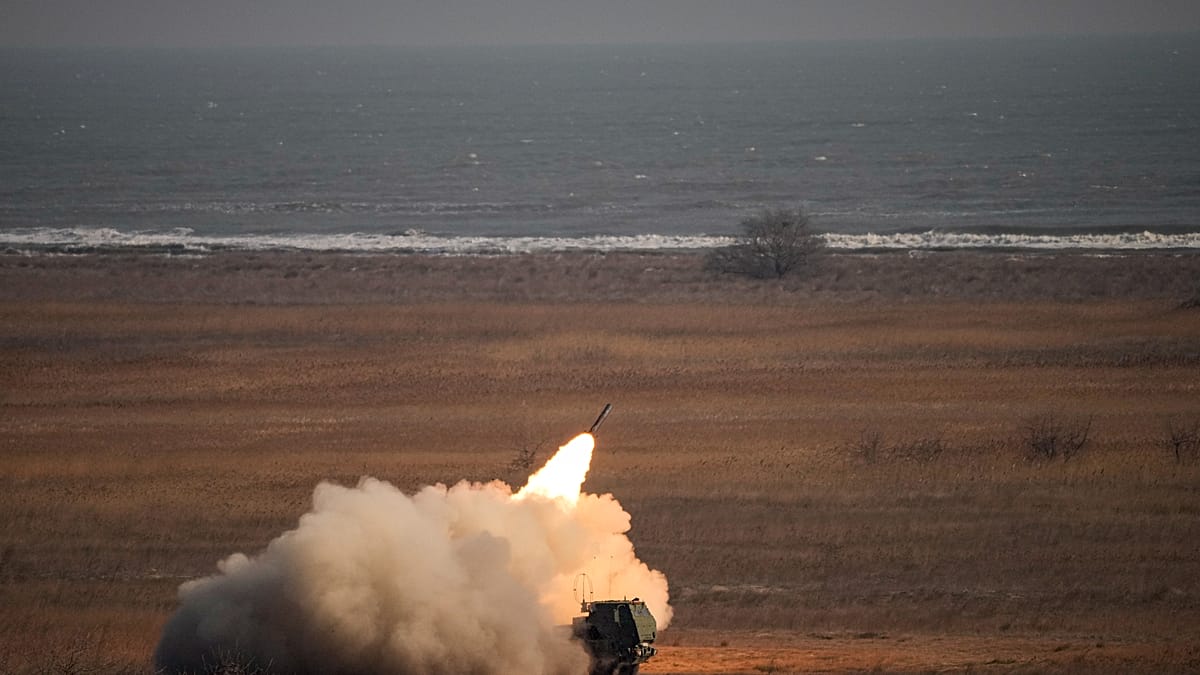
Photo via The Independent

US defense chiefs warn of munitions shortfall over Iran war

Read the original at The Independent ↗
Cite

Sommerlad, J. (2026, September 15). US defense chiefs warn of munitions shortfall over Iran war. The Independent. https://www.independent.co.uk/news/world/americas/us-politics/trump-iran-war-cost-munitions-missiles-b3050319.html

Dated when The Aporia collected the article, usually within hours of publication. Check the original for its exact date and byline.

The Independent · collected 2026-09-15 · by Joe Sommerlad

Quick Summary

The Department of Defense’s inspector general reports that the U.S.’s "Operation Epic Fury" against Iran, spanning February 28 to June 30, cost $33.4 billion, with $22.3 billion allocated for munitions alone. This expenditure has led to a strategic inventory shortfall and industrial production bottlenecks for resupplying munitions. The report details the destruction of four F-15E fighter jets and up to 30 MQ-9 Reaper drones, along with damage to several other aircraft and helicopters, totaling significant replacement costs.
Written by AI on 2026-09-15, from this article's own text only (the story summary below draws on all the coverage).
See how they differ ↓

AI analysis

Story summary

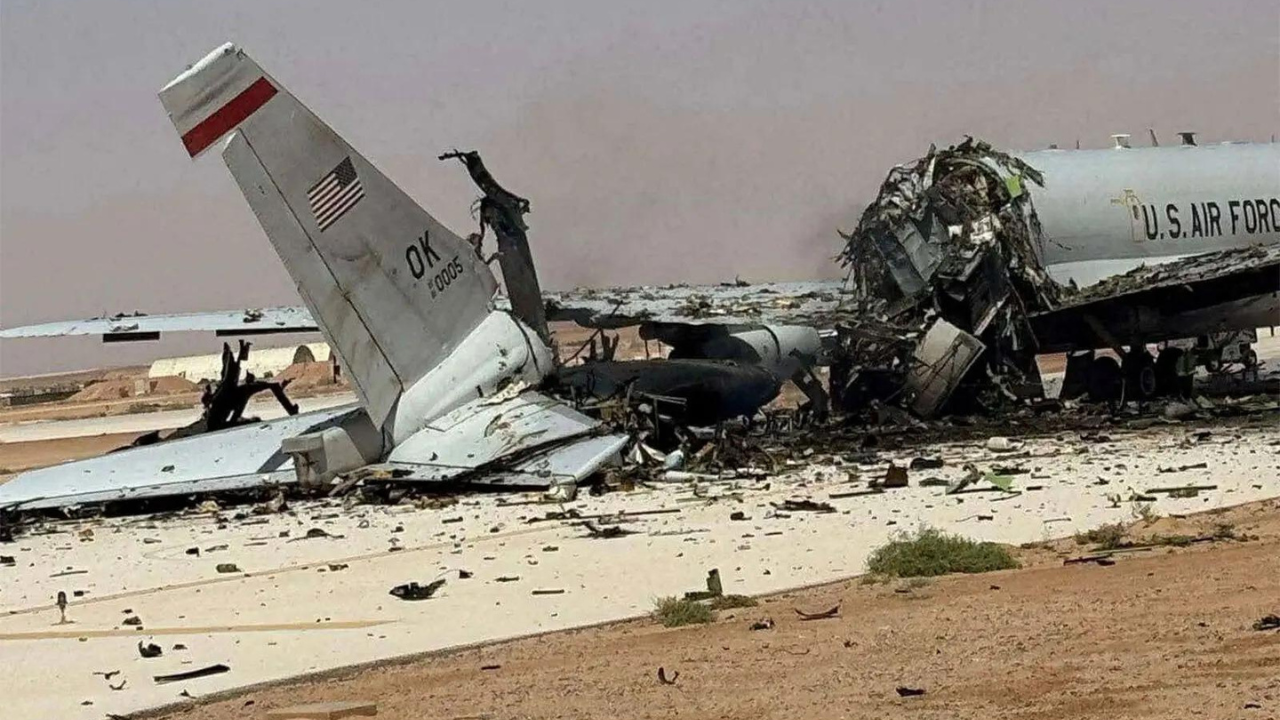
CBS News has obtained leaked photos from anonymous U.S. military personnel stationed in Saudi Arabia and Kuwait, showing extensive damage at U.S. bases following Iranian missile and drone strikes. The images depict destroyed aircraft, collapsed buildings, and burned-out vehicles. One photo captures a $270 million Boeing E-3 Sentry spy plane severely damaged at Prince Sultan Air Force Base in Saudi Arabia, with its tail section ripped off. These photos highlight significant destruction across multiple U.S. positions, raising concerns about the impact of President Trump's war on Iran, which began seven months prior and shows no signs of ending. The Pentagon’s inspector general reported that hundreds of buildings and structures at U.S. bases in eight countries, including Kuwait, Bahrain, Saudi Arabia, Iraq, and Jordan, were damaged or destroyed by Iranian strikes.

Written for “Iran Attacks Damage US Bases” on 2026-11-20, grounded in this article and the 29 other(s) covering the same event.

How they differ

17 outlets covered “Iran Attacks Damage US Bases”.

What each outlet says

One AI summary per outlet of its latest article on this story, written from that article alone and checked against it. Open the article for the outlet's own words.

The IndependentThis outlet15 Sep

The Department of Defense’s inspector general reports that the U.S.’s "Operation Epic Fury" against Iran, spanning February 28 to June 30, cost $33.4 billion, with $22.3 billion allocated for munitions alone. This expenditure has led to a strategic inventory shortfall and industrial production bottlenecks for resupplying munitions. The report details the destruction of four F-15E fighter jets and up to 30 MQ-9…

US defense chiefs warn of munitions shortfall over Iran war (this article)3 articles from The Independent on this story
Al Jazeera17 Sep

Iranian Parliament Speaker Mohammad Bagher Ghalibaf posted an equation used by central banks to determine interest rates on X, alongside wartime rhetoric implying Iran's influence over US economic decisions. He suggested that Tehran could manipulate U.S. interest rates and control the Strait of Hormuz strategically. This comes amid ongoing tensions between Iran and the United States since February 28 when a war…

Ghalibaf’s maths missile at Trump decoded: Is Iran fixing US interest rates? →3 articles from Al Jazeera on this story
BBC16 Sep

CBS obtained leaked photos from an unnamed US military source showing significant damage to several American bases in the Middle East due to Iranian strikes. The images depict a severed radar jet, destroyed trailers, and severely damaged buildings. The BBC's State Department correspondent discusses the implications of these undisclosed damages with viewers.

Watch: Leaked photos reveal extensive damage at US bases in Gulf →3 articles from BBC on this story
South China Morning Post19 Sep

The Pentagon reported to Congress that the ongoing conflict with Iran has incurred a total cost of $43.6 billion as of recent, including $11.2 billion for operational expenses and an additional $32.4 billion for replacing lost or damaged equipment. This figure does not account for potential damages to US military infrastructure in eight Middle Eastern countries. The increasing costs are cited by polls as a factor in…

How much has Iran war cost US? Pentagon estimates US$43.6 billion so far →2 articles from South China Morning Post on this story
Daily Mail17 Sep

Leaked photographs from American service members show significant damage to U.S. military bases in Saudi Arabia and Kuwait following Iranian missile and drone attacks. The photos depict destroyed aircraft, buildings, and vehicles at Prince Sultan Air Force Base and Camp Buehring in Kuwait. One striking image shows a Boeing E-3 Sentry surveillance aircraft with its tail severed and fuselage charred from what appears…

Leaked photos appear to show catastrophic damage to US military bases: 'This hasn't been communicated' →2 articles from Daily Mail on this story
Show 11 more outlets
New York Post16 Sep

CBS News reports on extensive damage to U.S. military bases in Saudi Arabia and Kuwait from Iranian airstrikes, showing destroyed aircraft, buildings, and vehicles. The article highlights a $270 million E-3 Sentry spy plane among the damaged assets. Service members who provided images to CBS contradicted claims by Defense Secretary Pete Hegseth that only minor damage occurred, stating they are witnessing major…

Widespread damage on US bases from Iranian airstrikes revealed, including to $270 million spy plane →2 articles from New York Post on this story
Times of India19 Sep

The Pentagon has informed Congress that the cost of America’s ongoing conflict with Iran is $45.1 billion, surpassing previous estimates by the Congressional Budget Office. Additionally, six US officials told The Washington Post that at least 22 service members have died since the war began, more than the 18 deaths reported publicly by the Pentagon. The article highlights uncertainties around the exact number of…

Iran war costs US $45.1 billion; fatalities possibly higher than 18 reported by Pentagon →2 articles from Times of India on this story
NBC News14 Sep

The Pentagon's inspector general released a report on Monday stating that the ongoing conflict with Iran has caused a shortage of U.S. munitions and supply chain bottlenecks. The report covers the period from February 28 to June 30, estimating costs at about $33.4 billion, including $22.3 billion for expended munitions. President Trump countered these findings by asserting that the U.S. is producing more weapons…

Pentagon inspector general says Iran war has led to a shortfall of U.S. munitions →
Euronews15 Sep

The US Defense Department's inspector general reported a shortage of ammunition and advanced weapons due to the conflict with Iran, costing an estimated $22.3 billion in munitions alone from February to June. The report revealed significant military equipment losses including four F-15 fighter jets, one damaged F-35, seven KC-135 tanker aircraft, and up to 30 MQ-9 Reaper drones, with repairs to base infrastructure…

US military says it is facing a shortfall in ammunition as a result of Iran war →
Dawn15 Sep

The Pentagon has released a report confirming that the US-Israeli war on Iran led to significant shortages in American munitions stocks and highlighted industrial bottlenecks for resupply. The four-month conflict from February 28 to June 30 involved over 50,000 US service members who flew thousands of combat missions at a cost of $33.4 billion, with $22.3 billion spent on munitions alone. The report underscores the…

War on Iran resulted in munitions shortfall for US, confirms Pentagon report →
The Hindu15 Sep

The U.S. Department of Defence's inspector general reported on September 14, 2026, to Congress that the ongoing war in Iran has caused a significant munitions shortfall costing $33.4 billion between February and June 2026, with $22.3 billion spent specifically on expended munitions. This report highlights industrial bottlenecks for resupplying ammunition and lists substantial military losses including damaged…

U.S. military says Iran war has led to munitions shortfall →
The Straits Times15 Sep

The US military reports a significant shortage of ammunition due to ongoing operations against Iran, as detailed in a recent mandatory report to Congress. Between February 28 and June 30, the operation cost $33.4 billion, with $22.3 billion spent on munitions alone, leading to strategic inventory shortfalls. The Pentagon is working to streamline procurement processes but acknowledges that expanding production…

US military says Iran war has led to munitions shortfall →
CBC15 Sep

A Pentagon inspector general report details damage caused by Iranian strikes during Operation Epic Fury from April to June 30, costing an estimated $33.4 billion. The report reveals damaged U.S. military bases and diplomatic buildings across several Middle Eastern countries, including the naval base in Bahrain which was targeted with drones and missiles. The conflict has also exposed shortages of advanced weapons…

Several U.S. military bases, diplomatic buildings have been damaged in Iran war: inspector general report →
The Bulwark16 Sep

Ben Parker and Lt. Gen. Mark Hertling discuss on The Bulwark’s live video how Iran is causing significant damage to U.S. military operations in the Middle East, including attacks on bases and interference with oil supplies. They also estimate economic consequences could amount to $38 billion. The conversation covers broader conflicts involving the Houthis and their impact on American forces. Subscribers get full…

Command Post: Iran Is Doing More Damage to the U.S. Military Than We Knew →
Reason16 Sep

Pentagon auditors report that the cost of the conflict with Iran, labeled as “Operation Epic Fury,” has reached $33.4 billion since February 28 through June 29, including $22.3 billion for munitions alone. However, this figure does not account for infrastructure repairs or ongoing impacts on fuel prices and supply chains, which have contributed to broader economic challenges like inflation and increased interest…

Pentagon Auditors Say the Iran War Has Cost $33 Billion. The Real Price Tag Is Far Higher. →
Toronto Star18 Sep

The U.S. military's cost for the ongoing Iran war has increased to $43.6 billion as of September 3, according to an estimate provided by U.S. Central Command to lawmakers this week. The report indicates that costs have escalated from $38 billion through August 1 and are expected to rise further at a rate of about $3 billion per month based on the conflict's intensity.

Iran war’s cost grows to $43.6 billion in new US military estimate →

Where they agree and split

Agreed

AI · cited, from two or more outlets

  • The Pentagon's inspector general reported a shortfall of U.S. munitions and supply chain bottlenecks due to the war with Iran.23
  • US bases across the Middle East have come under repeated attack by Iran, raising questions about their sustainability.13
Quoted from the coverage (3)

Two weeks ago, Trump posted that the U.S. had “virtually unlimited” amounts of ammunition and lashed out at reports of munitions shortfalls.

7 outlets

The report added that the defence department is now working to "streamline procurement processes and production lead times" to address the shortages and "respond rapidly to a contingency".

5 outlets

Among the losses have been four F-15e fighter jets, a highly advanced F-35 Joint Strike Fighter and 30 MQ-9 drones destroyed in "various circumstances".

4 outlets

Disputed

Picked by our model, which is sometimes wrong

  • President Trump denied reports of munitions shortages while the Pentagon's inspector general confirmed such shortfalls in a report.24

Framing

How the first headlines put it

  • Al Jazeera's headline emphasizes Iran's damage to U.S. bases in Bahrain and Jordan, while NBC News focuses on munitions shortfalls reported by the Pentagon inspector general.12
  • Dawn highlights the confirmation of munitions shortfall for US from a Pentagon report, whereas CBS News presents new photos showing widespread damage at U.S. positions caused by Iranian attacks.35
Words to watch (1)

Iran-US war latest: US military facing weapons shortages after dozens of aircraft destroyed as cost of war hits $33bn The Independent

The full story: what happened, how it changed, and all 30 articles →

Compared with similar articles

This article reads unscored and hedges 24% of its claims. Each row says how that neighbour differs.
The Hindu
Hedges 0 of 8 claims Outlet record 60/100
The Straits Times
Leans left Hedges 3 of 21 claims Outlet record 64/100
CBS News
Hedges 4 of 15 claims Outlet record 67/100
Dawn
Leans left Hedges 5 of 31 claims Outlet record 67/100
New York Post
Leans left Hedges 2 of 14 claims Outlet record 66/100
Times of India
Leans left Hedges 2 of 25 claims Outlet record 59/100
Washington Examiner
Leans right Hedges 1 of 14 claims Outlet record 67/100
“The articles describe different aspects of military operations and production efforts related to the conflict with Iran but do not report on the same specific incident or time.”
Euronews
Hedges 1 of 15 claims Outlet record 60/100
BBC News
Hedges 2 of 22 claims Outlet record 65/100

Story

Iran Attacks Damage US Bases
World · 30 article(s) covering the same event. Compare every outlet's account →
How this article was measured signals, leaning charts, publisher record, byline, topics and claims

Signals How these are calculated →

Claims extracted
21
sentences that state something as happening or true
Uncertain
24%
5 of 21 hedged ("reportedly", "may", "according to")
Leaning
withheld
no quote in the article backed the model's score
Publisher signals
59/100
The Independent's corrections and hedging, across everything collected from it. Not a measure of accuracy.
Outlets on this story
30
World
Same framing elsewhere
1
articles that frame the event the way this one does
Analyzed 2026-09-15 · how these are computed

How this is being covered How these are calculated →

Article leaning vs. publisher reliability
Source leaning vs. consistency

Publisher

The Independent · 4711 article(s) · 10 correction(s) detected
Running correction rate · 10 correction(s)

Who wrote this

Joe Sommerlad
113 article(s) here · 1 carrying a prediction
By contrast, Vance joked on Fox News that it was not yet time for Americans to stockpile food and water or “build a bunker” and Homeland Security Secretary Markwayne Mullin raised eyebrows by declaring “a guy that’s very smart with tech” had told him AI could be behind the outages.
The president had trailed his meeting with the Russian by saying it would largely concern the Ukraine war, declaring: “I think things are happening, I think [Putin] and hopefully the other side would like to see an end to that war.”
Earlier this week, Trump addressed CNN’s original reporting on the bomb during his visit to the Philippines, saying that if it proved accurate, Iran “will pay a price the likes of which no country has ever paid before.
The secretary was delivering a press conference in Manila Tuesday – where he is part of President Donald Trump’s entourage that will meet with Chinese Premier Xi Jinping and Russian President Vladimir Putin Thursday – when he was asked about possible threats against the U.S. from outside actors.
Challenged about his travel arrangements by Joe Kernen during an appearance on CNN’s Squawk Box Tuesday, the Oklahoman said: “We would’ve never went if the airways weren’t completely open.
As U.S. gas prices begin to come down after months of highs caused by the war with Iran, a top industry analyst has argued the relief could have come “far earlier” had President Donald Trump done more to help.
Another source told CNN the Iranian intelligence intercepted had indicated that Iran had already succeeded in stashing bomb-making materials on U.S. soil and that the enemy state would not necessarily need to send an operative into the country to assemble it.
President Donald Trump is expected to use the $400 million luxury jet he was gifted by Qatar to fly out to Asia this week despite doubts over whether it has received the necessary security upgrades, according to a report.
The secretary called the war “a courageous and historic effort that will ensure Iran never gets nuclear weapons”, and branded the impeachment attempt a “sham”.
Sunday’s defeat to the Bills saw their starting quarterback Geno Smith forced off with an ankle injury that could keep him on the sidelines.
Also by Joe Sommerlad
Nothing else under this byline is closely related to this article, so these are simply their most recent.
All 113 articles by Joe Sommerlad →

Topics

Iran Iraq Kuwait Saudi Arabia U.S.

Subjects

U.S. GPE · 6× Iran GPE · 4× Trump PERSON · 4× Iraq GPE · 2× Kuwait GPE · 2× Saudi Arabia GPE · 2× Congress ORG · 1× Donald Trump PERSON · 1× U.S.-Israeli GPE · 1× the Department of Defense’s ORG · 1×

Narrative

Even further expense was incurred by Iranian strikes on military buildings and infrastructure in the U.S.-allied Gulf states of Kuwait, Bahrain, Qatar, UAE, Saudi Arabia, Iraq, Oman and Jordan, although no cost is calculated in the report as it is not yet clear whether they will be restored and who would pay for the work.
framing: mixed · carried by 1 article(s) · first seen 2026-09-15
The F-35A plane is the first of its type to be compromised by enemy fire, according to CNBC, and would cost $92 million to replace.
2026-09-15 · The Independent
US defense chiefs warn of munitions shortfall over Iran war · mixed framing

Claims (21 extracted, 5 hedged)

President Donald Trump’s “Operation Epic Fury” assault on Iran cost $33.4 billion in its first four months and has resulted in a munitions shortfall, according to a report by the Department of Defense’s inspector general. uncertain
assault → cost → general
The 44-page report to Congress states that, between February 28 and June 30, the joint U.S.-Israeli attack on Iran saw the Trump administration spend $22.3 billion on munitions alone. asserted
administration → state → munitions
The onslaught “has resulted in strategic inventory shortfalls and revealed industrial base bottlenecks for munitions resupply,” Inspector General Platte B Moring III concludes. asserted
III → result → resupply
His report also lists the damage done to American military assets by Tehran’s retaliatory strikes, listing four F-15Es and and up to 30 MQ-9 Reaper drones as destroyed and one F-35A, seven KC-135 tanker aircraft and seven helicopters as damaged. asserted
report → list → F-15Es
The F-35A plane is the first of its type to be compromised by enemy fire, according to CNBC, and would cost $92 million to replace. uncertain
plane → compromise → million
An F-15E, meanwhile, costs $31.1 million to produce, U.S. Air Force data indicates, putting the pricetag for replacing four at $124.4 million. asserted
data → cost → million
The U.S. also spent $79.2 million responding to emergencies arising from the conflict “such as evacuation-related expenses for State personnel and their family members, U.S. citizens, and eligible third-country nationals.” asserted
U.S. → spend → personnel
Damage done to U.S. diplomatic premises in Iraq, Kuwait, Saudi Arabia and the U.A.E. add another $184 million to the bill. asserted
Damage → do → bill
Even further expense was incurred by Iranian strikes on military buildings and infrastructure in the U.S.-allied Gulf states of Kuwait, Bahrain, Qatar, UAE, Saudi Arabia, Iraq, Oman and Jordan, although no cost is calculated in the report as it is not yet clear whether they will be restored and who would pay for the work. asserted
who → incur → work
The Independent has reached out to the Pentagon for comment. asserted
Independent → reach → comment
Mark Cancian of the Center for Strategic and International Studies was asked by CBS News, in response to the report’s findings, whether he believed the U.S. still had a sufficient supply of munitions to call upon. “For a war against Iran, the answer is yes,” he answered. asserted
he → ask → Iran
We might be able to provide enough munitions for a month, but getting on to month two or month three or four, that’s a great challenge.” uncertain
that → provide → month
Trump himself has repeatedly insisted the U.S. has no munitions supply issues but was angered when it was reported in early August that he had confronted Defense Secretary Pete Hegseth over the matter at Camp David in Maryland, reportedly saying he thought the problem “had been fixed.” uncertain
problem → insist → Maryland
The president took to Truth Social in anger over the story, threatening the “leakers” who spoke to the press with jail. asserted
who → take → jail
Reuters reported around the same time that the U.S. Army had significantly depleted its stockpile of long-range missiles, using up “virtually all” of its crucial surface-to-surface weapons. asserted
Army → report → weapons
Trump was back on his social media platform Monday to claim: “The United States is producing more Exquisite and Elite Weapons than at any time in our History. uncertain
States → claim → History
“They are being delivered on a daily basis to our Forces in the Middle East, and beyond. asserted
They → deliver → East
Our Defense Company Factories are moving 24/7, while at the same time building, on average, 4 to 5 largescale brand new Plants, each! asserted
Factories → move → Plants
“A primary focus of this production has been Patriots, THAAD Systems, Tomahawks, and other Standard Missile Systems, of which we already have large numbers in stock.” asserted
we → have → stock
His unpopular war has rumbled on for another 10 weeks since the period documented by the report and shows no obvious sign of coming to an end even now, although Trump has said he is “open” to negotiations with Iran while stressing the final decision rests with him. asserted
decision → rumble → him
At least 18 U.S. soldiers have been killed and more than 750 service members injured in the conflict. asserted
members → kill → conflict
Give feedback · no sign-in needed

No sign-in needed for now. Your note is sent without a name, so it cannot be answered.

History Support