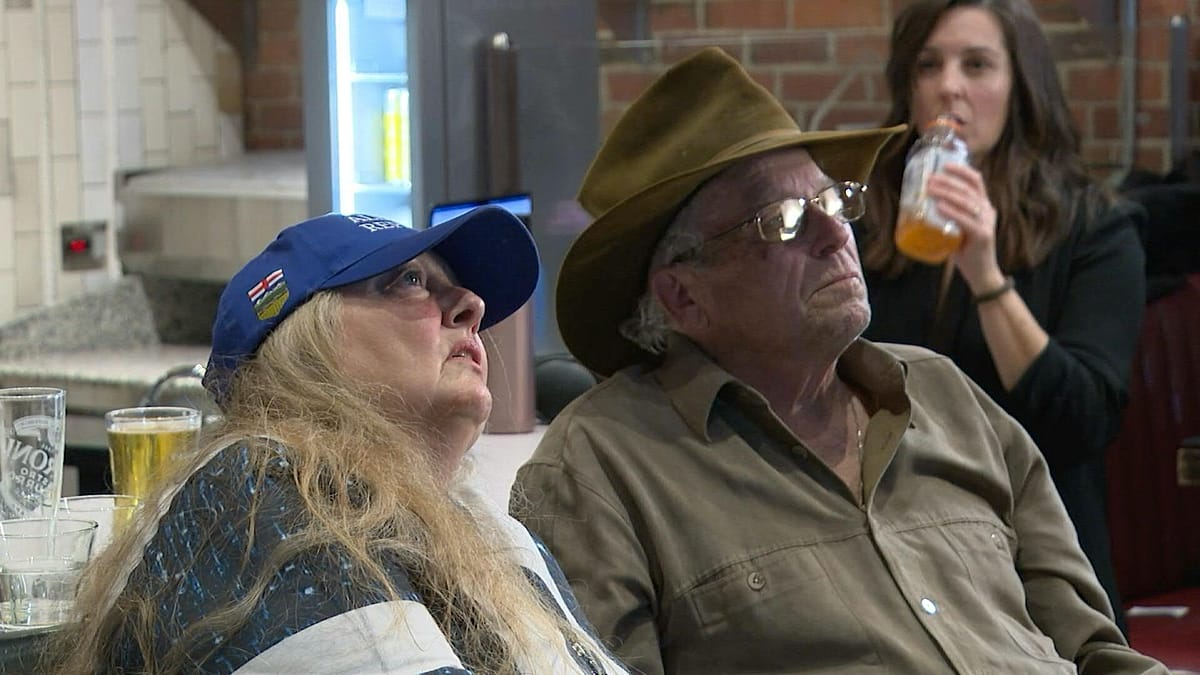
Photo via Toronto Star

Alberta separatists didn't just lose. They were humiliated. This is why

Read the original at Toronto Star ↗
Cite

DeLorey, F. (2026, October 21). Alberta separatists didn't just lose. They were humiliated. This is why. Toronto Star. https://www.thestar.com/opinion/contributors/alberta-separatists-didn-t-just-lose-they-were-humiliated-this-is-why/article_e3058b3b-a706-4021-8897-575a27a6c62c.html

Dated from the outlet's own feed. Check the original for its byline.

Toronto Star · collected 2026-10-21 · by Fred DeLorey

Quick Summary

The article discusses the recent defeat of Alberta separatists in Canada and contrasts their approach with historical separatist movements that have seriously challenged national unity. It highlights Quebec’s movement led by political figures like René Lévesque and Nova Scotia's 1867 secession effort as examples of well-organized, powerful campaigns backed by institutional support and electoral success. In contrast, the Alberta separatists are characterized as lacking legitimacy due to their reliance on social media rather than building a credible political machine or winning elections.
Written by AI on 2026-10-21, from this article's own text only (the story summary below draws on all the coverage).
See how they differ ↓

AI analysis

Story summary

On October 19, 2026, Albertans voted in a referendum that included ten questions, primarily focusing on immigration and constitutional issues. The last question asked if the Government of Alberta should commence legal steps to hold a second binding referendum on separation from Canada. Voting began with advance polls on October 13 at 311 polling stations.

The results released later showed that three-quarters of Albertans voted against pursuing separation, with strong support for remaining in Canada. However, there was a noticeable rural-urban divide, where questions pertaining to immigration and constitutional changes garnered more support from rural areas compared to urban centers like Calgary and Edmonton.

Premier Danielle Smith's request for "strong mandates" on the nine ballot questions did not materialize as expected, with most provincial ridings rejecting many of the proposed measures. This has left her government hesitant about swift action despite winning majorities in some areas related to immigration policies.

Written for “Alberta Referendum Results” on 2026-11-20, grounded in this article and the 104 other(s) covering the same event.

How they differ

19 outlets covered “Alberta Referendum Results”.

What each outlet says

One AI summary per outlet of its latest article on this story, written from that article alone and checked against it. Open the article for the outlet's own words.

Toronto StarThis outlet21 Oct

The article discusses the recent defeat of Alberta separatists in Canada and contrasts their approach with historical separatist movements that have seriously challenged national unity. It highlights Quebec’s movement led by political figures like René Lévesque and Nova Scotia's 1867 secession effort as examples of well-organized, powerful campaigns backed by institutional support and electoral success. In contrast…

Alberta separatists didn't just lose. They were humiliated. This is why (this article)30 articles from Toronto Star on this story
Global News23 Oct

Following Alberta’s referendum where a majority voted for policies limiting access to provincially funded services based on immigration status, union representatives are highlighting the contributions of immigrant workers rather than focusing on costs. Faduma Ahmed from the United Food and Commercial Workers Local 401 at Cargill’s abattoir in High River emphasized that these workers, many of whom hold temporary…

Advocates flag contributions, not costs, of newcomers in Alberta referendum aftermath →14 articles from Global News on this story
The Globe and Mail23 Oct

Danielle Smith, Alberta’s Premier, faced mixed results from Monday’s provincial referendum regarding immigration control and constitutional amendments. While proposals related to immigration received narrow majorities between 52% and 55%, those for constitutional changes fell short at below 50%. The proposal for proof-of-citizenship requirements garnered the highest support with 58%. These outcomes highlight a…

Mixed results on Alberta referendum questions highlight urban-rural divide →14 articles from The Globe and Mail on this story
CBC27 Oct

Alberta's recent referendum saw most provincial ridings reject Danielle Smith’s ballot questions, despite her seeking strong mandates for her proposals. Of the nine questions, seven would have lost in a riding-by-riding contest, with only Questions 1 and 5 receiving majority support. Edmonton and Calgary showed particular opposition to restricting services for temporary residents, while rural areas largely supported…

Nopes to the nine? Blue walls? Five takeaways from Alberta's referendum results →12 articles from CBC on this story
National Post25 Oct

This article compiles letters discussing Alberta's recent referendum on sovereignty. Writers express mixed views: while some see it as a positive development that may prompt federal attention to Western Canada, others fear it could embolden separatist movements elsewhere, like Quebec. One letter criticizes U.S. Ambassador Pete Hoekstra for lecturing Canadian politicians about interfering in American politics, citing…

Letters: The good and bad of Alberta’s vote →8 articles from National Post on this story
Euronews21 Oct

Alberta voters overwhelmingly rejected starting the process toward separation from Canada in a recent referendum, with about 75% supporting unity. This outcome gives Prime Minister Mark Carney a boost as he pushes for national unity amid US President Donald Trump’s trade war and annexation threats, which have rallied Canadians around their flag. Edmonton voter Shawn Campbell explained his vote: “It sends a message…

Alberta’s “no” to separation gives Carney a boost as Trump pressure unites Canadians →4 articles from Euronews on this story
Show 13 more outlets
BBC20 Oct

Albertans have voted overwhelmingly to stay part of Canada in a recent referendum, with over two-thirds of voters choosing unity despite calls for separation from some groups. Prime Minister Mark Carney celebrated the outcome as a victory for national unity, while provincial leader Danielle Smith acknowledged the results and suggested a path forward. Proponents of independence had argued that Alberta’s economic…

Alberta votes overwhelmingly to remain part of Canada →3 articles from BBC on this story
CBS News20 Oct

Voters in Alberta rejected a proposal to start the process toward independence from Canada, with 76% choosing to remain part of the country and only 23% supporting the path towards separation. The referendum was held due to tensions between Alberta and the Canadian federal government over issues like oil regulations and trade policies. Despite some support for separatism, particularly among conservatives who feel…

Voters reject separation of Alberta from Canada in referendum →2 articles from CBS News on this story
Al Jazeera20 Oct

In Alberta's first-ever independence referendum on Monday, 76% of voters chose to remain part of Canada, with results showing an overwhelming support for staying within the country. This outcome is seen as a significant victory for Canadian Prime Minister Mark Carney, who campaigned against separation, while disappointing those advocating for Alberta’s independence due to long-standing grievances with Ottawa. The…

Alberta rejects separation referendum: What’s next for Canadian province? →2 articles from Al Jazeera on this story
The Guardian20 Oct

Alberta voters rejected a proposal to initiate a process toward independence from Canada, with CBC projecting that about 76% of votes supported remaining in Canada while only 23% favored beginning the separation process. With over a million votes counted early Tuesday morning and nearly a third of ballots tallied, this outcome marks a significant victory for Canadian unity and Prime Minister Mark Carney. The ballot…

Alberta voters reject plan for referendum to leave Canada, CBC projects →2 articles from The Guardian on this story
The Straits Times20 Oct

On October 19, Canada awaited results from a divisive independence vote in Alberta, with less than one-quarter of voters reportedly supporting separation according to polls. Mitch Sylvestre, leader of the separatist movement, remained optimistic despite low polling numbers, stating his goal was to ignite provincial spirit regardless of initial outcomes. With 3.1 million eligible voters and 1.4 million advance…

Canada awaits result in Alberta independence vote →2 articles from The Straits Times on this story
Dawn19 Oct

Alberta is holding a non-binding referendum on Monday where residents will vote on ten questions related to separation from Canada and provincial governance. Premier Danielle Smith announced this after months of campaigning by separatists who argue that Alberta's wealth subsidizes other parts of the country and hinders its economy. The final question asks if Albertans want to remain in Canada or start a process for…

What does Alberta's referendum on separation from Canada mean? →2 articles from Dawn on this story
The Independent20 Oct

Voters in Alberta, Canada's oil-rich province, decisively rejected a move toward independence, with CBC projecting that about 76 percent of voters supported remaining within Canada, while only 23 percent backed the process towards separation. More than one million votes were counted from over 1.35 million cast, representing 43 percent of eligible voters. The vote reflects deep-seated tensions between Alberta and the…

Alberta rejects independence and votes to remain in Canada, CBC projects →2 articles from The Independent on this story
NPR20 Oct

In Alberta’s recent referendum, voters overwhelmingly rejected proposals toward provincial independence with 76% supporting remaining part of Canada and only 23% backing the process for potential separation. The vote came as tensions rose due to U.S. President Donald Trump's trade policies and annexation threats. Despite strong sentiment against Ottawa in some circles, a majority of Albertans chose unity, reflecting…

Alberta voters reject a move toward independence in referendum backing Canadian unity →2 articles from NPR on this story
South China Morning Post20 Oct

Alberta voters rejected the idea of separating from Canada in an overwhelming referendum, with 77% supporting staying within the country while 23% favored initiating a path toward separation. Early results provided a significant boost for Canadian Prime Minister Mark Carney's efforts to maintain national unity amid tensions with the US over trade and annexation threats.

Alberta voters choose Canada over independence in boost for Carney →2 articles from South China Morning Post on this story
Washington Examiner18 Oct

Alberta residents are set to vote in a referendum on October 19 that could lead to discussions about the province's potential independence from Canada. The ballot does not directly decide Alberta’s separation but asks if the provincial government should initiate the necessary steps for a future binding referendum on independence. This vote has significant implications for Canada's political structure and its…

What to know about the Alberta referendum on leaving Canada →
Fox News19 Oct

Alberta residents started voting on Monday in a non-binding referendum to decide if the western-Canadian province should separate from Canada. The poll involves about three million eligible voters amid tensions following recent military incidents in Alberta. Despite a majority of decided voters favoring remaining in Canada according to polls, nearly 30% support initiating the process for a binding referendum on…

Alberta holds non-binding separation vote as independence fight grips Canada →
New York Post20 Oct

Alberta residents voted to remain part of Canada in a recent referendum, with 76% supporting unity as initial results showed. The nonbinding vote, announced by Premier Danielle Smith in May, came amid growing calls for separation from a small but vocal group advocating for Alberta’s independence due to perceived economic injustices and bureaucratic impediments from the federal government. Prime Minister Mark Carney…

Alberta votes to remain part of Canada, rejects independence →
Daily Mail20 Oct

Alberta, Canada’s oil-rich province, voted overwhelmingly against separation from the country in a recent referendum, with 76% of voters supporting unity. Despite this outcome, Albertans also approved measures to tighten immigration laws and restrict access to social benefits for non-permanent residents. The vote reflects ongoing tensions between Alberta and the federal government over environmental policies and…

Oil-rich Canadian province of Alberta votes to remain part of the country... but demands immigration is slashed and voter ID laws are tightened →

Where they agree and split

Agreed

AI · cited, from two or more outlets

  • The referendum vote was not a direct decision on independence but would have set Alberta on a path toward a future vote on separation if passed.35
  • More than two-thirds of voters in the province chose to remain part of Canada rather than pushing for independence according to unofficial results from Elections Alberta.45
Quoted from the coverage (4)

With more than 1 million votes counted, about 76% supported remaining in Canada, compared with 23% who backed beginning a process that could lead to separation.

8 outlets

Prime Minister Mark Carney said on Tuesday that "it's a great result for Canada" and he is "thrilled that Albertans have chosen unity".

8 outlets

Alberta Premier Danielle Smith, a conservative, said she voted against independence but called the referendum to settle an issue that has divided the province.

6 outlets

Carney, who grew up in Alberta, has called the referendum “a dangerous bluff” as US President Donald Trump imposes punishing tariffs and levels annexation threats aimed – the prime minister says – at breaking Canadian resolve.

6 outlets

Disputed

Picked by our model, which is sometimes wrong

  • Separatist leaders vow to continue fighting for separation despite the referendum results, whereas Prime Minister Carney celebrates unity.45

Framing

How the first headlines put it

  • The Toronto Star frames the event as a timeline of events leading up to the vote, while CBS News presents it as a decisive rejection of separation.13
  • CBC highlights the rural-urban divide on additional referendum questions, whereas The Globe and Mail focuses on presenting the results of those nine other questions.67
The full story: what happened, how it changed, and all 105 articles →

Compared with similar articles

This article reads unscored and hedges 0% of its claims. Each row says how that neighbour differs.
Toronto Star
Leans left Hedges 4 of 41 claims Outlet record 64/100
National Post
Hedges 6 of 36 claims Outlet record 60/100
The Globe and Mail
Leans right Hedges 1 of 29 claims Outlet record 51/100
Euronews
Leans left Hedges 2 of 39 claims Outlet record 60/100
Euronews
Leans right Hedges 1 of 30 claims Outlet record 60/100
The Globe and Mail
Hedges 1 of 26 claims Outlet record 51/100
“Article A describes the run-up to the referendum vote, while Article B discusses the aftermath and analysis of the results.”
BBC News
Hedges 3 of 30 claims Outlet record 65/100
“Article A discusses the upcoming vote on whether to hold a referendum, while Article B discusses the result and aftermath of what appears to be a previous election or vote related to separatism.”
Fox News
Hedges 3 of 28 claims Outlet record 66/100
“Article A describes the voting process of a non-binding referendum on Alberta's potential separation from Canada, while Article B discusses the aftermath and analysis following the referendum results.”
Euronews
Leans right Hedges 0 of 6 claims Outlet record 60/100
Toronto Star
Hedges 1 of 47 claims Outlet record 64/100

Story

Alberta Referendum Results
Politics · 105 article(s) covering the same event. Compare every outlet's account →
How this article was measured signals, leaning charts, publisher record, byline, topics and claims

Signals How these are calculated →

Claims extracted
31
sentences that state something as happening or true
Uncertain
0%
0 of 31 hedged ("reportedly", "may", "according to")
Leaning
withheld
no quote in the article backed the model's score
Publisher signals
64/100
Toronto Star's corrections and hedging, across everything collected from it. Not a measure of accuracy.
Outlets on this story
105
Politics
Same framing elsewhere
1
articles that frame the event the way this one does
Analyzed 2026-10-21 · how these are computed

How this is being covered How these are calculated →

Article leaning vs. publisher reliability
Source leaning vs. consistency

Publisher

Toronto Star · 16185 article(s) · 31 correction(s) detected
Running correction rate · 31 correction(s)
2026-11-17
Correction
2026-10-26
Correction
2026-10-24
Correction
2026-10-07
Correction
2026-09-24
Correction

Who wrote this

Fred DeLorey
1 article(s) here · 1 carrying a prediction
Led by giants like Joseph Howe and Premier William Annand, they used that mandate to demand their way out of the newly formed country.
The only article under this byline in the corpus.

Topics

Alberta America Canada Canadian Nova Scotia

Subjects

Alberta GPE · 5× Canadian NORP · 3× Howe PERSON · 3× America GPE · 2× Annand PERSON · 2× Canada GPE · 2× Lévesque PERSON · 2× Nova Scotia GPE · 2× Ottawa ORG · 2× Trump PERSON · 2×

Narrative

They elected an explicitly Anti-Confederation government, sweeping 36 of 38 seats in the provincial legislature and capturing 18 of Nova Scotia’s 19 seats in the House of Commons, leaving future Prime Minister Charles Tupper as the lone, battered survivor of the pro-Canada camp.
framing: assertive · carried by 1 article(s) · first seen 2026-10-21
Led by giants like Joseph Howe and Premier William Annand, they used that mandate to demand their way out of the newly formed country.
2026-10-21 · Toronto Star
Alberta separatists didn't just lose. They were humiliated. This is why · assertive framing

Claims (31 extracted, 0 hedged)

Threatening to tear a country apart requires more than just raw anger. asserted
Threatening → threaten → anger
It requires a mandate, institutional power and, above all, it requires serious people. asserted
it → require → people
History has shown us exactly what a credible threat to the Canadian federation looks like. asserted
threat → show → federation
What we just witnessed in Alberta wasn’t it. asserted
witnessed → witness → Alberta
But historically, movements that pushed this country to the brink were orchestrated by political titans who knew how to actually wield power. asserted
who → push → power
Their push to fracture the country was masterminded by René Lévesque. asserted
push → fracture → Lévesque
He wasn’t a fringe activist with an X account; he was a heavyweight who commanded the room. asserted
who → command → room
Lévesque didn’t just air grievances — he built the Parti Québécois into a governing juggernaut. asserted
he → air → juggernaut
When the torch was eventually passed to Jacques Parizeau and the charismatic Lucien Bouchard in 1995, they weaponized the entire apparatus of the provincial state, staring down Ottawa and came within a percentage point of permanently shattering the country. asserted
they → pass → country
In 1867, secessionist forces there went to war at the ballot box. asserted
forces → go → box
They elected an explicitly Anti-Confederation government, sweeping 36 of 38 seats in the provincial legislature and capturing 18 of Nova Scotia’s 19 seats in the House of Commons, leaving future Prime Minister Charles Tupper as the lone, battered survivor of the pro-Canada camp. asserted
They → elect → camp
Led by giants like Joseph Howe and Premier William Annand, they used that mandate to demand their way out of the newly formed country. asserted
they → lead → country
And when that push finally hit a wall, the movement didn’t just quietly fade away — it ended in a spectacular, high-stakes rupture. asserted
it → hit → rupture
When Annand floated a last-ditch threat to pull Nova Scotia into the United States, Howe refused to cross that line. asserted
Howe → float → line
Realizing the secession fight had run its course, Howe made the agonizing, pragmatic choice to secure a better deal for his province and take a seat in Prime Minister John A. Macdonald’s pro-Canada cabinet. asserted
Howe → realize → cabinet
These were serious people running serious political machines. asserted
These → run → machines
They came close to getting what they wanted because they did the gruelling, unglamorous work of building institutional power, winning elections and securing democratic backing. asserted
they → come → backing
But even with all that legitimacy and firepower, they still ultimately failed. asserted
they → fail → legitimacy
There, the separatist movement was spearheaded by political nobodies playing dress-up as revolutionaries. asserted
movement → spearhead → revolutionaries
They bypassed the hard work of building a legitimate political party, knocking on doors, drafting credible policy, winning seats, and actually earning a mandate. asserted
They → bypass → mandate
Instead, they relied on a loud, unorganized fringe, mistaking a social media echo chamber for a groundswell of public support. asserted
they → rely → support
If the titans of Canadian separatism couldn’t break the country, this amateur hour never stood a chance. asserted
hour → break → chance
Western alienation is real, deep and entirely justified. asserted
alienation → justify → ?
But you cannot dismantle a G7 nation on frustration alone. asserted
you → dismantle → frustration
The Alberta separatists believed that righteous anger was enough to substitute for actual political strategy and carry a half-baked referendum across the finish line. asserted
anger → believe → line
Ottawa consistently misreads the West. asserted
Ottawa → misread → West
The federal government’s deaf-ear approach to provincial jurisdiction has created structural frustrations in Alberta that demand real, hard-nosed solutions. asserted
that → create → solutions
But last night proved that weaponizing those frustrations into a separatist fantasy is a dead end. asserted
weaponizing → prove → fantasy
When asked to bet the farm on an amateur-hour political stunt, they walked away. asserted
they → ask → stunt
The separatist bluff has been called. asserted
bluff → call → ?
If there’s going to be a real fight for Alberta’s place within Canada, this sideshow needs to end, and the fringe can no longer be in the driver’s seat. asserted
fringe → go → seat
Give feedback · no sign-in needed

No sign-in needed for now. Your note is sent without a name, so it cannot be answered.

History Support